
Spray foam expands and feels dry within minutes of application, but that is not the same as being fully cured. Understanding spray foam cure time helps homeowners plan re-entry, avoid unnecessary odor exposure, and know when a project is truly finished. The curing stage is really just the tail end of the same chemical reaction covered in how spray foam insulation works, so it helps to know that process before timing your re-entry. This guide breaks down spray foam insulation cure time by foam type, the conditions that speed up or slow down the process, and how to confirm foam has fully hardened before returning to a treated space.
TL;DR
- Fully cured foam is rigid, dry to the touch, and odorless. Occupants should wait until this stage before re-entering the space.
- Open-cell spray foam generally reaches full cure in 8 to 24 hours; closed-cell foam can take 24 to 72 hours depending on thickness.
- Tack-free “drying” happens in minutes, but that is a different stage from full cure time for spray foam insulation.
- Warm temperatures (70°F to 85°F) and moderate humidity (40% to 60%) produce the fastest curing time for spray foam insulation.
- Thick passes, cold weather, and high humidity all extend curing.
Spray Foam Drying Time vs. Cure Time: What’s the Difference
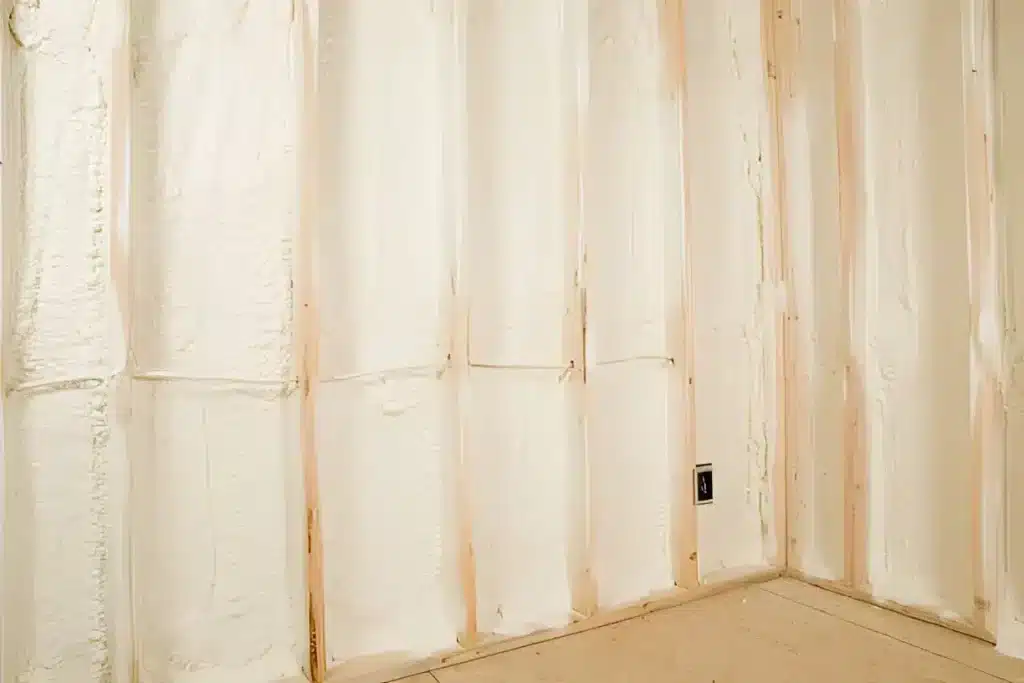
Most people searching for spray foam drying time are actually asking about two different milestones. The first is the tack-free stage, when the surface stops feeling sticky. This can happen in under a minute for some products. The second, and far more important, milestone is full cure, which is when all off-gassing has stopped, and the foam has reached its final density and strength.
A foam surface can feel completely dry to the touch while the interior is still curing. That is why relying on touch alone to judge how long it takes for spray foam to cure can be misleading, especially with thicker closed-cell applications.
How Long Spray Foam Takes to Cure by Type
Open-cell spray foam is lighter and less dense, so it typically reaches full cure time within 8 to 24 hours under normal conditions. It expands more during application and should be installed in thinner lifts to cure evenly.
Closed-cell spray foam is denser and packs more insulating value into less material, which is one reason it holds up well in tight wall cavities and roof assemblies where space is limited. Because of that density, closed-cell foam usually needs 24 to 72 hours to fully cure, and each pass should stay under about 2 inches to avoid trapping heat and moisture inside the layer. Many installers reach for professionally applied closed-cell foam specifically because its rigidity and air-sealing performance only fully develop once curing is complete.
According to federal building science guidance, spray foam is one of several insulation types rated by R-value, and the material’s final performance characteristics are only accurate once it has fully hardened.
Factors That Affect Spray Foam Insulation Cure Time
Several variables influence how long it takes spray foam to harden:
- Temperature: Curing speed is highest between 70°F and 85°F. Colder substrates slow the chemical reaction significantly.
- Humidity: Relative humidity between 40% and 60% supports the fastest, most even cure.
- Thickness: Thicker layers trap heat and take longer to cure all the way through.
- Foam formulation: Different manufacturers and product lines have different reaction speeds, so cure time for spray foam insulation can vary even between two closed-cell products.
In colder or wetter regions, curing naturally takes longer. Pre-warming substrates or using temperature-controlled application equipment can help reduce delays during cold-weather installations, which is a common consideration for winter projects in the Pacific Northwest.
Safety and Re-Entry Timing
Occupants should stay out of a treated space until the foam is fully cured, generally 8 to 24 hours for lighter applications and up to 72 hours for thick closed-cell installations. Re-entering too early can expose people to lingering off-gassing and can also compromise the foam’s final performance if the surface is disturbed before curing is complete.
Federal safety guidance recommends restricting re-entry until the product has finished curing and the space has been properly ventilated (official re-entry guidance). Following the manufacturer’s specific timeline for the product used is the most reliable way to confirm whether spray foam insulation is safe after it cures.
What Happens After Spray Foam Insulation Fully Cures
Once curing finishes, sealed cavities also stop functioning as pathways for trapped moisture, which is one reason properly cured foam holds up so well over time. Sealed wall assemblies block the air movement that would otherwise carry humidity into wall cavities, and that same air-sealing effect is central to how sealed walls resist hidden moisture and mold long after installation day.
Fully cured foam is also what determines how long spray foam insulation lasts. Because the material becomes chemically inert once curing is complete, properly cured foam typically holds its insulating value and structural integrity for decades, with minimal settling compared to loose-fill alternatives.
How to Confirm Spray Foam Has Fully Cured
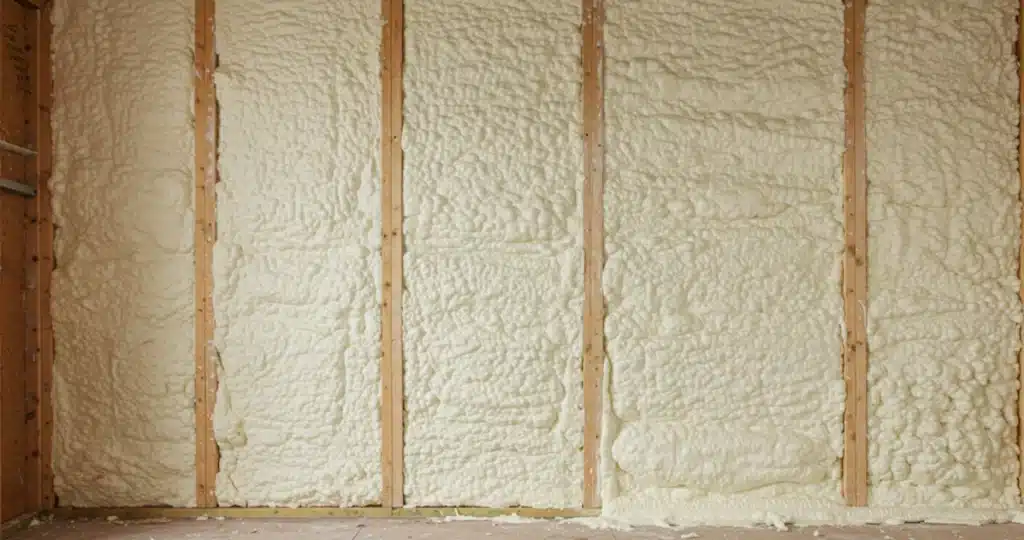
- Touch test: Press the surface. Cured foam feels firm and rigid, not tacky or soft.
- Odor check: Fully cured foam has little to no chemical smell. A strong odor usually means curing is still in progress.
- Rigidity check: Tap the surface. Cured foam should not compress or leave an indentation.
- Time check: Compare elapsed time against the expected range for the foam type (8 to 24 hours for open-cell, 24 to 72 hours for closed-cell).
Comparing Foam Performance After Curing
Cure time is not the only variable worth understanding before choosing a foam type. The R-value differences between open-cell and closed-cell foam also become locked in once curing is complete, since final density and thermal resistance are only accurate measurements after the foam has fully hardened. Comparing both cure time and R-value side by side gives a clearer picture of which foam type fits a specific project.
Frequently Asked Questions
Is spray foam insulation safe after it cures?
Yes. Once fully cured, spray foam becomes chemically stable and stops off-gassing. It does not pose ongoing health risks to occupants.
How long does spray foam insulation last?
Properly cured spray foam typically lasts several decades with minimal degradation, since it does not settle or compress the way some traditional insulation materials do.
How long does spray foam take to harden?
Surface hardening, or tack-free time, can occur in minutes, but full hardening throughout the material typically takes 8 to 72 hours depending on foam type and thickness.
Can curing be sped up?
Curing speed can be improved with warmer ambient temperatures and moderate humidity, but the chemical process itself cannot be rushed without risking uneven curing or surface cracking.
Is it safe to stay in the house while spray foam cures?
No. Occupants should vacate the treated area until the foam is fully cured, which is typically 8 to 24 hours for lighter applications and up to 72 hours for thicker closed-cell installations.