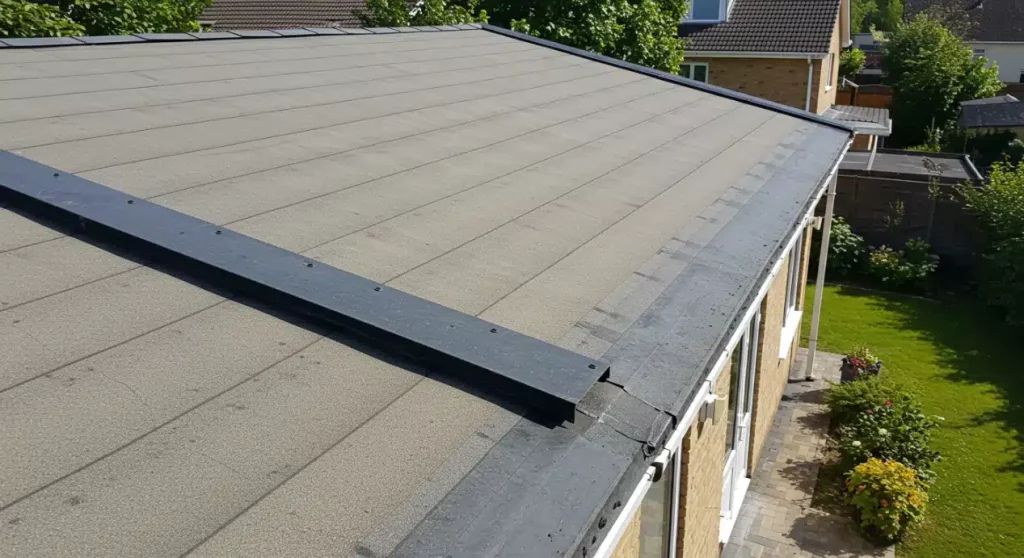
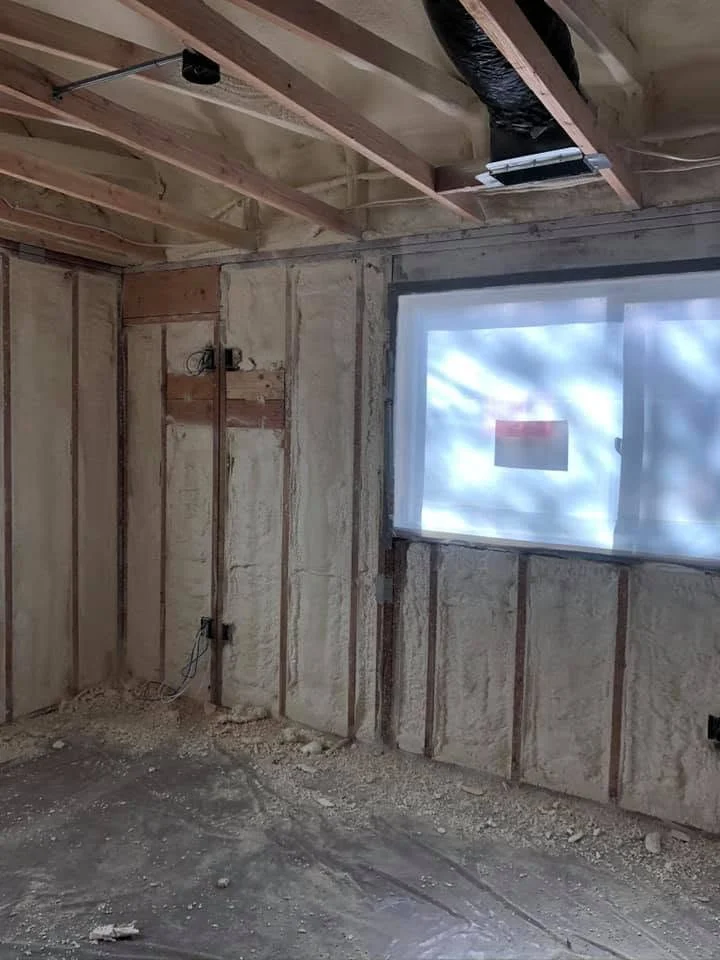
Commercial buildings in Medford can benefit from closed-cell spray foam insulation because it can combine thermal insulation with air sealing and vapor control in one continuous material. That matters in roof, wall, and other building-envelope assemblies where heat flow, air leakage, and moisture movement can affect building performance.
The material isn’t automatically the right choice for every commercial project. The building assembly, available space, moisture conditions, code requirements, and intended use should guide the decision.
TL;DR
- Closed-cell spray foam installation provides strong thermal control in relatively limited space.
- It can form part of an air barrier when installed as part of a continuous, properly detailed assembly.
- Its low vapor permeance can help control vapor diffusion in suitable assemblies.
- Medford’s hot summer conditions make effective roof and wall insulation especially relevant.
- Commercial projects still need to account for fire protection, transitions, penetrations, installation conditions, and Oregon code requirements.
- Open-cell foam can make more sense for some applications, particularly where sound absorption is a priority.
What Makes Closed-Cell Spray Foam Useful for Commercial Buildings?
Commercial buildings have more than one building-envelope problem to manage. Heat can move through roofs and walls, air can leak through joints and gaps, and moisture can move through both air leakage and vapor diffusion. Closed-cell spray foam can address several of these control functions within the same assembly.
Research from Building Science Corporation describes high-density closed-cell spray foam as capable of serving thermal, air, vapor, and, in properly designed assemblies, water-control functions. That doesn’t mean every project should make the foam responsible for all four. The surrounding materials and details still matter.
Thermal Performance And Air Sealing
A major reason commercial owners consider closed-cell foam is limited installation space. A building may have a shallow roof or wall cavity where adding more insulation depth isn’t practical.
The foam also expands into gaps and irregular areas, which can reduce uncontrolled air movement when the application forms a continuous air-control layer. That can matter around complicated commercial assemblies with joints, penetrations, framing, and transitions.
The key word is continuous. Spraying foam into one section of a wall doesn’t automatically make the entire building airtight. Connections between walls, roofs, windows, doors, and other assemblies still need proper detailing.
Moisture And Vapor Control
Closed-cell foam has lower vapor permeance than open-cell foam. That can make it useful where an assembly needs vapor diffusion control.
But vapor control and water leakage aren’t the same thing. A roof or wall still needs a design that handles bulk water, drainage, flashing, and transitions. Foam shouldn’t be treated as a substitute for every other building-envelope component.
How Does Medford’s Climate Affect The Case For Commercial Spray Foam?
Medford’s summer temperatures make heat control a practical concern for commercial buildings. NOAA’s 1991-2020 climate normals for Medford Rogue Valley Airport show a July normal average high of about 92°F, while the National Weather Service reported a July 2026 average maximum of 94.1°F.
That doesn’t mean every Medford building needs closed-cell foam in Medford. It does mean the roof and wall assemblies deserve attention when a building must maintain a controlled indoor temperature through hot outdoor conditions.
For a commercial property, insulation and air sealing work together. Insulation slows heat flow, while air sealing limits uncontrolled air movement through cracks and joints. The right assembly depends on the building’s construction and mechanical design.
Where Can Closed-Cell Spray Foam Be Used In Commercial Buildings?
Closed-cell spray foam can be used in several commercial assemblies, but the correct application depends on the product and the design.
| Commercial Application | Why Closed-Cell Foam May Fit |
|---|---|
| Roof assemblies | Can provide continuous insulation and air control while addressing complex roof surfaces |
| Exterior walls | Can combine insulation with air and vapor control in suitable wall assemblies |
| Metal buildings | Can help address air leakage and thermal bridging concerns that occur around metal framing |
| Foundations and under slabs | Can provide continuous insulation where the specified product and assembly allow it |
| Industrial or warehouse spaces | Useful where the building envelope has large areas, penetrations, or difficult-to-seal transitions |
Commercial roof and wall assemblies deserve special attention because the foam needs to connect with other control layers. Building Science Corporation’s commercial spray foam guidance specifically addresses continuity at wall-to-roof connections, frame movement, penetrations, and cladding attachments.
That is one reason installation details matter as much as the insulation material itself.
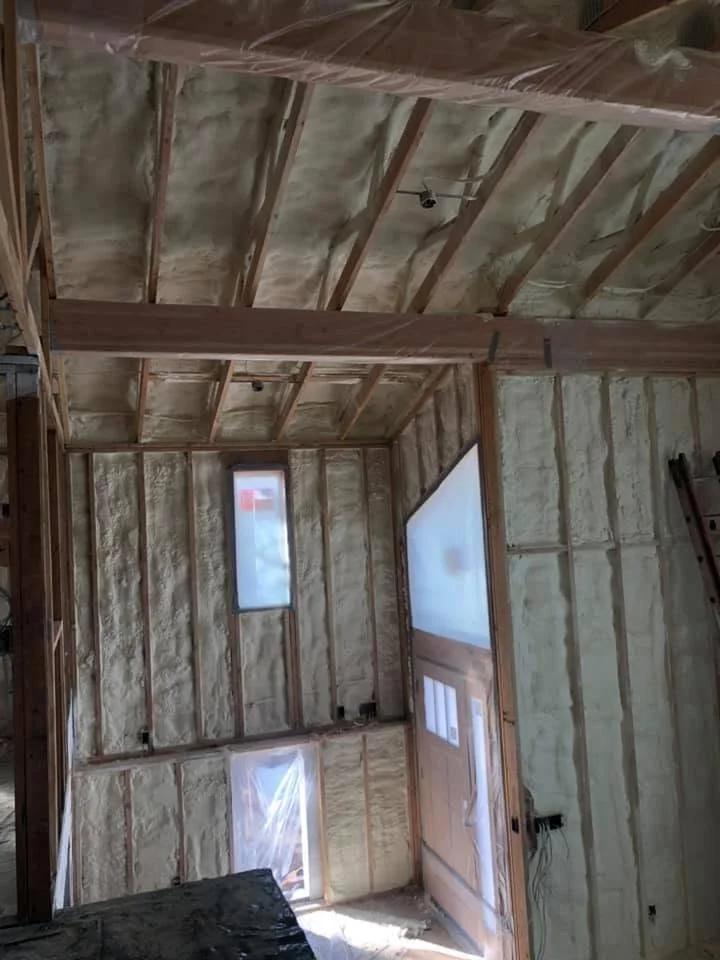
Metal Buildings And Roof Assemblies
Metal buildings can have many conductive paths through framing and numerous joints where air can move. Closed-cell foam may help reduce these problems by creating a more continuous insulation and air-control layer.
Roof applications have similar considerations. A commercial roof deals with solar heat, weather exposure, penetrations, and thermal movement. The foam system has to be selected and installed for that specific roof assembly rather than treated as a universal coating or insulation fix.
Closed-Cell Vs Open-Cell Spray Foam: Which Makes Sense?
There isn’t one answer for every commercial building. Closed-cell foam generally offers greater resistance to vapor movement and higher thermal resistance per inch than open-cell foam, while open-cell foam can be useful where sound absorption is a bigger concern.
| Factor | Closed-Cell | Open-Cell |
|---|---|---|
| Thermal control | Higher resistance per inch is available with many products | Lower resistance per inch |
| Air control | Can form an air-control layer when properly installed | Can also contribute to air control when installed to the required conditions |
| Vapor control | Lower vapor permeance | More vapor permeable |
| Space constraints | Useful where insulation depth is limited | May need more depth for comparable thermal performance |
| Sound absorption | Not usually the main reason to choose it | Often considered where acoustic performance matters |
| Moisture-sensitive assemblies | Can be useful when vapor control is part of the design | May need additional vapor-control measures in some assemblies |
The choice should follow the building assembly, not the other way around. A commercial spray foam guide from Building Science Corporation notes that high-density closed-cell foam is not the preferred choice for acoustical purposes, while open-cell foam can be used for acoustic insulation in certain commercial wall assemblies.
What Should Commercial Building Owners Consider Before Choosing Closed-Cell Foam?
Start with the assembly rather than the product. Before choosing closed-cell spray foam, commercial owners and project teams should look at:
- Building type: A warehouse, office, retail space, and industrial building can have very different envelope requirements.
- Available depth: Limited wall or roof depth can make higher-performance insulation per inch more useful.
- Moisture conditions: Determine where water and vapor need to move, stop, or dry.
- Roof and wall design: The foam needs to connect properly with the surrounding control layers.
- Fire and thermal protection: Foam-plastic insulation may need protective assemblies or coverings depending on its location and the approved assembly.
- Product documentation: The specified product should match the intended application and installation conditions.
- Installation quality: Gaps, poor adhesion, incomplete coverage, and poorly detailed transitions can undermine the intended performance.
- Budget and scope: The right comparison isn’t simply foam versus another insulation. The full assembly and required additional materials should be considered.
Oregon’s current commercial energy requirements also need to be part of the project conversation. The Oregon Building Codes Division identifies the 2025 Oregon Energy Efficiency Specialty Code as the adopted commercial energy code, based on ASHRAE Standard 90.1-2022, with the current mandatory date beginning July 1, 2025.
Code compliance doesn’t mean a particular insulation product is automatically required. The project still needs to meet the applicable requirements through its selected assembly and compliance path.
Get Commercial Closed-Cell Spray Foam Guidance In Medford, OR
If you’re evaluating insulation for a commercial building in Medford, the useful starting point is the building itself. At All Foam & Insulation, LLC, we can discuss the areas that need insulation, air sealing, or moisture control and help determine whether closed-cell spray foam fits the project.
Call (541) 826-9600 or email [email protected] to discuss your commercial insulation needs in Medford, OR.
FAQs
Is Closed-Cell Spray Foam Better Than Open-Cell Foam For Commercial Buildings?
Not in every situation. Closed-cell foam can make sense where higher thermal resistance per inch and vapor control are useful, while open-cell foam may be a better fit for some assemblies where depth and acoustic performance are priorities.
Can Closed-Cell Spray Foam Help With Condensation In A Metal Building?
It can help address conditions that contribute to condensation by improving thermal and air control, but the result depends on the complete building assembly. Roof design, interior humidity, exterior conditions, and installation details all matter.
Does Closed-Cell Spray Foam Provide An Air Barrier?
It can form part of an air-barrier system when the specified product is installed at the required thickness and the assembly is detailed for continuity. Joints, penetrations, windows, doors, and transitions still need attention.
How Much Does Commercial Closed-Cell Spray Foam Cost?
There isn’t a reliable single Medford price that applies to every commercial project. The final cost depends on the building, application area, foam product, required thickness, access, preparation, and other project conditions.
Is Closed-Cell Spray Foam Suitable For Every Commercial Building?
No. The best insulation choice depends on the building’s construction, moisture conditions, thermal requirements, code requirements, and intended use. A project-specific assembly review is more useful than choosing foam based only on its general performance.
Sources
- Building Science Corporation, Commercial Spray Foam Guide – Commercial spray foam applications, control layers, wall and roof assemblies, and installation considerations.
- Oregon Building Codes Division, Commercial Energy Code – Current Oregon commercial energy code and ASHRAE 90.1-2022 basis.

- How Can Medford Property Owners Extend the Lifespan of a Membrane Roofing System? - November 4, 2026
- What Factors Can Reduce the R-Value of Fiberglass Batts in Medford, OR? - November 4, 2026
- Fiberglass Batt vs. Roll Insulation in Ashland, OR: What’s the Difference? - October 15, 2026