You wake up in the middle of winter, put your feet on the floor, and feel an immediate chill. You check the thermostat, bump the heat up a few degrees, and wait. The draft persists, and your energy bill keeps climbing every month. This is a familiar story for many homeowners and builders, but the solution often lies in what you cannot see behind your walls. Insulation is the unsung hero of building performance, and not all insulation is created equal.
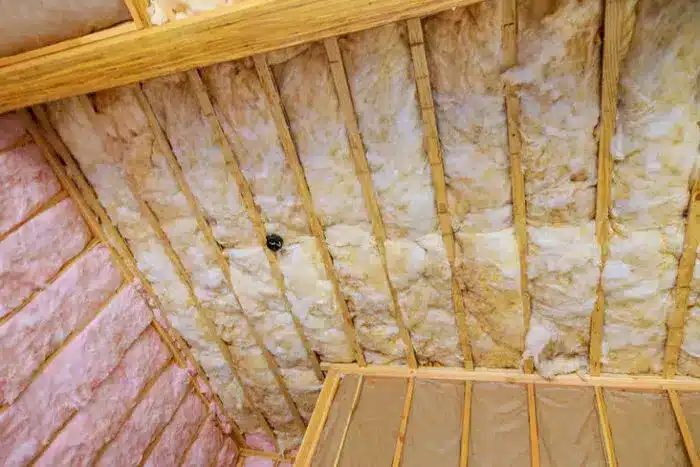
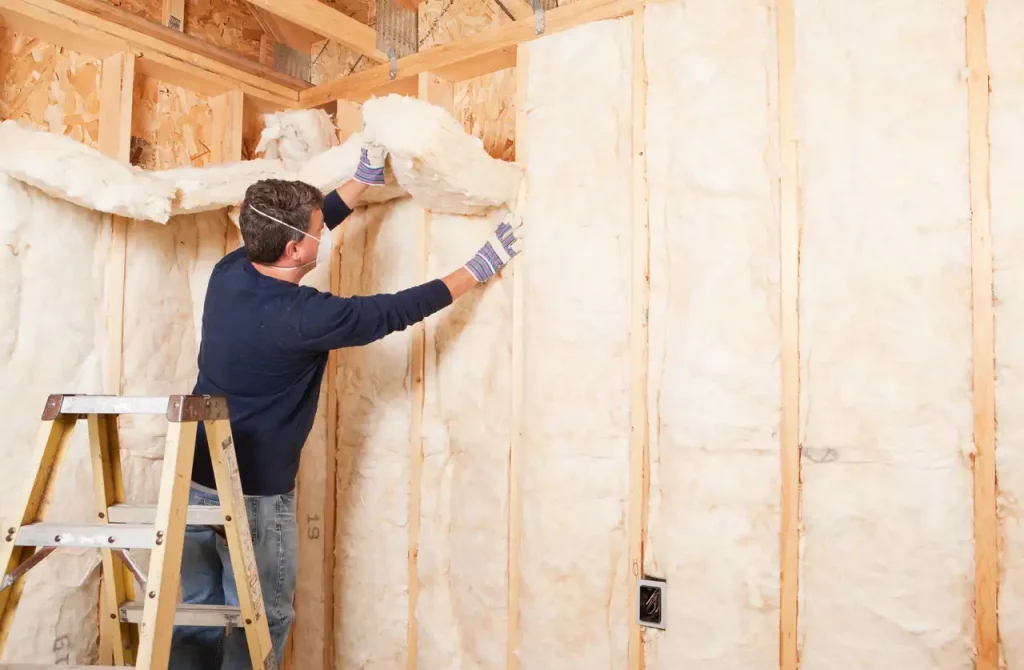
For decades, standard fiberglass batts were the default choice. They are cheap and easy to find, but they leave gaps and allow air to pass through freely. Closed-cell spray foam insulation has changed that equation. It works as an insulator and an air barrier in a single product, filling cavities that older materials simply cannot reach. This guide covers what closed-cell spray foam is, how it compares to open-cell foam, what it costs, and how it is installed, so you can decide with confidence whether it fits your project.
Quick Overview
- Closed-cell spray foam insulation is a rigid, dense foam with an R-value of roughly R-6 to R-7 per inch, nearly double that of fiberglass.
- It acts as its own closed-cell spray foam vapor barrier, blocking both air and moisture in a single application.
- In the open-cell vs. closed-cell spray foam insulation comparison, closed-cell is denser, more expensive per board foot, and better suited to exterior walls, crawl spaces, and metal buildings.
- Spraying closed-cell foam requires trained installers, specialized rigs, and controlled application in passes to avoid overheating the material.
- It adds real structural rigidity to a closed-cell spray foam wall assembly and can boost wind and shear resistance.
- Building codes require a thermal barrier (usually drywall) over the foam and often call for mechanical ventilation once a home is sealed this tightly.
- The upfront cost is higher than fiberglass, but the return shows up in lower utility bills and fewer air leaks over the life of the building.
What Is Closed Cell Spray Foam Insulation?
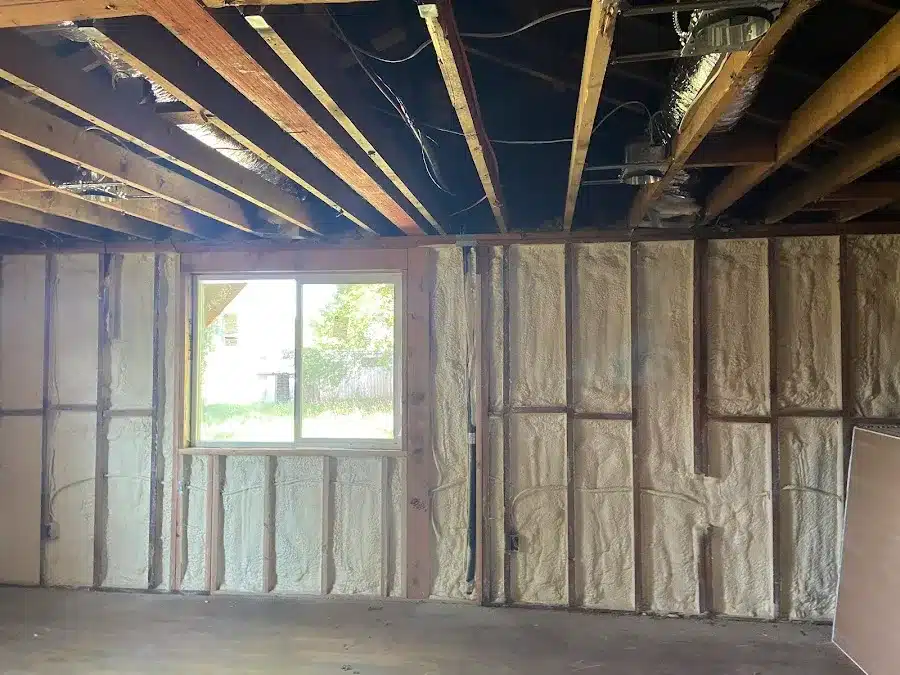
So, what is closed cell spray foam, exactly? It is a chemical product created by mixing two components: isocyanate and polyol resin. When these substances meet at the tip of a spray gun, they react instantly and expand into a rigid plastic foam. Unlike open-cell foam, which is soft and sponge-like, closed-cell foam cures hard and dense.
The name comes from its microscopic structure. Closed-cell insulation consists of millions of tiny bubbles, or cells, that are sealed off from one another and filled with a gas that resists heat flow. Because the cells stay closed, air and moisture cannot pass through the material. This single trait is what sets it apart from almost every other insulation type on the market, including fiberglass, cellulose, and open-cell foam.
This material expands significantly upon application, typically 30 to 60 times its liquid volume, though not as much as open-cell foam. That controlled expansion lets it fill cavities without generating enough pressure to bow a wall. Once cured, closed-cell spray foam insulation forms a solid, structural layer that bonds tightly to wood, concrete, and metal, which is why a growing number of contractors and homeowners across the country now specify it for both new construction and retrofits.
The Science Behind the R-Value
To understand why closed-cell spray foam insulation performs so well, look at R-value, which measures a material’s resistance to heat flow. The higher the number, the better the insulation performs.
Most traditional insulation types, like fiberglass or cellulose, rely on trapped air to slow heat transfer. They stop convection but struggle with radiant heat and air movement. Closed-cell foam takes a different approach entirely. Because it forms a solid, unbroken barrier, it resists all three modes of heat transfer: conduction, convection, and radiation.
Density is where this material earns its reputation. Closed-cell foam insulation typically delivers an R-value of R-6 to R-7 per inch of thickness, compared to roughly R-3.5 per inch for standard fiberglass batts. That means you can meet a higher thermal performance target with a much thinner layer of wall insulation, which matters in remodels where every inch counts.
Expert Tip: When comparing quotes, do not just look at the advertised total R-value. Ask for the installed thickness in inches. Some contractors quote an aged R-value rather than the initial rating, so knowing the actual depth sprayed helps you confirm you are getting what you pay for.
Air tightness matters just as much as R-value on paper. A wall insulated with fiberglass might carry an R-19 rating, but if air leaks through gaps around the studs, the effective performance drops well below that number. Closed cell foam eliminates those gaps, so the R-value you pay for is closer to the R-value you actually get in the field.
Core Benefits of Closed Cell Spray Foam Insulation
Superior Air Sealing
The single biggest source of energy loss in most buildings is air leakage through cracks around windows, outlets, and sill plates. Fiberglass does nothing to stop that airflow; it behaves more like a filter than a seal. Closed-cell spray foam insulation expands into every crack, crevice, and penetration it touches, creating an airtight seal that keeps conditioned air in and outside air out.
Closed Cell Spray Foam as a Vapor Barrier
Moisture is the enemy of building durability, leading to mold growth, wood rot, and poor indoor air quality. Because of its sealed cellular structure, closed-cell spray foam is essentially impermeable to water vapor. It stops humid interior air from migrating into wall cavities and condensing, and it sheds liquid water on contact, which is why it is a strong choice for crawl spaces and basements where dampness is common.
Structural Strength
This benefit is often overlooked. Because the foam is rigid and bonds strongly to framing, it adds real structural integrity to a closed-cell spray foam wall assembly, functioning almost like a structural adhesive. The Spray Polyurethane Foam Alliance notes that spray foam insulation can significantly increase the racking strength of walls, helping a home better withstand high winds and shear forces.
Space Savings
In remodeling projects, every inch of usable space matters. Because closed-cell insulation delivers a high R-value per inch, you can hit thermal targets with less thickness, preserving interior floor space while still meeting energy code requirements.
How Spray Foam Insulation Is Installed
Spraying closed-cell foam is not a DIY project. It requires specialized equipment, protective gear, and manufacturer training, since the process involves high pressures and temperatures that can be hazardous to untrained applicators.
Site Preparation
Before spraying begins, installers cover windows, doors, and floors with plastic sheeting to protect against overspray, and the workspace must be well-ventilated because application fumes are strong. Electrical and plumbing fixtures are masked off to keep them from being coated.
The Mixing Process
Installers use a mobile or portable rig to heat the two chemical components to precise temperatures, which is essential for a proper reaction and expansion. Heated hoses carry the liquid components from the rig to the spray gun.
Application
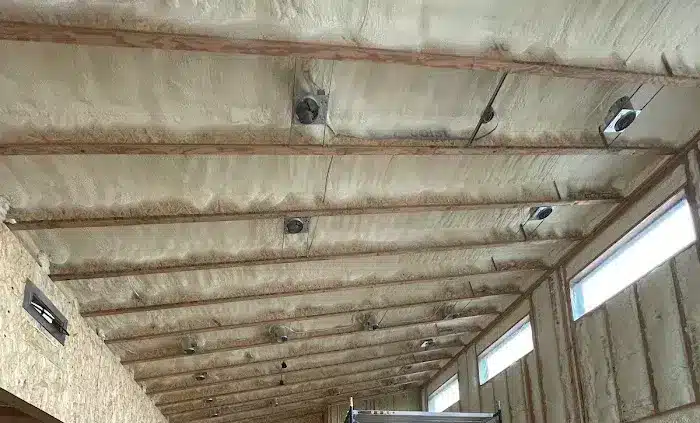
The applicator sprays the liquid mixture onto the substrate, where it expands rapidly into foam. Spraying closed-cell foam occurs in layered passes, generally no more than 2 inches per pass, to control the heat generated by the chemical reaction. Applying too much at once can scorch the foam or create a fire hazard.
Curing and Trimming
The foam cures and hardens within minutes. Once fully expanded and set, installers use saws or planers to trim the excess flush with the wall studs, leaving a smooth surface ready for drywall or another wall covering.
If you want to see how this compares against a different approach to whole-home insulation, spray foam’s role in preventing moisture and mold problems offers a closer look at the air-sealing side of the equation.
Expert Tip: If you are building new, consider running plumbing and electrical after the foam is sprayed. This requires coordination with your electrician and plumber, but it allows the foam to fully seal the cavity rather than being cut later for wire penetrations.
Open Cell vs Closed Cell Spray Foam Insulation
People frequently confuse these two products, but in the open-cell vs. closed-cell spray foam insulation comparison, they behave very differently, and the right choice depends on your climate, application, and budget.
Density and Rigidity
Closed-cell foam is dense and rigid, with a feel closer to hard plastic. Open-cell foam is soft and flexible, with a texture closer to a marshmallow. Because of its density, closed-cell foam can support some load if needed, while open-cell foam would compress under pressure.
Air and Moisture Permeability
Closed-cell foam completely stops air and moisture vapor, functioning as a Class II vapor retarder. Open-cell foam stops air movement but still allows moisture vapor to pass through, so it typically requires a separate vapor-barrier strategy in cold-climate exterior applications.
Cost
Closed-cell foam generally costs more per board foot than open-cell foam because the raw materials are more expensive and the foam expands less, so more material is needed to fill the same cavity. However, because its R-value per inch is higher, fewer inches are often needed to meet code requirements, which can offset some of the cost difference.
Table: Comparing Closed Cell and Open Cell Insulation
| Feature | Closed Cell Foam | Open Cell Foam |
| Cell Structure | Closed, gas-filled | Open, air-filled |
| R-Value per Inch | 6.0 to 7.0 | 3.5 to 3.8 |
| Vapor Barrier | Yes (Class II vapor retarder) | No (highly permeable) |
| Density | High (approx. 2 lbs/ft³) | Low (approx. 0.5 lbs/ft³) |
| Expansion Rate | Moderate (30x to 60x) | High (100x to 200x) |
| Best Application | Exterior walls, crawl spaces, metal buildings | Interior walls, attics, sound deadening |
Key Takeaways:
- Closed-cell spray foam insulation is the stronger choice for exterior applications, crawl spaces, and anywhere moisture control is a priority.
- Open-cell foam suits interior soundproofing or vented attics where the roof deck needs to breathe, provided a separate vapor-barrier strategy is in place.
Typical Applications and Best Uses
Knowing where to use closed-cell foam insulation matters as much as understanding what it is.
Attics
In a traditional attic, insulation sits on the attic floor, leaving the attic space vented and exposing ductwork to extreme temperatures. With closed-cell foam sprayed on the roof deck, the attic becomes an unvented, conditioned space, bringing ductwork and storage into the home’s thermal envelope and reducing the risk of ice dams in cold climates.
Crawl Spaces and Basements
Crawl spaces are notoriously damp. Fiberglass installed between floor joists there tends to absorb moisture, sag, and eventually fail. Spraying closed-cell foam on rim joists and crawl space walls converts the area into a semi-conditioned space, sealing out ground moisture and outside air.
Metal Buildings
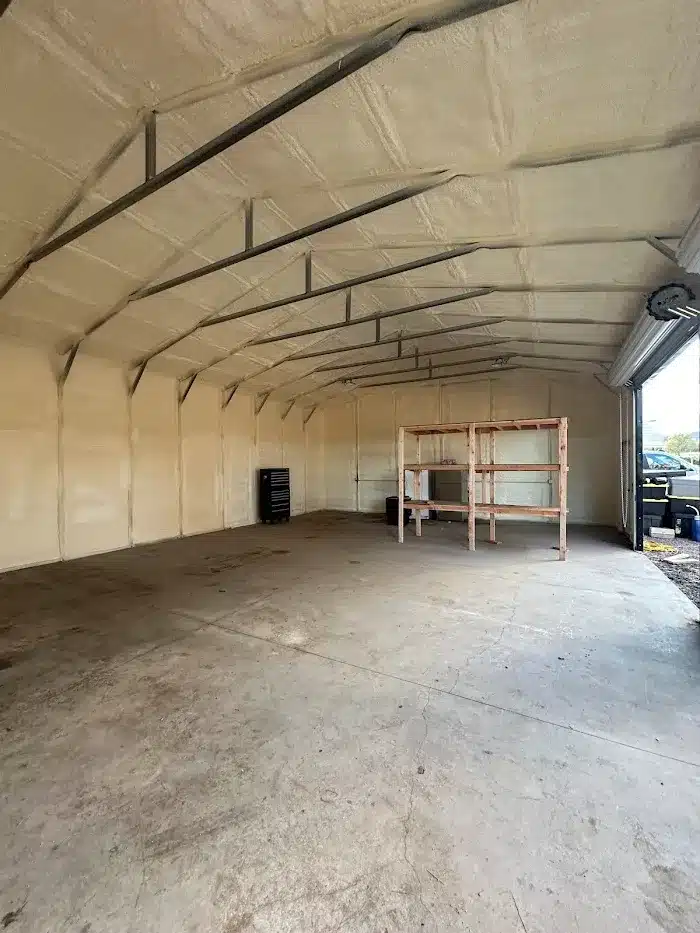
Metal framing conducts heat directly through walls, bypassing standard insulation layers entirely, a problem known as thermal bridging. Because closed-cell foam adheres directly to metal and fills flute spaces, it significantly reduces thermal bridging and helps prevent condensation that can lead to rust.
Rim Joists
The rim joist, where floor joists sit atop the foundation wall, is often a major source of air leakage and is difficult to seal with rigid foam or fiberglass alone. A few inches of closed-cell foam sprayed here creates a tight seal and gives an immediate efficiency boost.
Potential Challenges and Misconceptions
No building material is perfect, and closed-cell spray foam insulation comes with a few trade-offs worth planning around.
Cost
Upfront cost is the biggest hurdle, since it runs significantly higher than fiberglass batts. Focusing only on that initial number is misleading, though. According to the U.S. Department of Energy, heating and cooling account for a substantial share of energy use in a typical U.S. home, and high-performance insulation reduces that load meaningfully over time, often offsetting the higher installation cost through monthly savings.
Installation Quality
Performance depends entirely on the installer. A bad batch, incorrect rig temperature, or improper mixing ratio can cause the foam to shrink, crack, or fail to adhere, and these problems are invisible once the wall is closed up. Always hire certified installers who understand the chemistry and equipment involved.
Off-Gassing
Freshly applied spray foam releases a strong odor and volatile organic compounds. Occupants should stay out of the home during installation and avoid returning until the foam has fully cured and the space has been ventilated, which usually takes 24 to 48 hours. Reputable contractors use low-VOC formulations and confirm air quality before re-entry.
Expert Tip: Always ask your contractor for proof of manufacturer training and a certificate of insurance. Spray foam mishaps are expensive to correct, and an accredited installer significantly reduces your liability exposure. Your contractor is accredited, which protects you from liability if something goes wrong during installation.
Building Codes and Compliance
Building codes have grown stricter around spray foam, and most jurisdictions follow either the International Residential Code (IRC) or the International Energy Conservation Code (IECC).
Thermal Barriers
Spray foam is a plastic, and plastics can burn, so code requires a thermal barrier separating the foam from living space, typically half-inch drywall. In attics or crawl spaces where drywall is not practical, an ignition barrier coating, a specially formulated intumescent paint, is often required instead.
Ventilation Requirements
Because closed-cell spray foam insulation makes a home so airtight, codes often require mechanical ventilation to maintain healthy indoor air quality, usually through an HRV (Heat Recovery Ventilator) or ERV (Energy Recovery Ventilator) that exchanges stale indoor air for fresh outdoor air while recovering heat.
Market Trends
Adoption of spray foam has grown steadily as energy codes tighten. Industry data from the Spray Polyurethane Foam Alliance indicates continued expansion in the North American spray foam market, driven by demand for tighter, more energy-efficient building envelopes and newer, more environmentally friendly blowing agents that lower the product’s global warming potential.
Measuring Success and ROI
Energy Audits
A blower door test performed before and after installation measures a home’s air tightness directly. Homes insulated with closed-cell spray foam insulation typically show a dramatic reduction in air leakage compared to homes with traditional insulation alone.
Utility Bill Analysis
Comparing heating and cooling bills before and after the project, adjusted for weather, should show a clear downward trend if the work was done correctly. Data from the U.S. Energy Information Administration consistently shows that air sealing and insulation upgrades rank among the most cost-effective ways to cut home energy use.
Comfort Metrics
Numbers do not tell the whole story. Success also shows up as fewer cold spots, less drafty flooring, and an HVAC system that cycles less often and runs for shorter periods, which extends equipment life. If you are weighing this investment against other insulation upgrades for your home, exploring open-cell spray foam options can help you compare how each product fits your needs.
Key Takeaways:
- Closed-cell foam requires a higher upfront cost but pays off through long-term energy savings.
- Proper ventilation is non-negotiable once a home is sealed this tightly.
- The installer matters more than the brand. Vet contractors thoroughly before hiring.
Frequently Asked Questions About Closed Cell Spray Foam Insulation
Does closed cell spray foam need a vapor barrier?
No. Closed cell spray foam insulation acts as its own vapor barrier because of its low perm rating, which means moisture cannot easily pass through it. This eliminates the need for a separate plastic sheeting vapor retarder that fiberglass insulation typically requires in many climates.
Can I spray foam insulation over existing insulation?
In most cases, this is not recommended. Old fiberglass or cellulose can trap moisture between itself and the new foam, preventing the foam from bonding properly to the wall sheathing. For best performance, existing insulation should be removed first.
Is spray foam insulation safe for my family?
Once fully cured and off-gassed, closed-cell foam is safe and inert. During curing, it releases fumes that can be harmful in high concentrations, so occupants should stay out of the home during installation until the contractor confirms it is safe to re-enter.
How long does closed cell spray foam last?
Closed cell spray foam insulation is very durable and does not settle, sag, or degrade over time. Protected from UV exposure and physical damage, it can last for the lifetime of the building, often 80 or more years.
Why is closed-cell foam more expensive than other options?
The cost reflects the complex petroleum-based chemical components and the specialized labor and equipment required for proper installation. The higher price reflects the product’s superior performance and longevity compared to traditional insulation types.
Will spray foam insulation make my house too tight?
It can, and that tightness is actually the goal for energy efficiency. This does mean mechanical ventilation becomes necessary to maintain fresh air exchange, which modern building codes account for by requiring ventilation systems in homes sealed this tightly.
Putting Your Spray Foam Strategy Into Action
Choosing an insulation strategy affects your budget, comfort, and indoor air quality for decades. Closed-cell spray foam insulation delivers a high-performance solution that excels at air sealing, moisture resistance, and structural support, particularly in demanding environments like crawl spaces, attics, and metal buildings where traditional insulation tends to fall short.
Success comes down to planning and execution: calculate your expected ROI, make sure your home has adequate ventilation, and hire a contractor who genuinely understands the chemistry and equipment behind the product. To explore the full range of insulation options available for your project, visit All Foam & Insulation to see how the right solution can fit your needs.
Use this guide as a reference as you plan your project. Whether you are building new or retrofitting an existing structure, understanding these principles will help you make decisions that keep your home efficient and comfortable for years to come.
Sources
U.S. Energy Information Administration – the statistical and analytical agency within the U.S. Department of Energy that tracks energy consumption and trends.
Spray Polyurethane Foam Alliance – a trade association providing technical data, safety guidelines, and market information on spray polyurethane foam.
U.S. Department of Energy – official government resource on energy efficiency, including data on heating, cooling costs, and insulation performance.

- Faced vs. Unfaced Fiberglass Batts in Creswell, OR: Performance and Applications Compared - September 11, 2026
- How to Install Fiberglass Batt Insulation Between Floor Joists in Brookings, OR - September 11, 2026
- Fiberglass Batt Insulation Thickness: How Do You Choose the Right Size? - September 9, 2026