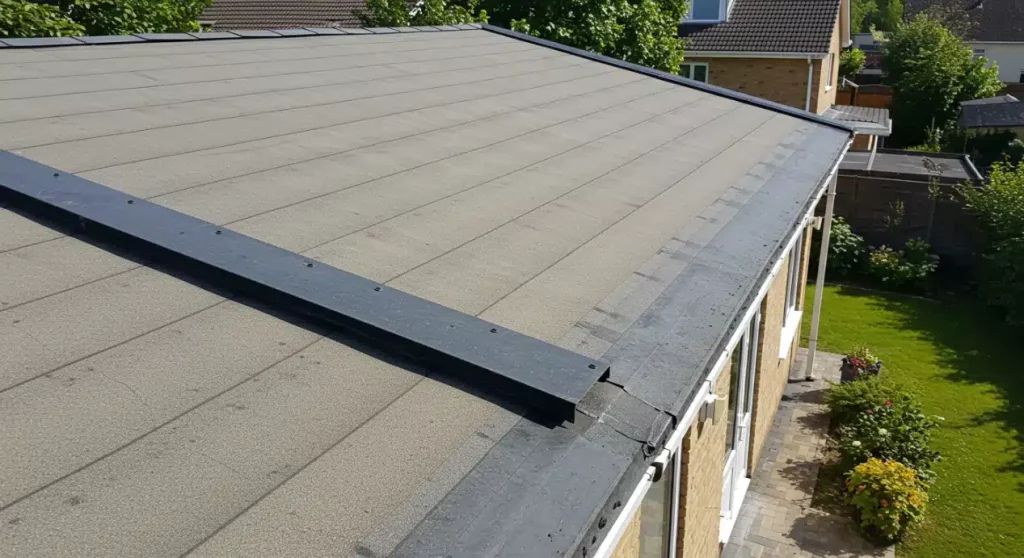
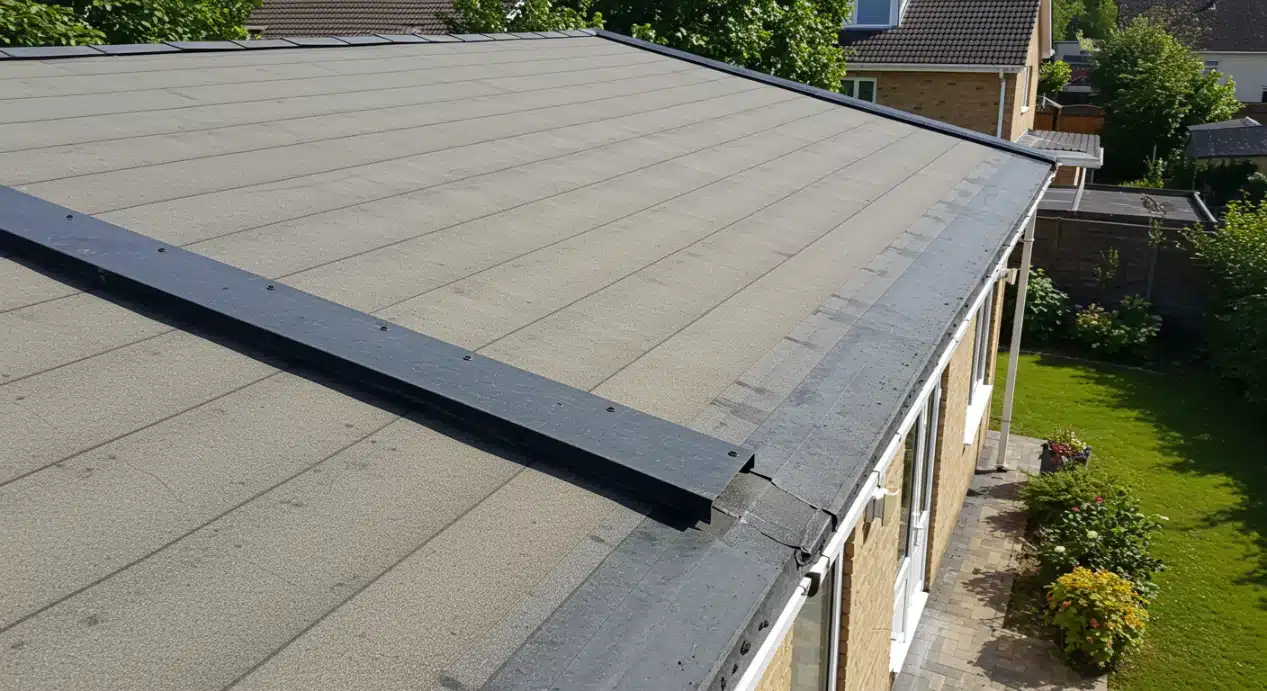
Medford property owners can extend the life of a membrane roof by keeping drainage paths clear to eliminate ponding water, scheduling twice-yearly seam inspections, installing walkway pads around HVAC equipment, and applying protective reflective coatings before the material dries out. Because membrane roofing system relies on watertight heat-welded or glued seams, staying ahead of small punctures and UV degradation prevents water from soaking the underlying insulation board.
TL;DR
- Clear drains and scuppers every autumn to stop water from standing longer than 48 hours.
- Inspect flashings and lap seams every spring and fall to catch micro-gaps early.
- Add protective rubber walkway pads along high-traffic service routes to prevent punctures.
- Apply restorative roof coatings to reflect Medford’s extreme summer sun and stop heat aging.
- Seal minor punctures immediately to protect the structural roof deck from rot.
The Rogue Valley Climate and Flat Roof Lifespans
On a hot July afternoon in Medford, dark or neglected flat roofs can reach surface temperatures above 150 degrees. This intense heat causes the material to expand during the day and contract rapidly as night falls. Over several years, this repeated movement pulls at seams, loosens fasteners, and stresses perimeter flashings.
When winter arrives, steady rains put those stressed seams to the test. If water cannot reach the downspouts quickly, it pools in low spots, slowly working its way into microscopic cracks. Understanding how to manage these local climate stresses is the key to getting 25 to 30 years of reliable protection out of your roofing investment.
Eliminate Standing Water and Keep Drainage Paths Clear
Flat roofs are never completely flat. Building codes require a slight slope, usually at least one-quarter inch per foot, to guide water toward internal drains, scuppers, or gutters.
When leaves, pine needles, and airborne dust build up around roof drains, rainwater backs up. According to technical standards from the National Roofing Contractors Association, water that sits on a flat roof for longer than 48 hours without evaporating or draining qualifies as ponding water.
Ponding water creates multiple risks for low-slope roofs in Medford:
- Standing water magnifies UV sunlight like a lens, speeding up the breakdown of the membrane surface.
- The added weight of trapped water causes the roof deck to sag slightly, creating even deeper low spots.
- Winter freeze-thaw cycles turn standing pools into sheets of ice that pry open lap seams along the edges.
Clearing roof drains, clearing out scupper boxes, and cleaning strainers every spring and autumn ensures water flows off the building as designed.
Schedule Bi-Annual Inspections to Check Seams and Flashings
The open field of a membrane sheet rarely fails first. The vast majority of roof leaks begin at the seams, corners, vent pipes, and parapet walls.
In our area, we recommend inspecting your roof twice a year: once in the spring to evaluate winter storm impact, and once in the fall before the rainy season arrives. During these walkthroughs, look closely at:
- Lap Seams: Check where separate sheets overlap to verify the hot-air weld or seam tape remains firmly bonded.
- Roof Penetrations: Examine the rubber boots and sealants around plumbing vents, electrical conduits, and air conditioning stands.
- Perimeter Edges: Ensure metal coping caps and termination bars along the parapet wall have not worked loose from thermal movement.
Hiring an experienced membrane roofing contractor in Medford to run a blunt seam probe along overlapping edges lets you find and re-weld loose seams months before moisture ever drips through your ceiling.
Control Rooftop Foot Traffic and Protect Service Routes
Mechanical equipment on commercial buildings and multi-family properties is usually located on the roof. HVAC technicians, plumbers, and solar installers walk across the surface with heavy boots, toolboxes, and sharp-edged equipment panels.
You can stop this mechanical damage by laying textured rubber walkway pads along common travel paths. Direct traffic from the roof hatch straight to every rooftop unit. These thick pads absorb impact, provide traction during damp winter mornings, and keep heavy boots from scraping against the waterproof layer.
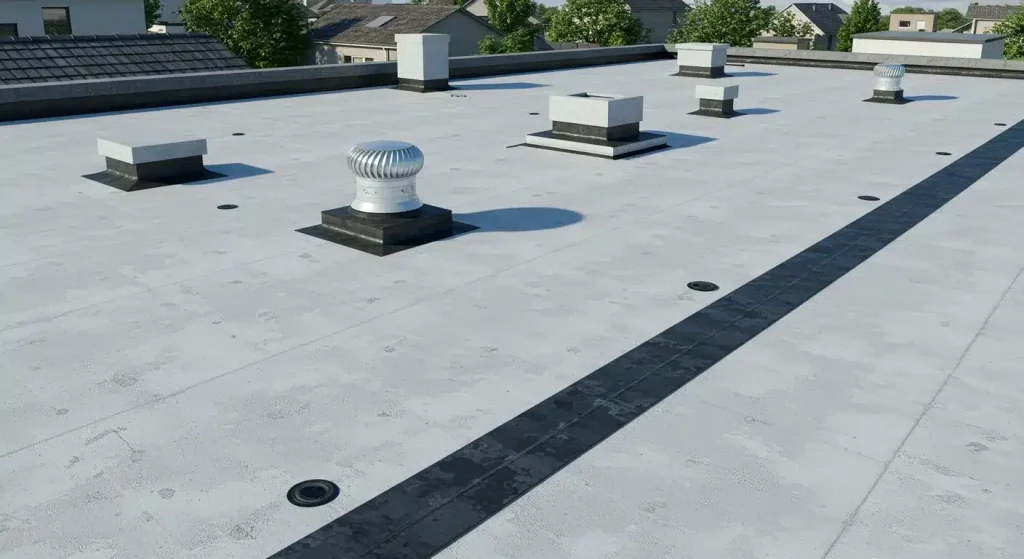
Apply Restorative Coatings to Counter Severe UV Exposure
Over years of exposure to Medford’s direct sun, the plasticizers and oils inside single-ply materials gradually cook out. The material becomes stiff, chalky, and less capable of bending with building movement.
Property owners do not have to wait for a roof to fail before taking action. Applying elastomeric acrylic or silicone roof coatings creates a protective boundary over the existing membrane, adding up to 10 or 15 years of serviceable life to the structure.
Data published by Energy.gov shows that highly reflective cool roof coatings can lower rooftop surface temperatures by up to 50 degrees during peak summer heat. By reflecting solar energy away from the building, these specialized membrane roofing solutions slow down material aging, reduce thermal shock across seams, and cut indoor cooling bills.
Under the commercial structural guidelines maintained by the Oregon Building Codes Division, applying an approved restorative coating over an existing, structurally sound membrane is often classified as maintenance rather than a re-roofing project, saving owners the immense expense of a complete structural tear-off.
Address Small Punctures and Seam Tears Immediately
A single tiny puncture might only let a few tablespoons of water in during a light shower, but ignoring it creates hidden structural damage. Water that slips through a torn seam does not stay in one spot; it travels horizontally through the underlying polyiso or EPS insulation board.
Whenever an inspection turns up a cut, slice, or loose patch, repair it immediately. Proper repairs require cleaning the aged membrane with an approved solvent, priming the surface, and heat-welding a round-cornered patch of compatible membrane material over the damage. Smearing common silicone caulk or asphalt roof cement over a single-ply tear is a temporary fix that often degrades the membrane and makes permanent repairs harder later.
Protect Your Commercial and Residential Roofs With All Foam & Insulation, LLC
Extending the life of a low-slope roof requires consistent care, correct materials, and an understanding of Southern Oregon weather. All Foam & Insulation, LLC helps building owners preserve their roofing systems and avoid early replacement costs.
Contact our team today to schedule your roof evaluation and explore how our complete membrane roofing services can add years of life to your building.
- Phone: (541) 826-9600
- Email: [email protected]
Frequently Asked Questions
How long does a membrane roof typically last in Southern Oregon?
With regular inspections, prompt seam repairs, and clean drainage pathways, single-ply systems like TPO and PVC usually last between 20 and 30 years in Medford.
How often should I have my flat roof inspected in Medford?
Inspect your roof twice a year, ideally in late spring after winter storms and in early autumn before seasonal rainfall and valley fog set in.
What is the biggest cause of membrane roof failure?
Ponding water left unaddressed is the primary cause, as standing water breaks down lap seams, stresses building framing, and accelerates material degradation under direct sunlight.
Can you walk on a membrane roof without damaging it?
Yes, but you should minimize foot traffic and install heavy-duty rubber walkway pads between roof access points and HVAC equipment to prevent accidental punctures.
Does roof coating count as a full roof replacement under Oregon code?
No, restorative coatings are typically categorized as routine building maintenance, allowing owners to extend roof life without triggering costly structural tear-off requirements.
Sources
- National Roofing Contractors Association – Official industry standards for low-slope roof maintenance, seam inspections, and ponding water mitigation.
- Energy.gov – U.S. Department of Energy guidelines on cool roof performance, solar reflectance, and thermal expansion reduction.
- Oregon Building Codes Division – Oregon Structural Specialty Code provisions

- How Can Medford Property Owners Extend the Lifespan of a Membrane Roofing System? - November 4, 2026
- What Factors Can Reduce the R-Value of Fiberglass Batts in Medford, OR? - November 4, 2026
- Fiberglass Batt vs. Roll Insulation in Ashland, OR: What’s the Difference? - October 15, 2026