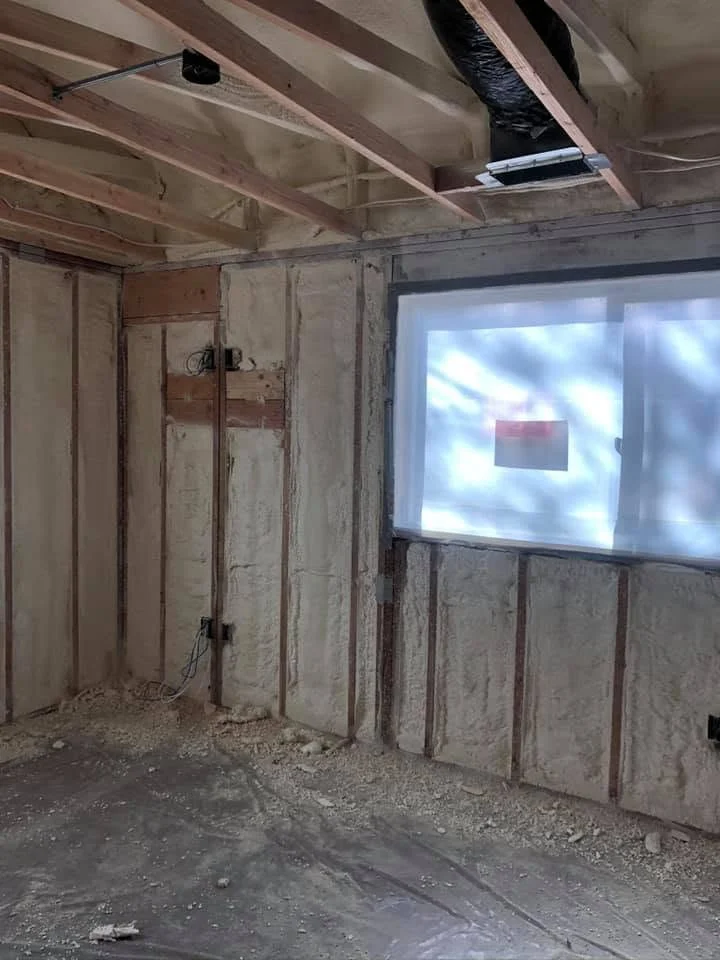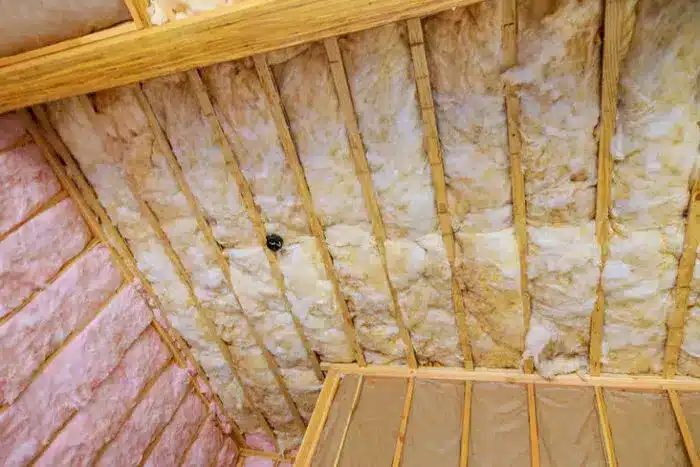
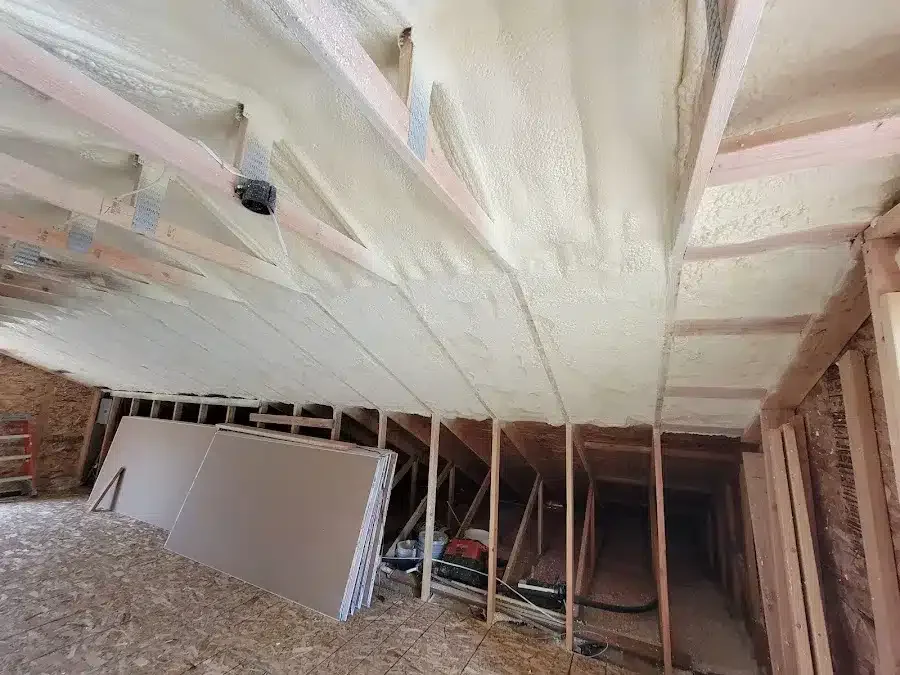
Closed-cell spray foam can improve a wall or roof’s thermal performance, but it does not automatically eliminate thermal bridging. The foam can insulate the cavities well while studs, plates, headers, corners, and rafters still create paths for heat flow. That means the foam’s R-value is not the same thing as the R-value of the finished assembly.
TL;DR
- Closed-cell spray foam has a high R-value per inch, but framing can still reduce whole-wall performance.
- Thermal bridging happens where heat moves through framing and other conductive parts of the assembly.
- Continuous insulation outside the framing can address those bridges more directly.
- Medford, OR is classified as IECC Climate Zone 4C, so the insulation strategy should be considered as part of the complete building assembly.
- We recommend evaluating the actual assembly, product, thickness, and code requirements rather than choosing foam based on an R-value alone.
What Is Thermal Bridging in a Spray-Foamed Assembly?
Thermal bridging occurs when heat finds an easier path through part of a building assembly than through the surrounding insulation. In a framed wall, the insulated cavity and the wood framing do not resist heat flow in exactly the same way.
A useful way to picture it is to imagine insulation between the studs and the studs themselves. The foam slows heat movement through the cavity, but the framing remains part of the wall. Building Science Corporation shows that thermal bridging through framing, including the top and bottom plates, can reduce the whole-wall performance of a spray-foam wall. Understanding closed-cell spray foam insulation and its thermal properties can help explain how insulation contributes to overall wall performance.
That distinction matters because we should judge insulation by how the completed assembly performs, not just by the material inside one part of it.
Does Closed-Cell Spray Foam Eliminate Thermal Bridging?
No. Closed-cell spray foam fills the cavity, but it does not automatically create a continuous thermal layer over the framing.
In a Building Science Corporation analysis of a 2×6 wall with high-density spray foam, the installed insulation was about R-30, while the modeled whole-wall value was approximately R-20 after thermal bridging was included. The example shows why a high insulation R-value cannot be treated as the final wall R-value. Building Science Corporation also notes that thermal bridging through the framing reduces the effectiveness of the spray foam.
We should also be clear about what this does not mean. Closed-cell foam is not ineffective. It can deliver a high level of cavity insulation while also helping with air sealing and moisture control. The issue is that framing remains part of the heat-flow path.
Why R-Value and Whole-Wall Performance Are Not the Same
The R-value assigned to an insulation material describes that material under specified conditions. A whole wall contains much more than insulation. It can include studs, plates, sheathing, drywall, exterior insulation, fasteners, openings, and other interfaces.
That is why two walls using insulation with the same nominal R-value can perform differently.
For us, the practical takeaway is simple: a higher foam R-value does not automatically mean the entire wall has a proportionally higher thermal resistance. Framing layout and the location of the insulation matter too.
A reader comparing insulation options should ask for the performance of the assembly, not just the advertised R-value of the foam.
Where Do Thermal Bridges Occur in Walls and Roofs?
Thermal bridges can occur anywhere a more conductive building component crosses or bypasses the insulation layer.
Common areas include:
- Wood studs, which run through the insulated cavity
- Top and bottom plates, where framing remains continuous
- Headers and corners, where additional framing can reduce insulated area
- Rim joists, where the wall meets the floor system
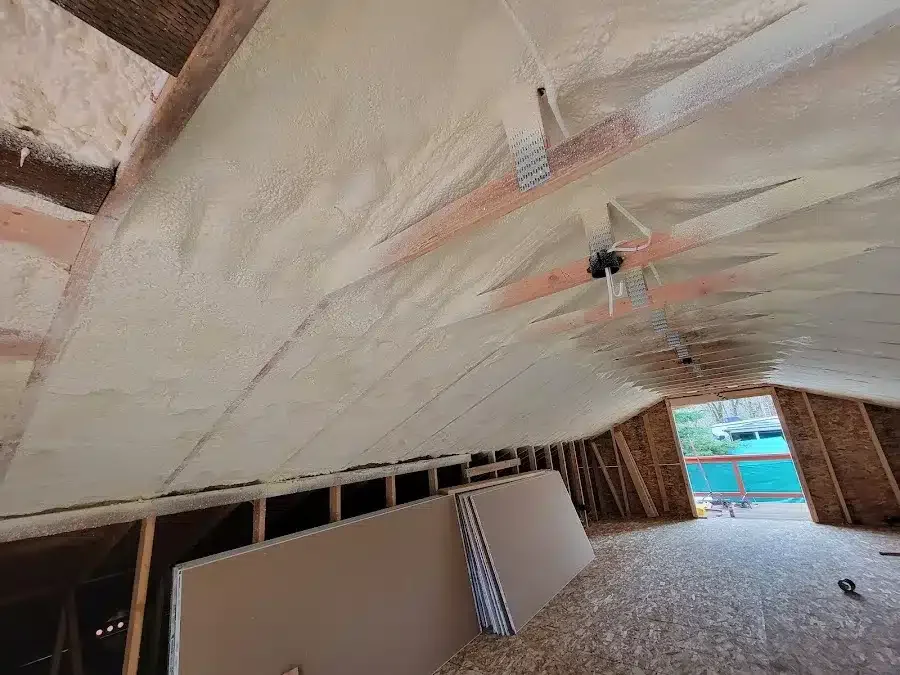
- Rafters and other roof framing, which can create similar bypass paths
These locations matter because adding more insulation inside a cavity does not necessarily create continuity across the framing.
Can Continuous Exterior Insulation Reduce Thermal Bridging?
Yes, when the assembly is designed for it. Continuous exterior insulation puts a layer of insulation outside the structural framing instead of leaving the framing exposed as part of the main heat-flow path.
That gives the assembly a different thermal strategy than cavity-only insulation.
| Assembly Approach | Main Role | Thermal-Bridge Control |
|---|---|---|
| Closed-cell foam in cavities | Insulates cavities and can provide air and moisture control | Framing bridges remain |
| Continuous exterior insulation | Adds insulation across the outside of framing | Better thermal continuity |
| Hybrid approach | Combines cavity insulation with exterior insulation | Can address both cavity and framing paths |
We would not treat one approach as automatically right for every building. The wall or roof design, available space, moisture conditions, code requirements, and project goals all matter.
What Installation Factors Can Affect Closed-Cell Spray Foam Performance?
The product itself is only part of the result. Installation has to match the product’s requirements and the planned assembly.
The Spray Polyurethane Foam Alliance (SPFA) reports that typical closed-cell foam SPF has an R-value of about R-5.8 to R-6.9 per inch, while also stressing that installers should use the specific product data sheet for its actual properties.
That matters because we should not assume every closed-cell foam product has the same performance.
Application quality matters too. Gaps, shrinkage, inconsistent coverage, or an installation that does not reach the specified thickness can affect the intended insulation and air-sealing performance. SPFA also states that SPF application is a technical process and that occupants should stay out of the work area during and immediately after application.
What Does Medford’s Climate Zone 4C Mean for Spray Foam Performance?
Medford has a specific local climate context that belongs in the insulation discussion. Research published by the National Renewable Energy Laboratory lists Medford, Oregon, as IECC Climate Zone 4C.
That does not mean every building in Medford needs the same insulation assembly. It means the climate should be considered alongside the wall or roof design, moisture control strategy, and thermal performance goals.
For residential projects, Oregon’s 2023 Oregon Residential Specialty Code, Chapter 11, regulates the building thermal envelope and related energy-efficiency requirements.
So when we evaluate closed-cell spray foam in Medford, OR, we need to look at the actual assembly and the applicable code path rather than rely on a generic thickness or R-value claim.
Get a Project-Specific Closed-Cell Spray Foam Assessment
If you’re planning insulation work in Medford, we can help you look at the actual application instead of judging the project by foam R-value alone. Ask All Foam & Insulation, LLC about closed-cell spray foam and how your wall, roof, or other assembly should be evaluated.
All Foam & Insulation Medford, OR Phone: (541) 826-9600 Email: [email protected]
Frequently Asked Questions About Thermal Bridging and Closed-Cell Spray Foam
Can Closed-Cell Spray Foam Reduce Thermal Bridging?
Yes, it can improve the insulated portions of an assembly, but filling the cavities does not automatically remove conductive paths through the framing.
Why Can Studs Still Show Up on Thermal Imaging After Spray Foam?
Framing remains part of the wall assembly, so the temperature pattern over a stud can differ from the insulated cavity. Thermal imaging can show a temperature difference, but the image alone does not identify the exact cause.
Is Continuous Exterior Insulation Better for Thermal Bridging?
It is specifically useful for creating a more continuous insulation layer across framing. Whether it is the right choice depends on the complete assembly and project requirements.
Does a Higher Closed-Cell Foam R-Value Always Mean Better Whole-Wall Performance?
No. The whole wall also includes framing and other components, so material R-value and whole-wall performance should be considered separately.
Does Medford’s Climate Zone 4C Change How We Should Evaluate Insulation?
It provides an important climate context, but it does not create one universal insulation solution. We still need to consider the specific building assembly, moisture control, and applicable Oregon requirements.
Sources
- Building Science Corporation – Whole-wall performance, thermal bridging, and spray-foam wall assembly analysis.
- Spray Polyurethane Foam Alliance – Closed-cell SPF properties, application, air sealing, safety, and product-data guidance.
- National Renewable Energy Laboratory – IECC climate-zone classification identifying Medford, Oregon as Climate Zone 4C.

- How Does Thermal Bridging Affect Closed-Cell Spray Foam Performance in Medford, OR? - October 13, 2026
- Why Do Medford Commercial Buildings Benefit From Closed-Cell Spray Foam? - October 13, 2026
- Faced vs. Unfaced Fiberglass Batts in Creswell, OR: Performance and Applications Compared - September 11, 2026