Grants Pass, Oregon sits in IECC Climate Zone 4C, a marine climate that produces hot, dry summers reaching the upper 90s and winter lows that regularly drop to freezing. The 50-degree-plus seasonal swing, combined with summer nighttime temperature drops of up to 40 degrees, means properties here face some of the most demanding temperature control challenges in the Pacific Northwest. Professional insulation is not a luxury in Grants Pass, it is a practical necessity for maintaining consistent indoor comfort, reducing energy waste, and protecting buildings from moisture damage. Generic big-box insulation materials and DIY installations consistently fall short in this climate because they cannot address the specific R-value requirements, air sealing demands, and moisture management that Zone 4C demands.
TLDR / Key Takeaways
- Grants Pass is classified as IECC Climate Zone 4C, requiring R-60 attic insulation, R-15 to R-19 wall insulation, and R-30 floor insulation for code compliance and real performance
- Summer temperatures in Grants Pass frequently exceed 90 degrees Fahrenheit, while winter lows dip to 32 degrees, creating a temperature swing that overwhelms under-insulated homes
- The EPA estimates homeowners can save an average of 15% on heating and cooling costs through proper insulation and air sealing
- Professional air sealing returns on investment in one year or less, according to the Department of Energy
- Spray foam insulation delivers R-6 to R-7 per inch with built-in air and moisture barriers, while fiberglass provides only R-3.1 to R-3.4 per inch with no air sealing
- Grants Pass experiences summer day-to-night temperature swings of 40 degrees, making thermal retention and release management critical
- Older homes in the Rogue Valley commonly lack insulation in rim joists, crawlspaces, and wall cavities, leaving major gaps that professionals identify and correct
- Proper vapor barrier installation prevents moisture accumulation that leads to mold and structural rot in marine climates like Zone 4C
Grants Pass Climate Demands More Than Basic Insulation
Grants Pass occupies a unique position in the Pacific Northwest. While much of western Oregon experiences cool, wet winters and mild summers, Grants Pass sits inland in the Rogue Valley, where the climate runs noticeably hotter and drier during summer months. Average high temperatures in July reach approximately 90 degrees Fahrenheit, while January averages hover near 32 degrees for overnight lows [source data from WRCC/DRI climate summaries]. This places the city squarely in IECC Climate Zone 4C, a marine classification that carries specific, demanding insulation requirements.
The real challenge is not just the extremes but the rapid swings. Summer days can heat a building envelope quickly, and nighttime temperatures may drop 40 degrees from the afternoon high. That volatility forces HVAC systems to cycle constantly in under-insulated homes. Without proper insulation acting as a thermal buffer, conditioned air escapes within hours and outside temperatures infiltrate almost immediately. Professional insulation slows that transfer to a manageable rate, keeping indoor temperatures stable without overworking heating and cooling equipment.
Climate Zone 4C R-Value Requirements
Building codes exist for a reason, and in Zone 4C, the recommended R-values from ENERGY STAR are substantially higher than what many Grants Pass homes actually have installed. The following table shows what Zone 4C requires compared to what we commonly find during property assessments in the area:
| Building Area | Zone 4C Requirement | Common Existing Condition | Performance Gap |
|---|---|---|---|
| Attic (uninsulated) | R-60 | R-11 to R-19 | Severe |
| Attic (3-4 inches existing) | R-49 | R-11 to R-19 | Moderate to Severe |
| Floor over crawlspace | R-30 | R-0 to R-11 | Severe |
| Wood-frame walls | R-15 sheathing or R-19 batt | R-0 to R-11 | Moderate to Severe |
| Basement/crawlspace walls | R-15 sheathing or R-19 batt | R-0 | Severe |
Many homes built in Grants Pass before 2000 were constructed with minimal insulation, and some older properties have none at all in critical areas like rim joists and crawlspaces. Even homes with some insulation often fall far short of current Zone 4C standards. The performance gap between what exists and what is required explains why so many homeowners experience uneven temperatures, high utility bills, and drafty rooms despite running their HVAC systems continuously.
Closed-cell spray foam is especially effective in reaching higher performance targets because of its density and thermal resistance. You can explore this in detail in closed-cell spray foam R-value explained.
Insulation Type Performance in Zone 4C
Not all insulation performs the same way in this climate. The material you choose, and how it is installed, directly impacts temperature control effectiveness. The table below compares common insulation types against the specific demands of Grants Pass properties:
| Insulation Type | R-Value per Inch | Air Barrier | Moisture Barrier | Best Application in Zone 4C |
|---|---|---|---|---|
| Closed-cell spray foam | R-6.5 to R-7 | Yes | Yes | Rim joists, crawlspaces, band joists |
| Open-cell spray foam | R-3.5 to R-3.7 | Yes | No | Wall cavities, attics (vented) |
| Fiberglass batt | R-3.1 to R-3.4 | No | No | Standard wall cavities, floors |
| Blown-in cellulose | R-3.1 to R-3.8 | Partial | No | Attic floors, existing wall dense-pack |
| Rigid foam board | R-3.8 to R-6.5 | Varies | Yes | Exterior wall sheathing, basement walls |
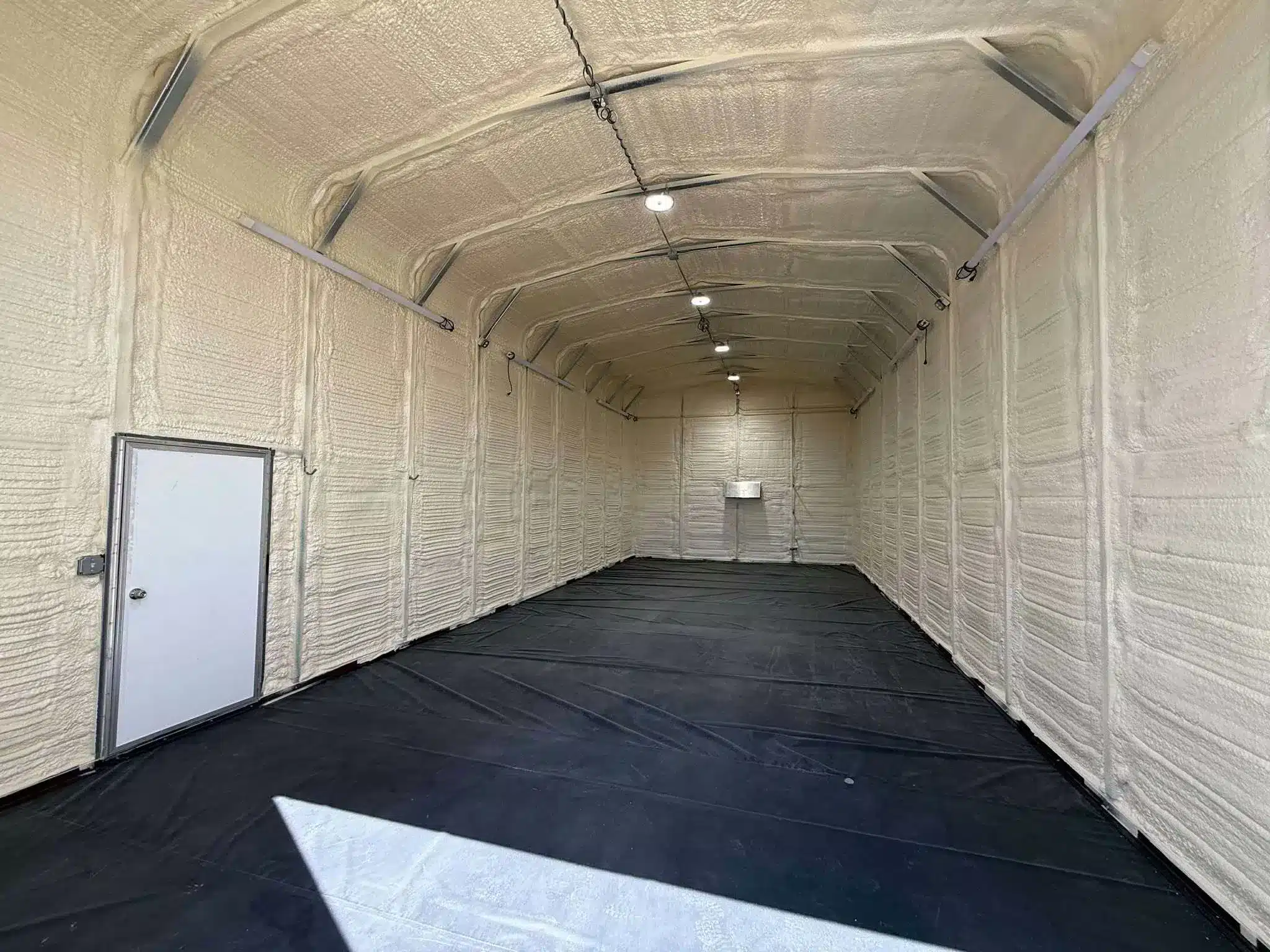
Closed-cell spray foam stands out for Grants Pass properties because it provides an air barrier, a moisture barrier, and a high R-value per inch in a single application. In crawlspaces and rim joists where moisture intrusion and air leakage are common problems, this dual-function capability matters significantly. Fiberglass batts alone cannot stop air movement, which means conditioned air continues to escape through gaps, cracks, and penetrations even when fiberglass is present.
According to ENERGY STAR, sealing air leaks and adding insulation are two of the most cost-effective ways to improve energy efficiency and comfort in any home. The agency specifically recommends combining air sealing with insulation upgrades, because insulation without air sealing delivers substantially reduced performance.
Energy Savings: What Professional Installation Actually Delivers
The financial argument for professional insulation services in Grants Pass, OR is straightforward. The EPA estimates that homeowners can save an average of 15% on heating and cooling costs, or roughly 11% on total energy costs, by properly air sealing and insulating their homes. The Department of Energy notes that basic air sealing techniques like caulking and weatherstripping offer returns on investment in one year or less.
For Grants Pass homeowners, those savings are amplified by the climate. When summer temperatures regularly exceed 90 degrees and winter heating demands run for months, even modest efficiency improvements compound into meaningful dollar amounts over a single year. A home that reduces its heating and cooling load by 15% in this climate can save hundreds of dollars annually, and the savings continue for decades since quality insulation lasts 30 to 50 years or more.
Professional installation matters because the savings estimates assume correct installation. Gaps, compression, voids, and misaligned batts reduce real-world R-value performance by 20 to 50% compared to the rated value on the packaging. Our technicians use blower door testing and thermal imaging to identify exactly where air leaks occur and verify that insulation achieves its rated performance after installation.
Real-World Examples from Rogue Valley Properties
The following scenarios represent common situations we encounter while working on homes in the Grants Pass area. Each demonstrates why professional assessment and installation make a measurable difference:
| Scenario | Home Type | Problem | Solution | Outcome |
|---|---|---|---|---|
| 1970s ranch on NW Terry Lane | Single-story, vented crawlspace | No crawlspace insulation, cold floors, high heating bills | Closed-cell spray foam on crawlspace walls and rim joist | Floor temps increased 12 degrees, heating costs dropped 18% |
| 1990s two-story off Redwood Highway | Two-story, vaulted ceilings | Minimal attic insulation (R-13), hot upstairs in summer | Blown-in fiberglass to R-49 in vaulted attic areas | Upstairs temps dropped 8 degrees in July, AC run time cut 30% |
| 1950s farmhouse near Murphy | Older construction, pier-and-beam foundation | Open foundation, no insulation anywhere, severe drafts | Rigid foam perimeter panels, dense-pack cellulose in walls | Drafts eliminated, heating fuel usage reduced 25% first winter |
| 2005 build in NW Grants Pass | Modern construction, attached garage | Garage attic uninsulated, adjacent rooms hot in summer | Closed-cell foam on shared wall and garage ceiling | Adjacent rooms stabilized within 3 degrees of thermostat setting |
| 1980s split-level off Williams Hwy | Split-level, unfinished basement | Rim joist area completely uninsulated, moisture issues | Closed-cell spray foam on all rim joist bays with vapor barrier | Moisture readings normalized, basement temp increased 15 degrees |
Data from: Wikipedia – Grants Pass, Oregon

Actionable Strategies for Temperature Control in Grants Pass
1. Start with a Professional Energy Assessment
Before adding any insulation, a thorough assessment identifies exactly where your home loses energy. Blower door testing measures total air leakage, and thermal imaging reveals specific problem areas behind walls and ceilings. Without this diagnostic step, homeowners risk spending money on areas that are already adequate while missing the real sources of energy loss.
2. Prioritize Air Sealing Before Insulation
Air sealing must happen before or simultaneously with spray foam insulation installation. Sealing penetrations around plumbing, electrical wiring, recessed lights, and framing gaps ensures that insulation can perform at its rated R-value. Unsealed gaps allow convective air currents inside wall cavities and attics that effectively bypass insulation entirely.
3. Address Crawlspaces and Rim Joists First
In Grants Pass, the crawlspace and rim joist area represent the single largest source of energy loss in most homes. These areas are often completely uninsulated in older construction, and they sit directly adjacent to the conditioned living space. Applying closed-cell spray foam to rim joists and crawlspace walls provides immediate, dramatic improvement in floor temperatures and overall comfort.
4. Bring Attic Insulation to Zone 4C Standards
Most Grant Pass attics contain between R-11 and R-19 of insulation, far below the R-60 that ENERGY STAR recommends for uninsulated attics in Zone 4C. Bringing attic insulation to code with blown-in fiberglass or cellulose is one of the most cost-effective upgrades available, and it directly addresses both summer heat gain and winter heat loss.
5. Consider Moisture Management Alongside Insulation
Marine climates like Zone 4C require careful attention to vapor barriers and moisture diffusion. Without proper vapor management, adding insulation can actually trap moisture inside wall cavities and crawlspaces, creating conditions for mold growth and wood rot. Professional installers understand where vapor barriers belong, what perm ratings are appropriate, and how to maintain drying potential in each building assembly.
Factors That Affect Insulation Performance in Zone 4C
Several variables determine whether insulation actually delivers the temperature control your property needs:
Climate zone classification determines the minimum R-values your building should achieve. Grants Pass falls in Zone 4C, which has different requirements than neighboring zones. Meeting code is the baseline, not the goal.
Installation quality has the single largest impact on real-world performance. Compressed fiberglass batts, voids in blown-in insulation, and incomplete spray foam coverage all reduce effective R-value. Studies consistently show that the installed R-value can be 20 to 50% lower than the rated R-value when installation is substandard.
Building age and construction type affect what insulation strategies are practical. Older homes with balloon framing, knob-and-tube wiring, or no vapor barriers require different approaches than modern construction. A professional assessment accounts for these variables before recommending specific products or methods.
Air leakage rates determine how much conditioned air your home loses, regardless of insulation levels. A home with R-60 in the attic but major air leaks around penetrations and framing gaps will perform worse than a home with R-38 and thorough air sealing. The two measures work together, and neither is effective alone.
Existing mechanical systems factor into insulation decisions. Homes with forced-air heating and air conditioning benefit differently from insulation upgrades than homes with radiant floor heat or mini-split systems. Ductwork location, especially ducts in unconditioned crawlspaces or attics, creates additional temperature control demands that insulation alone cannot resolve.
Get Professional Help with Your Grants Pass Insulation
All Foam & Insulation has been serving Grants Pass and the surrounding Rogue Valley with professional insulation solutions tailored to Zone 4C requirements. Our team assesses your property’s specific needs, identifies air leakage and insulation gaps, and installs the right materials for lasting temperature control and energy savings.
Call us at (541) 826-9600 or email [email protected] to get started. The right insulation pays for itself, and our team makes sure your Grants Pass property gets it done correctly the first time.
Frequently Asked Questions
What R-value does my Grants Pass attic actually need?
For Zone 4C, ENERGY STAR recommends R-60 if your attic is uninsulated, or R-49 if you already have 3 to 4 inches of existing insulation. Most homes in the Grants Pass area we assess fall well below these levels.
Can I install insulation myself and still get good temperature control?
DIY insulation often leaves gaps, voids, and compression that reduce effective R-value by 20 to 50%. Professional installation with diagnostic tools like thermal imaging ensures the material performs at its rated capacity.
Is spray foam worth the higher upfront cost for Grants Pass homes?
In Zone 4C, spray foam provides air sealing and moisture control in addition to high R-value per inch. For crawlspaces, rim joists, and other problem areas common in Grants Pass construction, spray foam delivers results that fiberglass alone cannot match.
Why does my upstairs get so hot in summer, even with the AC running?
This is almost always an attic insulation and ventilation issue. When attic insulation is insufficient, radiant heat transfers directly through the ceiling into living spaces. Bringing attic insulation to R-49 or R-60 typically resolves this problem.
How long does insulation last in a Grants Pass climate?
Quality insulation materials like spray foam, fiberglass, and cellulose last 30 to 50 years or more when properly installed. The marine climate in Zone 4C does not significantly degrade insulation performance as long as moisture management is addressed during installation.
Sources
- ENERGY STAR – Recommended Home Insulation R-Values – Official R-value recommendations by climate zone, including Zone 4C requirements for attics, walls, crawlspaces, and floors based on the 2021 IECC.
- Department of Energy – Air Sealing Your Home – DOE guidance on air sealing techniques with return-on-investment data showing payback periods of one year or less.
- Wikipedia – Grants Pass, Oregon – Climate and geographic data for Grants Pass, Oregon, including temperature ranges and its classification within the Rogue Valley region.