Adding insulation to your home and still feeling cold is one of the most frustrating experiences a homeowner can face. The good news is that this problem almost always comes down to a handful of common, correctable issues. The most frequent culprit is air sealing, which, according to the Department of Energy, accounts for 25% to 40% of the energy used for heating and cooling in a typical home. If air leaks were not addressed before insulation was installed, your new insulation is working with one hand tied behind its back. Other leading causes include using the wrong insulation type for your climate zone, incomplete coverage, thermal bridging through framing members, and an HVAC system that cannot keep up with the improved building envelope. The fix starts with identifying exactly where heat is escaping and applying the right combination of air sealing, insulation upgrades, and mechanical system adjustments.
Key Takeaways
- Air leakage can account for 25% to 40% of heating and cooling energy loss, making air sealing the single most important step before or alongside any insulation project
- Adding insulation without sealing air leaks first is like wearing a thick winter coat with the zipper open, since drafts can bypass insulation entirely
- The DOE recommends specific R-values by climate zone, ranging from R-30 in warm zones to R-60 in cold zones for attics, and many homes fall short of these targets
- Thermal bridging through wood studs and framing can reduce a wall assembly’s actual R-value by 20% or more compared to the rated insulation value
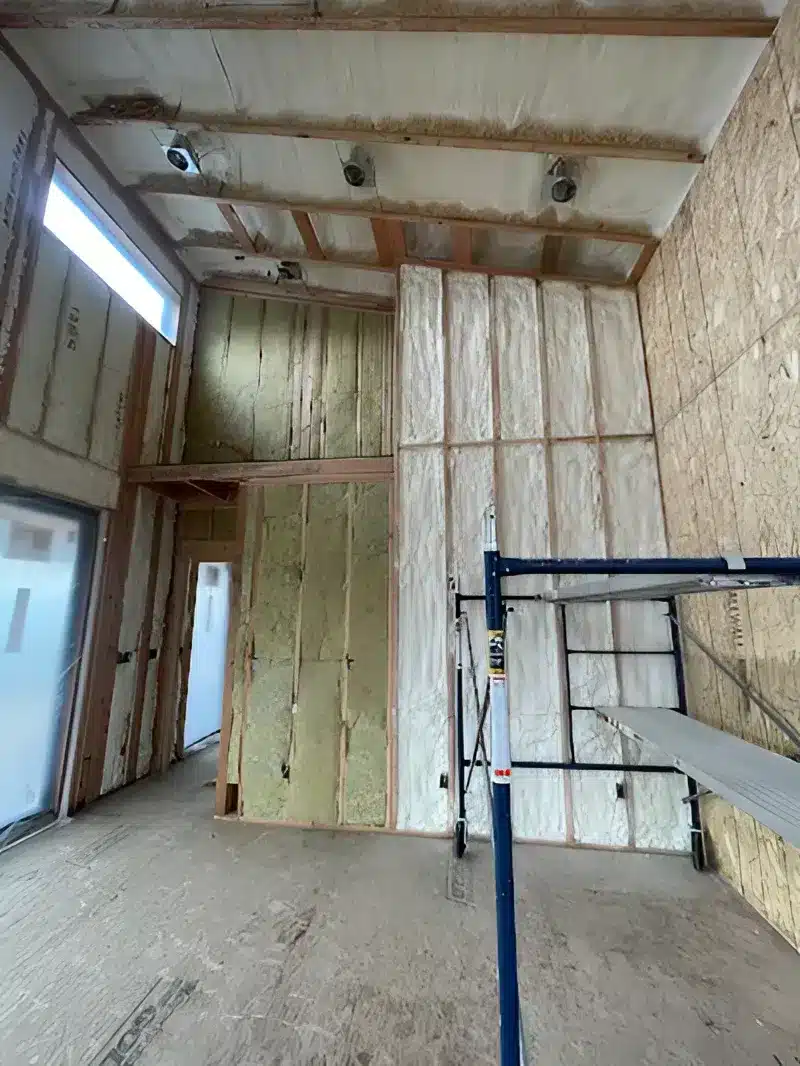
- Spray foam insulation provides both an air barrier and thermal resistance in a single step, making it one of the most effective solutions for eliminating drafts and heat loss
- A blower door test is the most reliable diagnostic tool for measuring air leakage rates and pinpointing where heat is escaping
- HVAC sizing, duct leakage, and poor airflow distribution can all make a well-insulated home feel cold, even when the building envelope is solid
Why Adding Insulation Alone Is Not Enough
Many homeowners assume that piling more insulation into an attic or wall cavity will automatically solve comfort problems. In practice, insulation only resists conductive heat flow through the material itself. It does nothing to stop air from moving through gaps, cracks, and penetrations in the building envelope. According to ENERGY STAR, the order of operations matters: air sealing should be completed before adding insulation to maximize both energy savings and comfort.
Think of it this way. Warm indoor air is driven outward by pressure differences created by wind, stack effect, and mechanical systems. That warm air finds every crack, gap, and penetration, carrying heat and moisture with it. Insulation sitting in a cavity cannot stop this convective movement. Only a properly installed air barrier, combined with insulation, creates an effective thermal envelope.
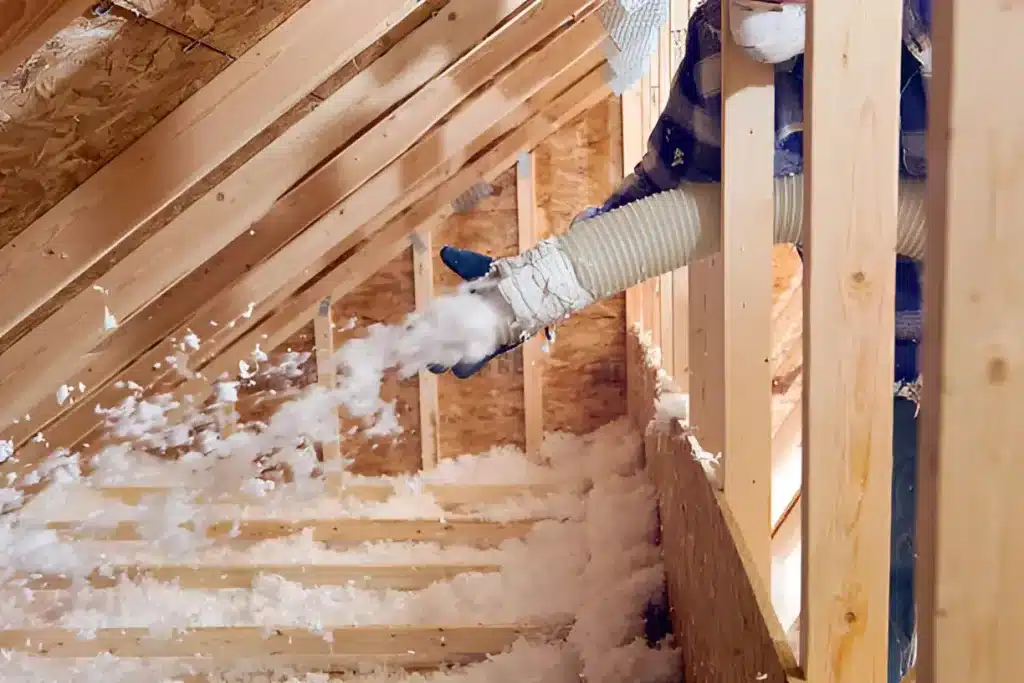
The Building Science Corporation’s attic air sealing guide identifies dozens of common air leakage locations in attics alone, including top plate penetrations, chimney chases, recessed light housings, plumbing stacks, duct boots, and dropped soffits. Any one of these can allow enough air movement to render the surrounding insulation ineffective.
The Air Sealing Problem
Air sealing is the missing link in most insulation upgrades. Without it, insulation delivers a fraction of its rated performance. The DOE’s own guidance states that proper air sealing and moisture control are every bit as important to home energy efficiency as the insulation itself.
Common air leakage points include:
- Attic floor penetrations: Electrical wiring holes, plumbing vents, and chimney chases are direct pathways for warm air to escape into the attic
- Recessed can lights: Older IC-rated and non-IC-rated fixtures are notorious for allowing significant air leakage
- Dropped soffits and bulkheads: These architectural features create hidden cavities that connect directly to the attic unless sealed
- Top plate gaps: The joint between the top wall plate and the drywall ceiling is a major leakage path
- Kneewall areas: In homes with finished attic spaces or bonus rooms, the kneewall area often lacks both air sealing and adequate insulation
- Basement and crawlspace rims: The band joist area at the top of the foundation is one of the leakiest locations in any home
How Insulation Type Affects Performance
Not all insulation materials perform the same way, and selecting the right type for your climate and application makes a measurable difference in comfort. The DOE recommends specific R-values based on climate zone, and the type of insulation you choose determines how much thickness is required to reach those targets.
Insulation Performance Comparison
| Insulation Type | R-Value per Inch | Air Barrier | Moisture Barrier | Best Application |
|---|---|---|---|---|
| Closed-cell spray foam | R-6.5 to R-7 | Yes | Yes (Class II vapor retarder) | Walls, crawlspaces, rim joists, cathedral ceilings |
| Open-cell spray foam | R-3.7 to R-3.8 | Yes | No | Wall cavities, attics (vented assemblies) |
| Fiberglass batts | R-3.1 to R-3.4 | No | No | Standard wall cavities, floors, attics |
| Blown cellulose | R-3.2 to R-3.8 | Partial (dense-pack) | No | Attic floors, existing wall cavities (dense-pack) |
| Rigid foam board (XPS) | R-5.0 | No | Yes | Continuous exterior insulation, basement walls |
| Mineral wool batts | R-3.3 to R-4.2 | No | No | Walls, fire-rated assemblies, sound control |
Spray foam insulation stands apart because it expands to fill cavities completely and creates both an air barrier and a thermal barrier simultaneously. This dual function eliminates the air leakage problem that undermines fiberglass, cellulose, and mineral wool when they are installed without a separate air barrier.
DOE Recommended R-Values by Climate Zone
| Climate Zone | Attic (Uninsulated) | Attic (Existing 3-4 in.) | Floor Over Unconditioned Space | Wood Frame Wall |
|---|---|---|---|---|
| Zone 1-2 | R-30 to R-60 | R-25 to R-38 | R-13 | R-13 to R-20 |
| Zone 3 | R-49 to R-60 | R-38 to R-49 | R-19 | R-20 or R-13 + R-5 CI |
| Zone 4 | R-60 | R-49 | R-19 to R-30 | R-20 + R-5 CI |
| Zone 5-6 | R-60 | R-49 | R-30 | R-20 + R-5 CI |
| Zone 7-8 | R-60 | R-49 | R-38 | R-20 + R-5 to R-20 CI |
CI = Continuous Insulation applied to the exterior of the wall assembly.
Many homes in colder climate zones (4 through 8) have attic insulation levels far below the DOE-recommended minimum of R-60. If your home was built before modern energy codes, you may have as little as R-11 to R-19 in the attic, which falls well short of the R-49 to R-60 target.
Thermal Bridging: The Hidden Heat Loss
Thermal bridging occurs when framing materials like wood studs, joists, and rafters create pathways for heat to bypass the insulation in between them. Wood has an R-value of approximately R-1 per inch, which is roughly one-third that of common cavity insulation. In a standard 2×6 wall with R-19 fiberglass batts, the studs create continuous heat highways that lower the whole-wall R-value to approximately R-13.7, a reduction of about 28% from the nominal insulation rating.
In steel-framed construction, the problem is even more severe. Steel conducts heat at a much higher rate than wood, and linear thermal bridges can increase heat transmittance through the envelope by up to 30% or more, according to WBDG research.
Spray foam insulation reduces thermal bridging because it adheres directly to framing members and fills gaps around them completely. For existing homes where spray foam is not practical, adding continuous rigid foam insulation to the exterior of wall assemblies interrupts thermal bridges and raises the effective R-value of the entire wall system.
Real-World Scenarios Where Insulation Was Not Enough
We see these patterns repeatedly in the field. Here are five scenarios that illustrate why insulation alone sometimes fails to deliver comfort:
| Scenario | Home Type | Problem | Solution | Outcome |
|---|---|---|---|---|
| Cold bonus room above garage | 2005 two-story | Kneewall lacked air sealing; fiberglass batts were falling out of place | Dense-packed cellulose with rigid foam on kneewall plus air sealing | Room temperature rose 8°F; drafts eliminated |
| Drafty living room after attic upgrade | 1970s ranch | Blown-in fiberglass added to attic but no air sealing done first | Sealed top plates, chimney chase, and duct boots with spray foam; added R-20 blown insulation | Heating costs dropped 18%; even temperatures throughout home |
| Cold master bedroom in new build | 2018 two-story | Compressed fiberglass behind electrical wiring; blocked air flow from closed supply registers | Removed compressed insulation, re-insulated with spray foam; adjusted duct balancing | Bedroom reached setpoint in 15 minutes instead of never reaching it |
| Ice dams despite R-49 attic | 1990s colonial | Warm air leaking through recessed lights and bypasses melted snow on roof | Sealed all attic penetrations, replaced old can lights with airtight LED fixtures, added R-11 to reach R-60 | Ice dams eliminated; attic temperature stayed within 10°F of outdoor temperature |
| Entire home feels cold after blown cellulose | 1960s split-level | Dense-pack cellulose added to walls but HVAC was undersized for improved envelope | Conducted blower door test revealing 8 ACH50; sealed rim joists and upgraded to two-stage furnace | Comfort improved dramatically; energy use dropped 22% |
Actionable Steps to Fix a Cold Home After Insulation
1. Schedule a Blower Door Test
A blower door test is the starting point for diagnosing why your home still feels cold. This diagnostic tool depressurizes your home and measures the rate of air leakage in air changes per hour (ACH). It also helps locate specific leaks using thermal imaging or smoke tracing. Any home with an air leakage rate above 5 ACH50 in a cold climate will feel drafty regardless of insulation levels.
2. Seal Before You Add More Insulation
If your insulation was installed without air sealing, go back and seal the attic floor first. Focus on the top plates, penetrations for plumbing and electrical, chimney chases, and any ductwork or vent boots passing through the attic floor. The Building Science Corporation recommends completing all attic air sealing work before adding insulation to maximize effectiveness.
3. Check Your R-Values Against DOE Recommendations
Look up your climate zone on the DOE insulation page and compare your current insulation levels to the recommended minimums. Many homes in climate zones 4 through 8 have attic insulation between R-19 and R-30, well below the R-60 target. Bringing the attic up to R-60 with blown fiberglass or cellulose, combined with proper air sealing, is one of the most cost-effective upgrades available for aligning your home with insulation performance recommendations.
4. Address Thermal Bridging in Walls
If your walls are insulated but your home still feels cold, thermal bridging through framing may be the cause. Adding R-5 to R-10 of continuous rigid foam insulation beneath new siding interrupts these heat pathways and can improve whole-wall R-value by 20% or more. For homes with exposed framing, spray foam applied to the interior side of wall sheathing provides a similar benefit.
5. Evaluate Your HVAC System
An HVAC system that was sized for a leaky, under-insulated home may actually be oversized after insulation and air sealing upgrades. An oversized furnace short-cycles, which means it heats the air quickly but does not run long enough to distribute that heat evenly throughout the home. Have a qualified HVAC technician evaluate your system using Manual J load calculations to confirm it matches your improved building envelope. Duct leakage testing is also recommended, since leaky ducts in unconditioned spaces can waste 15% to 30% of the air your system produces.
6. Do Not Forget the Basement and Crawlspace
Many homeowners focus exclusively on the attic while neglecting the basement rim joist and crawlspace areas. The band joist area at the top of the foundation wall is one of the largest sources of air leakage in most homes. Sealing and insulating the rim joist with spray foam or rigid foam board can eliminate a significant source of cold air infiltration and make upper floors noticeably more comfortable.
Factors That Affect Insulation Performance
Several variables influence whether insulation delivers its rated R-value in practice. Understanding these factors helps homeowners and contractors diagnose comfort problems and apply the right corrections.
- Installation quality: Gaps, voids, compression, and incomplete coverage all reduce effective R-value. Fiberglass batts that are compressed behind wiring or pipes can lose up to 50% of their rated performance
- Moisture accumulation: Wet insulation loses thermal resistance. Fiberglass and cellulose that become damp from air leakage or condensation can see their R-value drop dramatically
- Climate zone: The same insulation level that works in a mild climate will underperform in a cold climate. Always match your insulation to your zone’s minimum requirements
- Building age and construction type: Older homes with balloon framing, balloon-framed gable walls, and unsealed common walls have hidden air pathways that insulation alone cannot address
- Vapor diffusion: In cold climates, moisture from indoor air can condense inside wall cavities when it reaches the dew point. Proper vapor retarder placement prevents moisture damage and preserves insulation performance
- Air filtration: Wind washing across attic insulation, caused by missing or inadequate wind baffles at the eaves, can strip heat from insulation and reduce its effectiveness significantly
Ready to Stop Guessing and Start Solving?
All Foam & Insulation has the experience and equipment to diagnose exactly why your home still feels cold after insulation upgrades. Our team uses blower door testing, thermal imaging, and building science principles to identify air leakage, thermal bridging, and insufficient insulation levels that are costing you comfort and energy dollars every day. Whether you need air sealing before an insulation project, a full insulation assessment, or help upgrading your building envelope to meet current DOE standards, we are ready to help.
Call us at (541) 826-9600 or email [email protected] to get started.
Frequently Asked Questions
Can adding insulation actually make my home colder?
Insulation itself does not make a home colder, but if it reduces air leakage without providing adequate ventilation, or if it was installed over damp materials, comfort can feel worse. In some cases, insulation added without air sealing can redirect drafts to new locations, making previously unaffected rooms feel cold for the first time.
How much does air sealing actually improve comfort compared to just adding insulation?
Air sealing alone can reduce heating and cooling energy use by 10% to 20%, and when combined with proper insulation levels, the combined effect is significantly greater than either measure alone. Homes with thorough air sealing report more even temperatures between rooms and fewer draft complaints.
Is spray foam insulation worth the extra cost for cold climates?
In cold climates, spray foam insulation provides benefits that go beyond what fiberglass or cellulose can deliver, including a built-in air barrier, resistance to moisture infiltration, and a higher R-value per inch. For rim joists, crawlspaces, and cathedral ceilings in cold climates, spray foam is often the most effective long-term solution.
How do I know if my insulation was installed correctly?
Signs of poor installation include visible gaps or voids, insulation that has been compressed behind wiring or pipes, batts that have fallen or sagged out of wall cavities, and insulation that does not fully cover the attic floor. A professional energy audit with thermal imaging can identify installation defects that are not visible to the naked eye.
Should I remove old insulation before installing new insulation?
In most cases, existing insulation can remain in place if it is dry, intact, and free of mold or pest damage. New insulation is typically added on top to reach the target R-value. However, if the existing insulation is wet, contaminated, or was installed without a vapor barrier in a location that requires one, removal and replacement is the better approach.
Sources
- Department of Energy – Insulation – Comprehensive federal guidance on how insulation works, R-value recommendations by climate zone, and the relationship between air sealing and insulation performance.
- ENERGY STAR – Recommended Home Insulation R-Values – EPA-backed reference table for cost-effective insulation levels by climate zone for retrofitting existing wood-framed buildings.
- Building Science Corporation – Attic Air Sealing Guide and Details – Authoritative guide by Joseph Lstiburek on identifying and sealing common attic air leakage points prior to adding insulation.