Mineral wool delivers better soundproofing performance on paper, with STC ratings reaching 45 to 52 in standard wall assemblies compared to 39 to 50 for blown-in insulation, depending on the material and application method. However, the right choice depends heavily on whether you are insulating an open wall during new construction or retrofitting finished walls in an existing Medford home. For new construction and open cavities, mineral wool batts are the clear acoustic winner. For retrofitting existing walls without demolition, dense-pack blown-in cellulose is the most practical option and can achieve comparable results when installed at proper density. In Medford’s Climate Zone 4 conditions, both materials meet thermal code requirements, so the decision comes down to your project type, budget, and how much sound reduction you actually need. If you want a broader overview of insulation options, explore this complete insulation guide for homes and businesses.
TLDR / Key Takeaways
- Mineral wool achieves STC ratings of 45-52, making it the highest-performing common insulation material for sound blocking
- Dense-pack blown-in cellulose can reach STC 50+ in wall assemblies, closing the gap with mineral wool significantly
- Blown-in fiberglass delivers lower acoustic performance, typically raising a standard wall’s STC from 33 to only around 39
- Mineral wool costs 20-50% more than blown-in alternatives like fiberglass or cellulose, Green Building Advisor.
- For retrofitting existing finished walls in Medford homes, blown-in is often the only viable option without removing drywall
- Both mineral wool and blown-in cellulose are naturally fire-resistant and meet Oregon building code thermal requirements for Climate Zone 4
- Mineral wool maintains its structure and performance over decades without settling, while some blown-in materials can compact over time
How STC Ratings Work for Soundproofing
Sound Transmission Class (STC) is the standard measurement for how well a building assembly blocks airborne sound. According to Acoustical Surfaces, a standard interior wall with two sheets of half-inch drywall and no insulation has an STC of roughly 33, which is not enough to muffle a normal conversation in an adjacent room. For practical reference, an STC of 40 means loud speech is heard but not understood, and an STC of 50 means loud sounds are faint. The higher the number, the better the sound isolation.
Two other ratings matter as well. Noise Reduction Coefficient (NRC) measures how much sound a material absorbs within a space, rather than how much it blocks from passing through. Impact Insulation Class (IIC) measures resistance to impact noise like footsteps, which matters more for floors than walls. For wall soundproofing in Medford homes, STC is the number to focus on.
Mineral Wool: The Acoustic Leader
Mineral wool, sometimes called rock wool or stone wool, is manufactured from basalt rock and slag that is melted and spun into dense fibers. Its high density, typically 2.5 to 8 pounds per cubic foot, is what gives it superior sound-blocking properties.
In a standard 3.5-inch stud cavity with drywall on both sides, mineral wool batts contribute to wall assemblies achieving STC ratings between 45 and 52. This is the highest range among common insulation materials. Mineral wool also holds a structural advantage: it does not settle, sag, or lose density over time, which means its acoustic performance stays consistent for the life of the building. The material is also naturally non-combustible, mold-resistant, and hydrophobic, making it well-suited for Medford’s wet winters.
The main drawback is cost. Mineral wool runs 20 to 50% more than fiberglass or cellulose alternatives. It is also heavier to handle on the jobsite, and it requires open wall cavities for installation, which limits its use in retrofit scenarios.
Blown-In Insulation: The Retrofit Solution
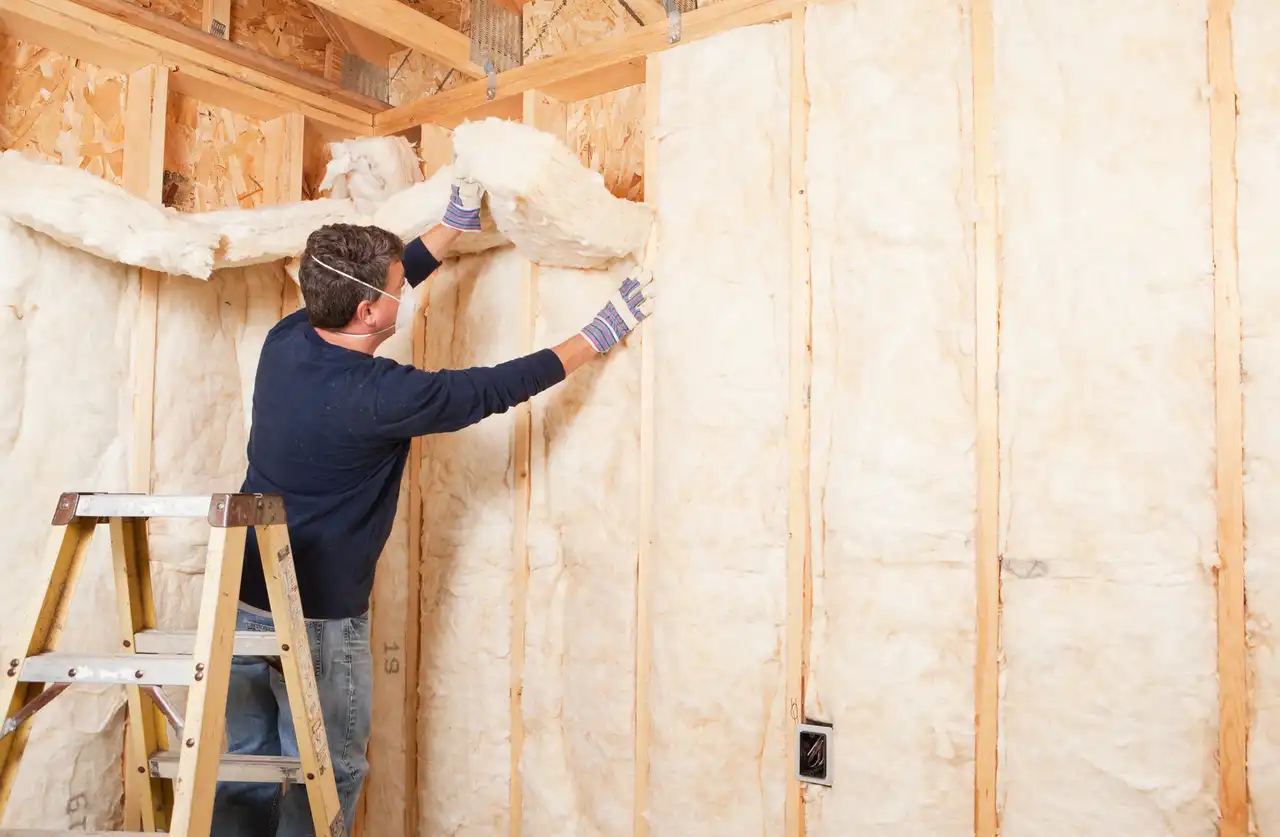
Blown-in insulation refers to loose-fill materials, typically cellulose or fiberglass, that are installed using a blowing machine through small holes drilled into wall cavities or spread across attic floors. For soundproofing specifically, the type of blown-in material and the installation density matter enormously.
Blown-in cellulose is made from recycled paper treated with borates for fire and pest resistance. When installed at high density, typically 3.5 pounds per cubic foot or more in a process called dense-packing, cellulose fills every gap and void in the wall cavity. This complete fill eliminates air gaps through which sound can travel. According to data from Greenfiber’s wall assembly testing, walls insulated with cellulose can achieve STC ratings of 50 or greater, which puts them very close to mineral wool performance.
Blown-in fiberglass is lighter and less dense than cellulose or mineral wool. While it does improve sound control compared to an empty wall, the Insulation Institute reports that fiberglass wall assemblies typically achieve an STC around 39, which is notably lower than both mineral wool and dense-pack cellulose.
The primary advantage of blown-in insulation is retrofit capability. For existing homes with finished walls, blown-in cellulose in Medford, OR can be installed through small access holes without tearing out drywall. This makes it the go-to choice for older homes in established Medford neighborhoods where wall cavities are already closed.
Head-to-Head Comparison
| Factor | Mineral Wool Batts | Blown-In Cellulose (Dense-Pack) | Blown-In Fiberglass |
|---|---|---|---|
| STC Rating (Wall Assembly) | 45-52 | 49-51 | 37-39 |
| NRC Rating | 0.95-1.05 | 0.80-0.95 | 0.90-1.00 |
| Cost (per sq ft, installed) | $1.50-$3.00 | $1.00-$2.00 | $0.80-$1.50 |
| Best Application | New construction, open walls | Retrofit existing walls, open walls | Attics, large open areas |
| Fire Resistance | Non-combustible | Fire-retardant treated | Non-combustible |
| Moisture Resistance | Hydrophobic | Absorbs moisture, can dry | Can trap moisture |
| Long-Term Settling | None | Minimal when dense-packed | Possible settling |
| R-Value per Inch | 3.7-4.2 | 3.5-3.8 | 2.9-3.8 |

Why Medford, OR Climate Matters
Medford sits in Climate Zone 4, which means winters are cold and wet, while summers are hot and dry. The U.S. Department of Energy recommends wall insulation of at least R-13 to R-20 for this climate zone, and both mineral wool and blown-in cellulose meet or exceed these minimums when installed at standard depths.
The wet winters in the Rogue Valley create an additional consideration for soundproofing projects. Mineral wool’s hydrophobic properties mean it repels water and dries quickly if any moisture gets into the wall cavity. Cellulose, being paper-based, can absorb moisture but is treated with borates that resist mold growth. Both materials can perform well in Medford’s climate when paired with proper vapor barriers and air sealing.
Real-World Scenarios in Medford
| Scenario | Property Type | Recommended Option | Estimated Cost Range |
|---|---|---|---|
| New ADU with shared wall near downtown | Accessory Dwelling Unit | Mineral wool batts in shared walls | $2,500-$4,500 |
| 1960s home retrofit, bedroom next to the living room | Single-family residence | Dense-pack cellulose blown into walls | $1,500-$3,000 |
| Home office conversion above the garage | Existing home | Mineral wool in new walls, blown-in cellulose in the ceiling | $2,000-$4,000 |
| Multi-unit duplex conversion | Duplex | Mineral wool in party walls, cellulose in exterior walls | $4,000-$8,000 |
| Finished basement with media room | Single-family residence | Mineral wool in all interior walls | $2,000-$3,500 |
Factors That Influence the Decision
Several variables determine which material will deliver the best results for your specific project:
- Project type: New construction with open studs allows either option. Retrofitting finished walls limits you to blown-in unless you are already planning a gut renovation.
- Budget: Mineral wool’s higher material and labor costs can add 20-50% to the insulation portion of your project. Blown-in cellulose offers the best balance of cost and performance for retrofits.
- Noise source type: For airborne noise like voices, TV, and music, both materials perform well when properly installed. For low-frequency impact noise like heavy footsteps or plumbing vibration, neither material alone is sufficient, and additional measures like resilient channels or acoustic caulk may be needed.
- Wall assembly quality: The STC rating depends on the entire assembly, not just insulation. Double layers of drywall, acoustic sealant around electrical boxes, and staggered stud construction all contribute to overall soundproofing. Insulation alone cannot compensate for poor assembly details.
- Installation quality: Both materials require correct installation to perform as rated. Gaps, voids, and compression all reduce acoustic performance. Dense-pack cellulose must reach the correct density, and mineral wool must fit snugly without gaps around obstructions.
- Existing conditions: Homes with knob-and-tube wiring, significant water damage, or pest infestations in wall cavities need those issues addressed before any insulation is installed.
Who Each Option Is Best For
Mineral wool is the right choice when:
- You are building new or opening walls during a remodel
- Maximum sound isolation between rooms is the top priority
- Fire resistance matters, such as between a garage and a living space
- Long-term performance without degradation is important
- The budget allows for the premium material cost
Blown-in insulation is the right choice when:
- You need to soundproof existing finished walls without demolition
- You are working with a tighter budget
- The project involves hard-to-reach areas like attic floors or irregular cavities
- You want to combine soundproofing with energy efficiency upgrades in one step
Neither option is ideal when:
- The primary noise problem is flanking sound traveling through ductwork, floors, or structural connections rather than through walls
- Low-frequency noise, like bass from speakers or mechanical equipment, is the main concern
- The wall assembly has major structural issues that need addressing first
Get a Professional Soundproofing Assessment
All Foam & Insulation has been helping Medford homeowners and contractors solve noise problems with the right insulation solutions for over a decade. Our team evaluates your specific property, noise concerns, and budget to recommend the material and installation method that will deliver real results. Whether you are building a new ADU, converting a room, or retrofitting an older home, we bring the experience and local knowledge that matters in southern Oregon.
Call us at (541) 826-9600 or email [email protected] to discuss your project.
Frequently Asked Questions
Can blown-in insulation match mineral wool for soundproofing?
Dense-pack cellulose can approach mineral wool performance, achieving STC ratings around 49-51 compared to mineral wool’s 45-52 range, but it must be installed at the correct density to reach these levels.
Is mineral wool worth the extra cost for soundproofing?
If you have open wall cavities during new construction or a remodel, mineral wool is worth the premium for its superior STC ratings, fire resistance, and long-term stability without settling.
Can I install blown-in insulation myself to save money?
A: Blowing insulation into walls requires specialized equipment and experience to achieve proper density and coverage. Incorrect installation leaves voids that allow sound to pass through, so professional installation is recommended.
Does insulation alone solve noise problems between rooms?
Insulation is one part of the solution. Sealing gaps around electrical boxes, using acoustic caulk at drywall joints, and ensuring proper wall assembly construction all contribute to the final STC rating.
Which insulation material works best in Medford’s wet winters?
Mineral wool has the advantage of being hydrophobic and naturally resistant to moisture, mold, and pests, making it particularly well-suited for Medford’s climate zone conditions.
Sources
- Acoustical Surfaces – Mineral Wool vs Fiberglass: Which is Better? – Detailed comparison of mineral wool and fiberglass insulation, including STC ratings, R-values, fire resistance, and installation considerations for soundproofing applications.
- Insulation Institute – Comparing Insulation Types – Industry-backed comparison of fiberglass, mineral wool, cellulose, and spray foam insulation covering acoustic performance with NRC and STC data.
- U.S. Department of Energy – Insulation – Federal guidance on insulation types, R-value recommendations by climate zone, and energy efficiency considerations for residential buildings.