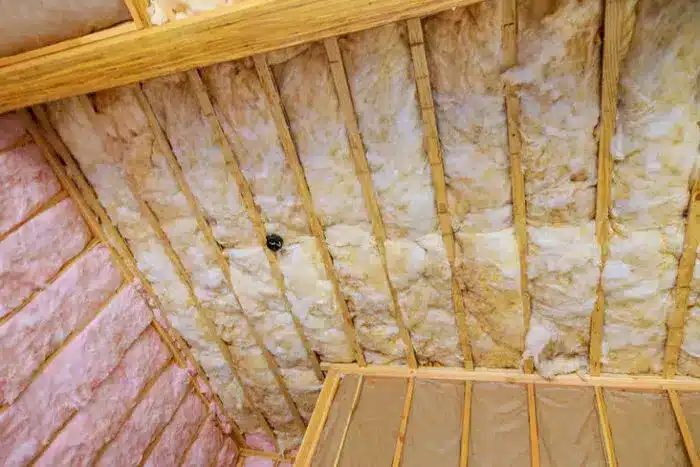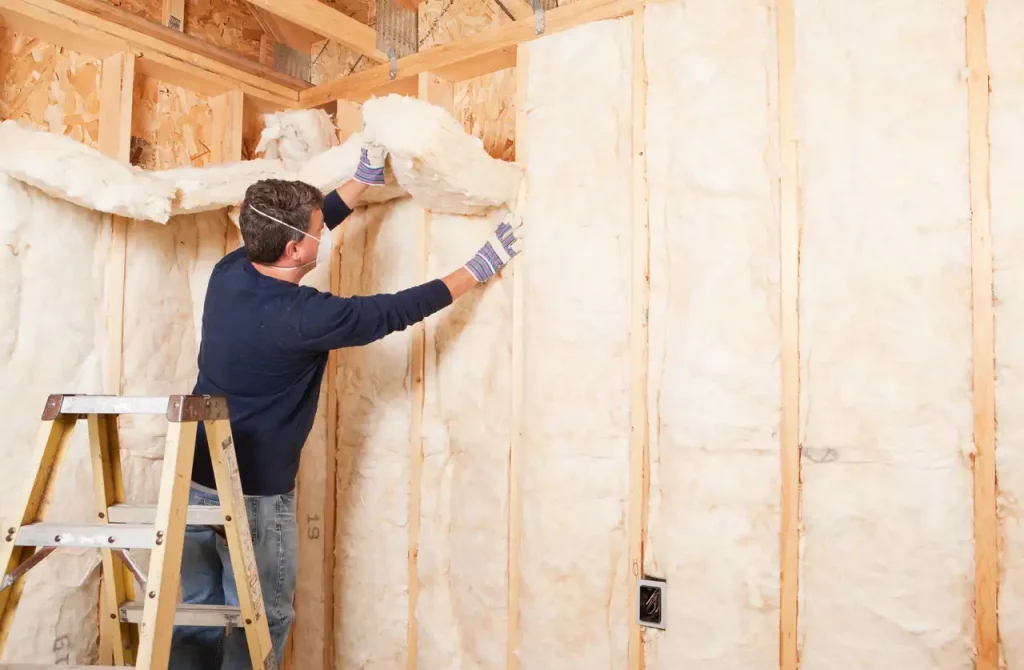
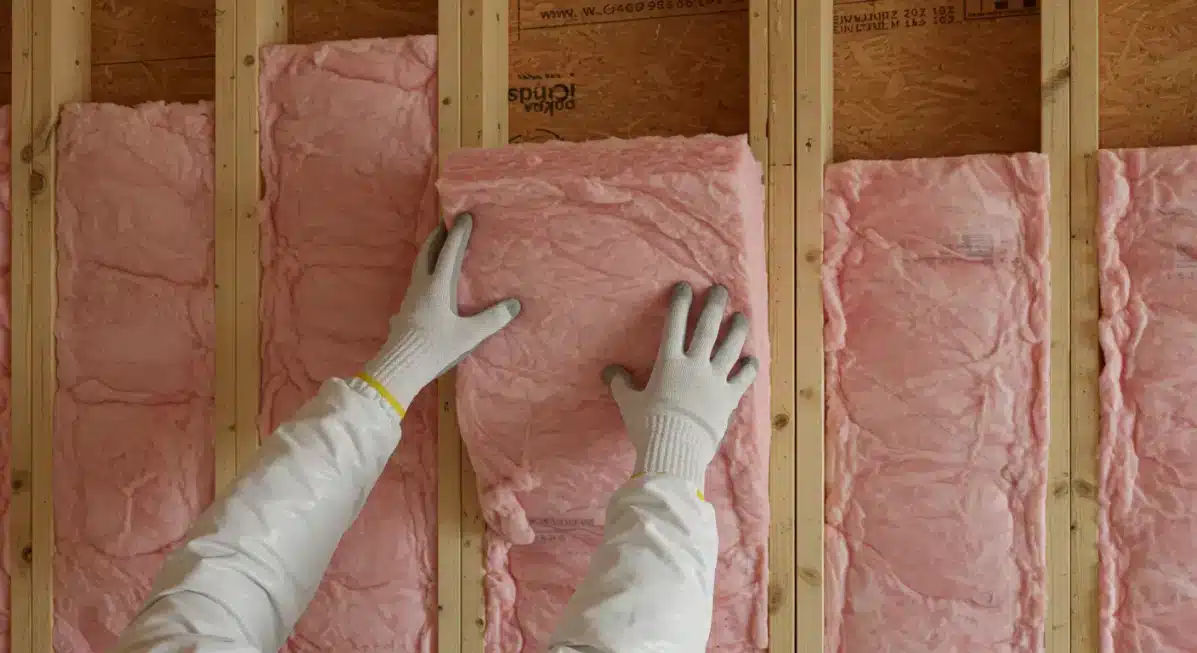
Spray foam insulation delivers significantly higher R-value per inch than fiberglass, with closed-cell spray foam reaching R-6.0 to R-7.0 per inch compared to fiberglass at roughly R-3.1 to R-3.8 per inch. But R-value alone does not tell the whole story. Spray foam also creates an airtight seal that blocks air infiltration, something fiberglass cannot do on its own. According to the U.S. Department of Energy, air leakage accounts for a substantial portion of energy loss in homes, making air sealing just as important as the insulation material itself. Fiberglass remains the more affordable upfront option and works well in standard wall cavities, but spray foam outperforms in areas prone to air leaks, moisture, and temperature extremes. For contractors and property owners, the right choice depends on climate zone, budget, project scope, and long-term energy goals.
TLDR / Key Takeaways
- Closed-cell spray foam delivers R-6.0 to R-7.0 per inch, nearly double fiberglass at R-3.1 to R-3.8 per inch
- Open-cell spray foam lands around R-3.5 to R-3.8 per inch, comparable to fiberglass but with superior air sealing
- Spray foam acts as both insulation and an air barrier in a single application, eliminating the need for separate air sealing steps
- Fiberglass costs $0.30 to $1.50 per square foot installed, while spray foam ranges from $0.50 to over $3.00 per square foot, depending on type
- Air leakage can account for 25 to 40 percent of a building’s heating and cooling energy loss, a gap that fiberglass does not address
- ENERGY STAR recommends attic R-values from R30 (Zone 1) up to R60 (Zones 4-8), which requires more depth with fiberglass than spray foam
- Fiberglass is better suited for large, open cavities with minimal air infiltration; spray foam excels in irregular spaces, crawl spaces, and rim joists
- Long-term, spray foam holds its R-value and seals better than fiberglass, which can settle, compress, or degrade over time
What R-Value Actually Measures
R-value measures thermal resistance, or how well a material slows heat transfer. The higher the number, the better the insulation performs at maintaining indoor temperatures. This rating is determined in a lab under controlled conditions, which means real-world performance can differ depending on installation quality, moisture, air movement, and compression.
ENERGY STAR provides recommended R-values for homes based on climate zone. In colder regions like Zones 5 through 8, attic insulation should reach R49 to R60, while floors over unconditioned spaces need R25 to R38. In milder climates like Zones 1 and 2, R30 to R49 in attics is the target. These targets matter because they directly influence which insulation type makes practical and financial sense for a given project.
Head-to-Head: R-Value Per Inch
The table below shows how spray foam and fiberglass compare on a per-inch basis.
| Insulation Type | R-Value Per Inch | Air Barrier | Vapor Barrier | Best Application |
|---|---|---|---|---|
| Closed-cell spray foam | R-6.0 to R-7.0 | Yes | Yes | Crawl spaces, rim joists, and metal buildings |
| Open-cell spray foam | R-3.5 to R-3.8 | Yes | No | Wall cavities, attics, sound-dampening |
| Fiberglass batts | R-3.1 to R-3.8 | No | No | Standard wall cavities, floors, and attics |
| Blown-in fiberglass | R-2.2 to R-2.8 | No | No | Attic floors, existing wall cavities |
Closed-cell spray foam delivers the highest R-value per inch by a wide margin, which means less thickness is needed to meet code requirements. A 2×4 wall cavity (3.5 inches) filled with closed-cell foam achieves roughly R-21 to R-25, while the same cavity with fiberglass maxes out around R-13 to R-15. For a deeper dive into performance metrics, check out our detailed guide on closed-cell spray foam R-value.
According to Johns Manville, closed-cell spray foam also adds structural rigidity to the wall assembly, something no other insulation material offers. This makes it particularly valuable for buildings in high-wind or seismic zones.
Why R-Value Is Not the Whole Picture
The biggest limitation of comparing R-values in isolation is that the R-value only measures heat transfer through the material itself. It does not account for air movement through gaps, seams, and penetrations. Fiberglass batts fit between studs, but they do not seal against the framing. Air can still pass around the edges, through electrical boxes, and at the top and bottom plates.
The U.S. Department of Energy states that reducing air leakage is one of the most cost-effective ways to improve energy efficiency. They recommend air sealing first, then adding insulation. Spray foam handles both tasks simultaneously. When applied, it expands to fill gaps, cracks, and voids, creating a continuous air barrier that fiberglass simply cannot replicate on its own.
A Building Science Corporation study found that even small amounts of air leakage can significantly degrade the effective R-value of fiberglass insulation in walls. This means a wall labeled R-13 with fiberglass might perform closer to R-9 or R-10 in real conditions if air is moving through it.
Cost Comparison: Upfront vs Long-Term
Material cost is where fiberglass has a clear advantage. It is widely available, easy to install, and requires no specialized equipment. Spray foam requires professional installation, protective equipment, and precise mixing and application.
| Factor | Spray Foam (Closed-Cell) | Spray Foam (Open-Cell) | Fiberglass Batts |
|---|---|---|---|
| Installed cost per sq ft | $1.50 to $3.50+ | $0.50 to $1.50 | $0.30 to $1.50 |
| Air sealing included | Yes | Yes | No (requires a separate step) |
| Lifespan | 80+ years | 80+ years | 50 to 80 years |
| Can settle or sag | No | No | Yes, over time |
| DIY friendly | No | No | Yes |
Fiberglass wins on upfront cost, especially for large projects where material volume matters. But when you factor in the additional labor and materials needed to air seal a home insulated with fiberglass, the gap narrows. Spray foam eliminates the need for caulking, weatherstripping, and house wrap in many applications because the foam itself serves as the air barrier.
Lowe’s buying guide notes that spray foam typically costs two to three times more than fiberglass, but the energy savings over time can offset that premium, particularly in extreme climates.
Real-World Scenarios
Here are five common contractor scenarios showing when each insulation type is the better call.
| Scenario | Property Type | Recommended Option | Estimated Cost |
|---|---|---|---|
| New construction 2×6 walls, mixed climate | Single-family home | Closed-cell spray foam (2 inches) + fiberglass (fills remainder) | $2,500 to $5,000 |
| Attic retrofit, existing home | Ranch-style residence | Blown-in fiberglass over existing batts | $1,200 to $2,500 |
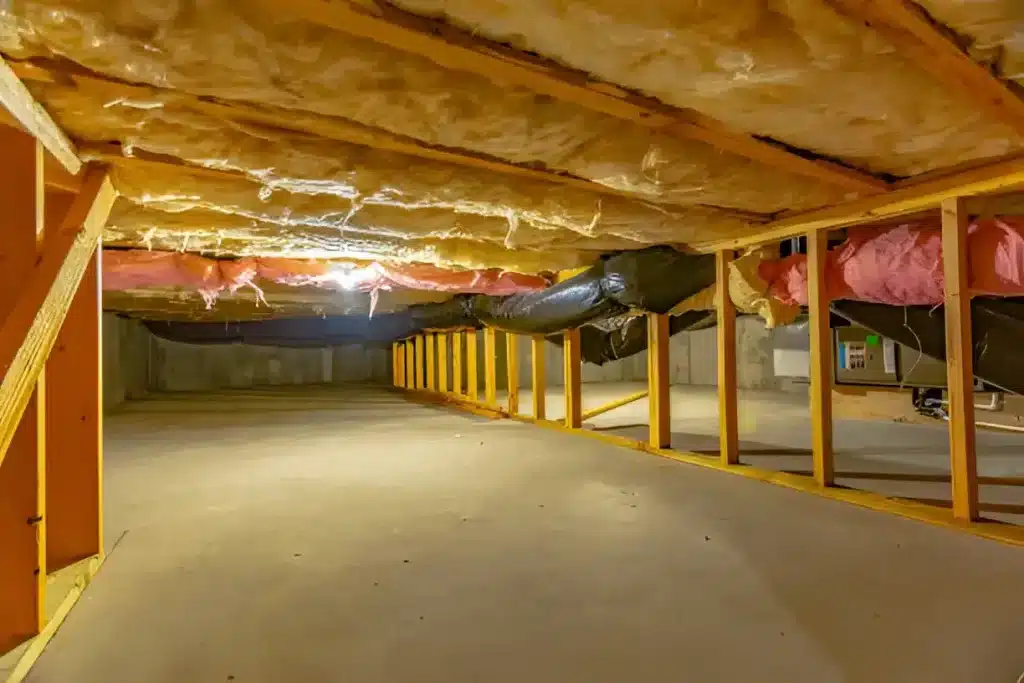
| Crawl space encapsulation | Residential crawl space | Closed-cell spray foam on walls and rim joist | $1,500 to $4,000 |
| Metal building insulation | Commercial warehouse | Closed-cell spray foam | $3,000 to $8,000+ |
| Sound dampening between units | Multifamily wall assembly | Open-cell spray foam | $1,000 to $2,500 |
Each scenario highlights a different strength. Spray foam dominates in crawl spaces and metal buildings where moisture control and air sealing are non-negotiable. Fiberglass remains the practical choice for standard attic floor insulation and large-volume projects where budget matters most.
Factors That Influence the Decision
Several variables determine which insulation type delivers the best return on investment:
- Climate zone: Colder climates benefit more from spray foam’s higher R-value per inch and air sealing. In mild climates, fiberglass may be sufficient
- Existing construction vs new build: Retrofitting spray foam into finished walls is difficult and costly. New builds allow full access for spray application
- Budget constraints: Fiberglass costs less upfront. Spray foam costs more but reduces ongoing energy expenses
- Moisture concerns: Closed-cell spray foam acts as a vapor barrier, making it ideal for crawl spaces, basements, and humid climates
- Space limitations: In thin-wall cavities or tight framing bays, spray foam achieves a higher R-value in less depth
- Air quality goals: Spray foam seals out pollen, dust, and pollutants by eliminating air infiltration points
- Building code requirements: Some jurisdictions require specific R-values or continuous insulation that may favor one material over another
Who Spray Foam Is For (and Who It Is Not)
Spray foam is the right choice for:
- Contractors building or retrofitting in cold or mixed climate zones where air sealing is critical
- Projects with moisture-prone areas like crawl spaces, basements, and below-grade walls
- Metal buildings, pole barns, and structures with irregular framing or cathedral ceilings
- Property owners prioritizing long-term energy savings and indoor air quality
- Sound isolation projects in multifamily or commercial settings
Spray foam is NOT the right choice for:
- Tight-budget projects where upfront material costs are the deciding factor
- DIY installations, as spray foam requires professional equipment and training
- Large, open attic floors where blown-in fiberglass or cellulose provides a more cost-effective solution
- Situations where the building already has adequate air sealing and only needs an R-value boost
Get an Expert Insulation Assessment
All Foam & Insulation has years of experience helping property owners select and install the right insulation for every application. Our team evaluates your building envelope, climate zone, and project goals to recommend the material that delivers the best performance and value. We install both spray foam and fiberglass insulation across a wide range of residential and commercial projects.
Call us directly at (541) 826-9600 or email [email protected] to get started.
Frequently Asked Questions
Can spray foam be installed over existing fiberglass insulation?
Yes, but it depends on the application. In attics, closed-cell spray foam can be applied to the roof deck regardless of what is on the floor. In walls, spray foam over fiberglass is uncommon because the existing batts would need to be removed first to allow proper foam adhesion and expansion.
Does fiberglass lose R-value over time?
Fiberglass itself does not degrade chemically, but it can lose effective R-value if it settles, compresses, gets wet, or is exposed to air movement through gaps. In attics, blown-in fiberglass can settle by 10 to 20 percent over several years, reducing its thermal performance.
Is closed-cell spray foam worth the extra cost?
For many projects, yes. The higher R-value per inch, air sealing, vapor barrier, and structural benefits make closed-cell foam a strong investment in crawl spaces, basements, rim joists, and metal buildings. In standard above-grade wall cavities in mild climates, fiberglass may offer a better cost-to-performance ratio.
How does open-cell spray foam compare to fiberglass?
Open-cell spray foam has a similar R-value per inch to fiberglass (R-3.5 to R-3.8), but it provides far superior air sealing and sound dampening. It is less expensive than closed-cell foam but does not act as a vapor barrier. It works well in interior wall cavities where moisture is not a concern.
What R-value do I need for my climate zone?
Requirements vary. ENERGY STAR recommends R30 to R38 for attics in warmer zones (1-2), R49 for moderate zones (3), and R49 to R60 for colder zones (4-8). Wall insulation targets range from R13 to R20, depending on the zone and whether the project is new construction or a retrofit. Check local building codes for specific requirements in your area.
Sources
- ENERGY STAR – Recommended Home Insulation R-Values – Official recommended R-values by climate zone for retrofitting existing wood-framed buildings, based on the 2021 IECC.
- U.S. Department of Energy – Air Sealing Your Home – Federal guidance on reducing air leakage, improving energy efficiency, and the relationship between air sealing and insulation performance.
- Johns Manville – Spray Foam: Open-Cell vs. Closed-Cell – Technical comparison of open-cell and closed-cell spray foam, including R-values, density, and application differences from a major building materials manufacturer.