Membrane roofing systems installed on commercial and flat-roof buildings in Medford, OR, can deliver decades of reliable performance when the work follows manufacturer specifications and industry best practices. The most common cause of premature membrane roof failure is not material defects but installation errors that compromise watertight integrity. Understanding which mistakes happen most often and how to prevent them protects your investment and avoids expensive repairs down the road.
TLDR / Key Takeaways
- Seam failure is the leading cause of premature membrane roof leaks, often caused by improper heat welding or insufficient adhesive application during installation.
- Inadequate flashing at penetrations (HVAC units, vents, pipes) accounts for approximately 90% of all flat roof leaks according to maintenance industry data.
- Poor drainage and ponding water on flat roofs increase structural load and accelerate membrane deterioration, with damage visible only after significant interior harm has occurred.
- Skipping substrate preparation or installing over a damaged, wet, or uneven deck prevents proper membrane adhesion and voids most manufacturer warranties.
- Cool roof membrane selection matters in Medford’s climate, where reflective white TPO or PVC membranes can reduce roof surface temperatures by more than 50 degrees compared to conventional dark materials.
- Insulation installation errors such as failing to stagger joints between layers create thermal bridges that reduce effective R-value and promote condensation within the roof assembly.
- Using untrained labor for heat-welded thermoplastic seams or modified bitumen torch applications leads to inconsistent bonds that separate under Medford’s seasonal temperature swings.
Understanding Membrane Roofing Systems
Modern flat and low-slope roofs in Medford rely on single-ply membrane systems, which are prefabricated sheets rolled onto the roof and attached through mechanical fasteners, adhesives, heat welding, or ballast. According to Wikipedia’s roofing materials reference, common membrane materials include EPDM rubber, polyvinyl chloride (PVC), and thermoplastic polyolefin (TPO), along with modified bitumen sheet membranes. Each material has specific installation requirements, and deviating from those requirements is where most problems begin.
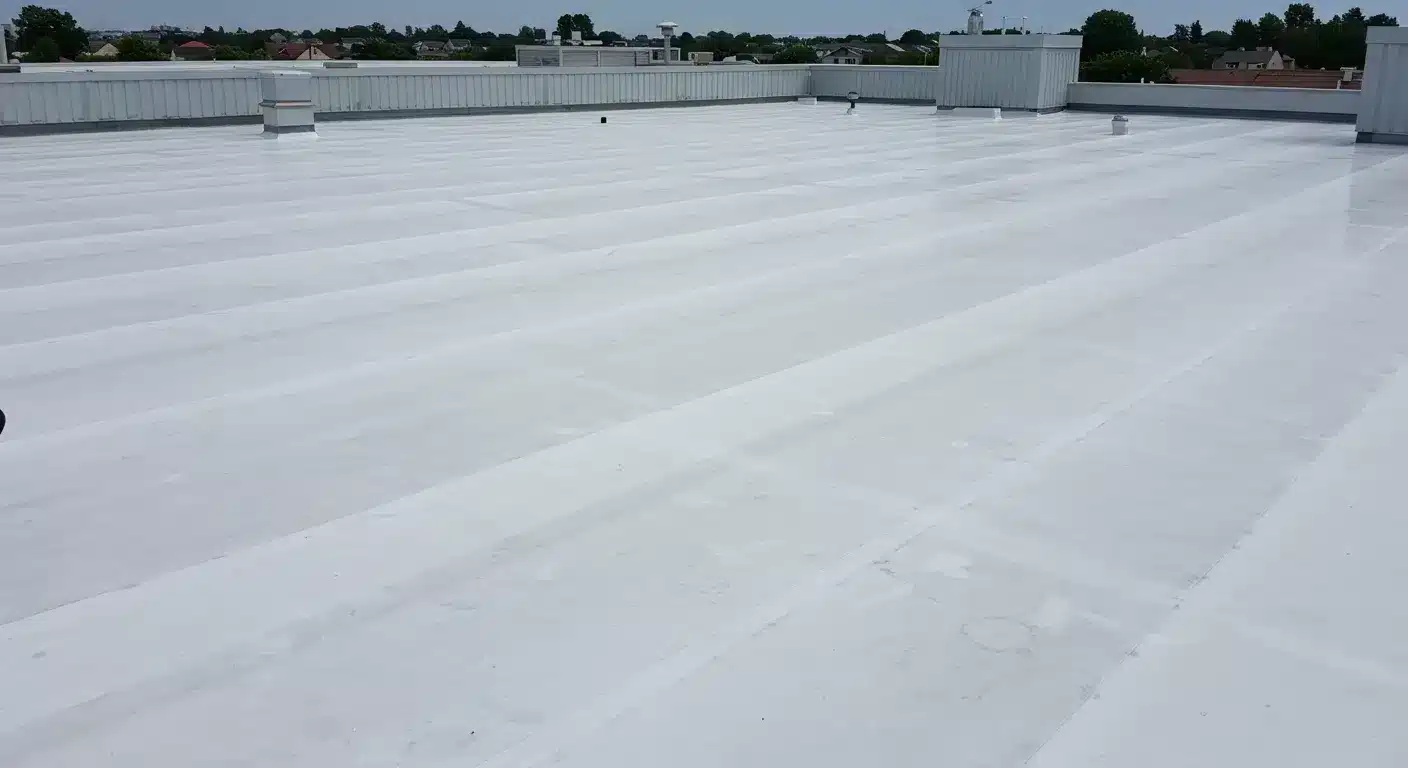
The U.S. Department of Energy classifies single-ply membranes as a primary low-slope roofing option and notes that white or light-colored membranes provide cool roof performance, reflecting 60 to 90% of sunlight. This is especially relevant in Medford, where summer temperatures regularly exceed 90 degrees and reducing cooling costs is a priority for building owners.
Mistake 1: Improper Seam Welding and Adhesive Application
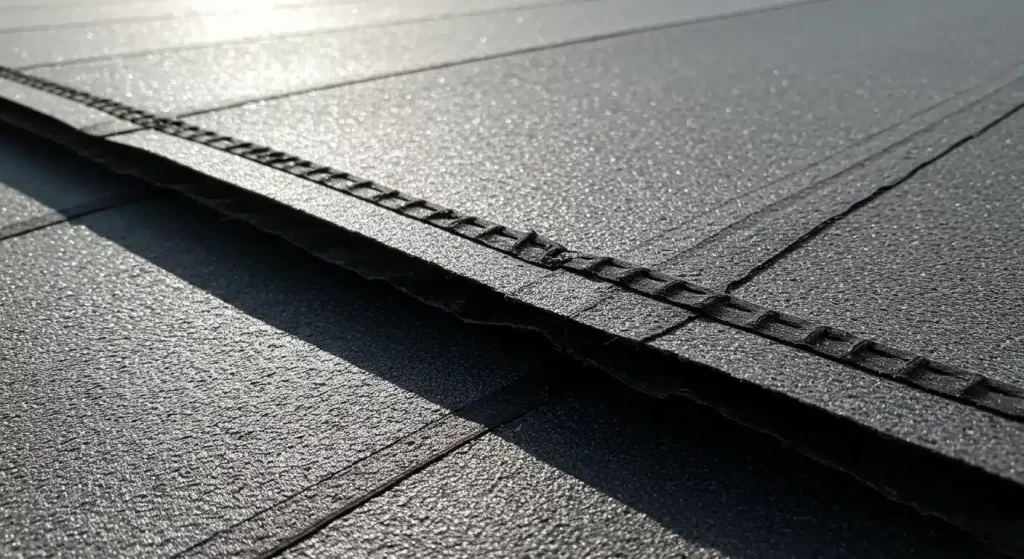
For thermoplastic membranes like TPO and PVC, seams must be heat-welded to form a monolithic, watertight bond. The Professional Roofing article on NRCA’s 2023 manual highlights that the National Roofing Contractors Association updated its guidelines for single-ply attachment methods and membrane application techniques to address recurring installation failures.
Common seam-related errors include:
- Welding at incorrect temperatures, either too hot (which burns and weakens the membrane) or too cold (which produces an incomplete bond)
- Insufficient roller pressure after welding, leaving voids along the seam line
- Contaminated welding surfaces from dust, dirt, or oils that prevent proper fusion
- Rushing through seam work without allowing the membrane to reach proper welding temperature
For EPDM thermoset membranes, seams rely on pressure-sensitive tapes or liquid adhesives rather than heat. Errors here include inadequate surface cleaning before tape application and failing to roll the seam thoroughly after placement.
Mistake 2: Inadequate Flashing at Roof Penetrations
Commercial flat roofs inherently contain many penetrations from HVAC equipment, exhaust pipes, plumbing vents, and electrical conduits. These areas present detailing challenges that are substantially more difficult than standard field seams.
According to Wikipedia’s flat roof reference, 90% of all roof leaks and failures occur at the flashings around rooftop penetrations. When flashings are not properly formed, sealed, and integrated with the membrane, water infiltration follows quickly. In Medford, where seasonal rains and occasional snow loads place additional stress on these vulnerable points, cutting corners on flashing details is one of the costliest mistakes a building owner can make.
Common flashing failures include:
- Boot flashings that are not properly sealed to the membrane at the base
- Counter-flashing omitted or poorly fitted at parapet walls and curbs
- Using caulk-only patches instead of proper membrane-based flashing repairs
- Failing to extend flashing high enough up vertical surfaces to meet code minimums
Mistake 3: Ignoring Drainage and Slope Requirements
Water that sits on a flat roof creates multiple problems. Standing water adds weight to the structure, promotes algae and mold growth, degrades adhesives, and accelerates membrane breakdown under UV exposure. The Wikipedia flat roof article notes that ponding water can freeze and expand during cold months, cracking the roof surface and forcing water into any existing seam gaps.
Installation mistakes related to drainage include:
- Failing to verify adequate slope before membrane installation begins
- Blocking or improperly locating roof drains and scuppers during the layout phase
- Allowing debris to accumulate around drain bowls, restricting water flow during storms
- Installing crickets and saddles without the proper taper to direct water toward drains
Proper drainage design should eliminate ponding within 48 hours of rainfall. If the existing deck has insufficient slope, tapered insulation systems should be specified before the membrane is installed.
Mistake 4: Substrate Preparation Failures
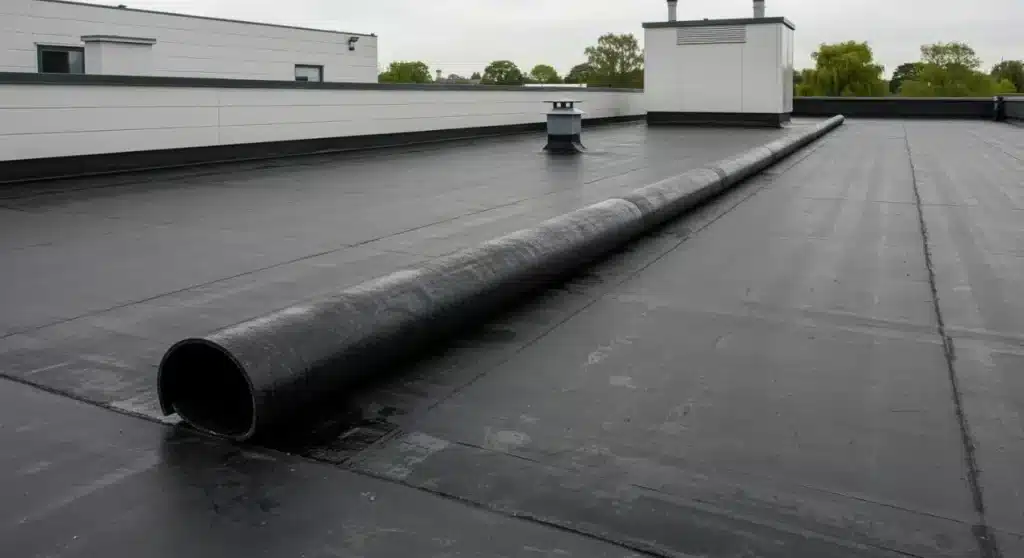
The membrane can only perform as well as the surface beneath it allows. Installing a single-ply membrane over a deck that is wet, damaged, uneven, or contaminated practically guarantees adhesion failure and premature leaks.
Common substrate mistakes include:
- Skipping moisture testing on concrete or gypsum decks before installation
- Not repairing damaged or deteriorated roof deck areas before laying new material
- Failing to clean the substrate of dust, debris, and old adhesive residue
- Ignoring fastener back-out on steel decks, which creates uneven surfaces that telegraph through the membrane
The NRCA Roofing Manual: Membrane Roof Systems 2023 provides updated guidance on steel deck design, wood deck standards, and substrate preparation requirements that should be followed before any membrane material is rolled out.
Mistake 5: Insulation Errors That Compromise Performance
Roof insulation does more than control indoor temperatures. When installed incorrectly, it creates thermal bridges, condensation points, and structural weaknesses that shorten the life of the entire roof assembly. The NRCA’s 2023 manual added specific commentary about polyisocyanurate board thickness, thermal bridging concerns, and the inclusion of new sections on vacuum-insulated panels.
| Insulation Mistake | Consequence | Prevention |
|---|---|---|
| Unstaggered joints between insulation layers | Continuous thermal paths that reduce effective R-value | Offset joints by minimum 4 inches between layers |
| Gaps between boards | Air infiltration and condensation within the assembly | Fit boards tightly and seal all joints |
| Insufficient thickness for climate zone | Fails to meet energy code R-value requirements | Specify per ASHRAE 90.1 and local energy code |
| Ignoring thermal bridging at fasteners and structural supports | Localized heat loss and condensation risk | Use thermally broken fastener plates and cover boards |
Mistake 6: Choosing the Wrong Membrane for the Application
Not every membrane type suits every building or climate. TPO has been the most popular commercial low-slope roof covering material since 2016, offering white reflective surfaces and heat-welded seams. However, EPDM has a longer track record and superior flexibility in cold conditions. PVC offers chemical resistance and strong seam strength but comes at a higher material cost.
| Membrane Type | Seaming Method | Best Climate Fit | Key Limitation |
|---|---|---|---|
| TPO | Heat-welded | Hot, sunny climates | Newer material, less long-term field history |
| EPDM | Tape or adhesive | Cold, variable climates | Not inherently reflective (black is standard) |
| PVC | Heat-welded | Chemical exposure or grease environments | Higher material cost than TPO |
| Modified Bitumen | Torch or cold-adhered | Various | Fire hazard during torch application |
In Medford, where summers are hot and dry and winters bring rain and occasional snow, a white TPO or PVC membrane offers both cool roof benefits and durable heat-welded seams that perform well across seasonal temperature swings.
Recommendations by Building Type
Warehouses and distribution centers: Prioritize TPO for its balance of reflectivity, weld strength, and material availability in large sheet widths. Ensure drainage is addressed with tapered insulation if the deck is flat.
Office buildings and retail spaces: Consider PVC for its chemical resistance if rooftop HVAC grease is a concern, or TPO for maximum energy savings with cool roof performance.
Agricultural and storage buildings: EPDM offers lower material costs and proven performance in variable conditions, making it a practical choice where budgets are tighter and energy savings are less critical.
Signs You Have the Right Roofing Contractor
- They reference NRCA guidelines and manufacturer specifications during planning, not just during warranty discussions
- They conduct a thorough substrate inspection and moisture assessment before proposing any installation approach
- They explain drainage concerns and propose solutions like tapered insulation when ponding is evident
- They detail flashing and penetration work separately from field membrane installation, showing attention to the areas where most leaks originate
- They provide documentation for material warranties and workmanship guarantees with clear coverage terms
- Their crew demonstrates familiarity with Medford’s climate-specific challenges, including UV exposure, thermal cycling, and seasonal precipitation patterns
Ready to Protect Your Commercial Roof in Medford, OR
At All Foam & Insulation, LLC, our team brings extensive experience with membrane roofing installations for commercial buildings throughout the Medford area. We follow NRCA best practices from substrate preparation through final inspection, ensuring every seam, flashing detail, and drainage element meets manufacturer specifications. Whether you need a new membrane roof system, a re-cover, or targeted repairs, we approach every project with the same commitment to quality and long-term performance.
Call us directly at (541) 826-9600 or email [email protected] to discuss your commercial roofing needs with our experienced team.
Frequently Asked Questions
What is the most common cause of membrane roof failure?
Installation errors, particularly at seams and flashings, cause the majority of premature membrane roof failures. Material defects are far less common than workmanship issues.
How long should a membrane roof last in Medford’s climate?
Properly installed single-ply membranes typically last 20 to 30 years when maintained according to manufacturer guidelines, with some EPDM systems documented to exceed 50 years.
Can a membrane roof be installed over an existing roof?
In some cases a re-cover is possible when the existing roof is in sound condition and local building codes permit it, but a tear-off is usually recommended to inspect and repair the deck.
What is the difference between TPO and EPDM?
TPO is a thermoplastic membrane with heat-welded seams and reflective white surfaces, while EPDM is a thermoset rubber membrane seamed with tapes or adhesives and typically black in color.
How often should a flat roof be inspected?
Flat roofs should be inspected semi-annually and after any major weather event, with particular attention to flashings, seams, and drainage components.
Sources
- Wikipedia – Roof – Comprehensive reference on roofing materials, membrane types (EPDM, PVC, TPO), and roof assembly functions including drainage and insulation.
- U.S. Department of Energy – Cool Roofs – Federal guide on cool roof benefits, single-ply membrane reflectivity standards, and climate-specific considerations for energy savings.
- Professional Roofing – NRCA Membrane Roof Systems 2023 – Industry publication covering the NRCA’s updated manual for membrane roof design and installation best practices, including attachment methods and insulation guidance.
- Wikipedia – Flat Roof – Detailed reference on flat roof construction methods, single-ply membrane types, common failure modes, and maintenance requirements including ponding water and flashing vulnerabilities.
- NRCA Roofing Guidelines Library – National Roofing Contractors Association technical resource providing best practice guidelines for membrane roof system design, materials, and installation standards.