Flat commercial roofs are a practical and cost-effective design choice for warehouses, retail centers, office buildings, and industrial facilities. But their minimal slope also makes them inherently vulnerable to water intrusion. When water sits, seeps, or stresses the seams of an older roofing system, leaks follow, damaging inventory, disrupting operations, and driving up repair bills. The right membrane roofing guide can help you understand your options. The right membrane roofing system, matched to your building’s use and climate, eliminates the weaknesses that cause most flat-roof failures and provides decades of reliable protection.
TLDR / Key Takeaways
- Ponding water is the leading cause of flat commercial roof leaks, forcing moisture through seams, flashing, and degraded materials over time.
- UV degradation breaks down traditional asphalt-based systems, causing cracking, blistering, and alligatoring that opens pathways for water.
- Flashing and penetration failures account for roughly 90% of all reported roof leaks, especially at vents, pipes, HVAC curbs, and parapet walls.
- Membrane roofing systems, including TPO, EPDM, and PVC, are engineered as continuous waterproof barriers that resist UV exposure, temperature swings, and ponding water.
- Heat-welded thermoplastic seams (TPO, PVC) create bonds stronger than the membrane itself, eliminating the adhesive failure points common in older systems.
- EPDM rubber membranes offer superior flexibility in cold climates and can stretch up to 300% to accommodate building movement without cracking.
- Cool roof membranes in white TPO or PVC can reflect over 80% of solar radiation, reducing cooling energy demand by up to 10% on hot days.
- Semi-annual inspections and prompt drain maintenance remain essential regardless of the membrane system installed.
Common Reasons Flat Commercial Roofs Leak
Flat and low-slope roofs operate under conditions that steep-slope roofs rarely face. Water does not run off quickly, UV rays hit the surface at more direct angles, and foot traffic from HVAC maintenance adds physical stress. According to the Wikipedia flat roof reference, the primary purpose of any flat roof membrane is to waterproof the roof area, and when that barrier fails, the damage often goes unnoticed for considerable time as water penetrates and soaks the decking, insulation, and structural components beneath.
Ponding Water
Water that remains on a roof surface for more than 48 hours is classified as ponding. Clogged drains, inadequate slope, and debris buildup all contribute to standing water. As the depth increases, so does hydrostatic pressure, which forces water into the smallest cracks, seams, and fastener holes. In colder climates, ponding water freezes and thaws in cycles, expanding and splitting the roof surface. Once underlying decking absorbs water, it sags, creating a deeper depression that holds even more water, accelerating the failure cycle.
UV Degradation and Material Aging
Traditional built-up roofing (BUR) systems using asphalt and gravel are particularly vulnerable to UV radiation. The gravel layer protects the underlying tar, but when gravel shifts from wind, rainfall, or foot traffic, the tar surface becomes exposed. UV rays oxidize the asphalt, causing it to lose plasticizers, shrink, and develop an alligator-skin pattern of cracks. Modified bitumen systems face similar aging pathways, with UV exposure accelerating brittleness over time.
Flashing and Seam Failures
The transitions between the roof membrane and vertical surfaces, such as parapet walls, skylights, vents, and HVAC curbs, are the weakest points on any flat roof. These flashings endure constant thermal movement and weather exposure. Seam adhesives in older systems break down, opening gaps that allow water entry. Flashing failures at rooftop penetrations represent the vast majority of leak sources on commercial flat roofs.
Poor Installation and Maintenance Neglect
Improper fastening, inadequate seam bonding, and incorrectly detailed flashings during installation create problems that compound over years of exposure. Meanwhile, neglected maintenance, such as failing to clear debris from drains and scuppers, allows ponding to persist unchecked. Many building owners do not inspect their roofs between major storm events, meaning small issues like punctures or open seams go unrepaired until water appears inside the building.
What Is Membrane Roofing and Why Does It Work
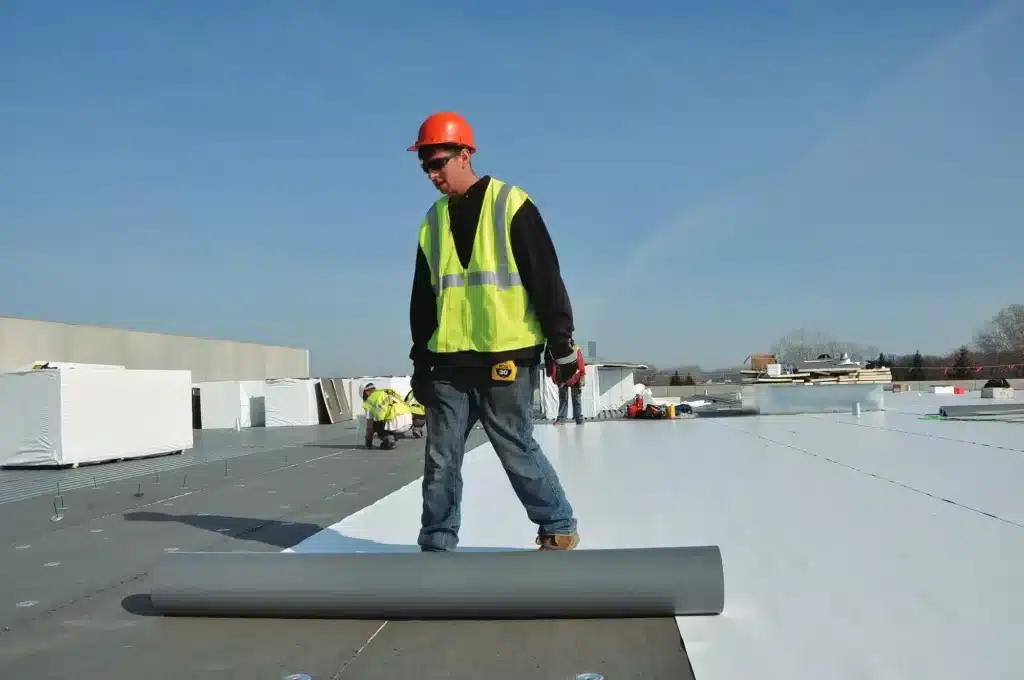
Membrane roofing refers to roofing systems that use large, factory-manufactured sheets of synthetic material to create a continuous, watertight barrier across the entire roof surface. These systems were developed specifically to address the shortcomings of older built-up and modified bitumen roofs, offering stronger seams, better UV resistance, and fewer failure points.
Modern membrane systems fall into two main categories:
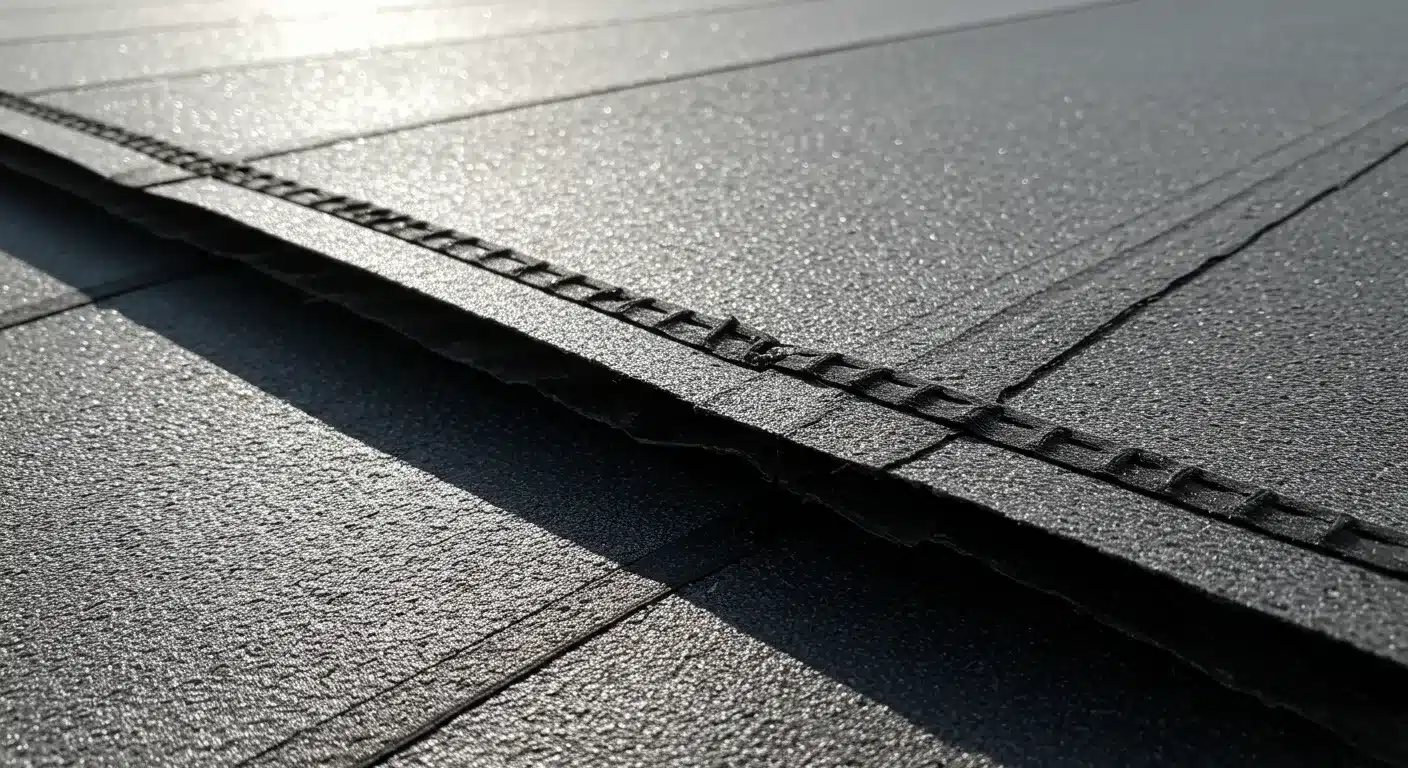
- Thermoplastics (TPO, PVC): Seams are heat-welded, creating a bond that is as strong as or stronger than the membrane itself.
- Thermosets (EPDM): Sheets are seamed using pressure-sensitive tapes or adhesives, offering exceptional flexibility and weathering resistance.
These materials resist the expansion, contraction, and UV degradation that plague traditional asphalt-based systems, and their factory-controlled manufacturing ensures consistent thickness and quality across every roll.
How the Three Main Membrane Types Compare
Each membrane system has distinct characteristics that make it better suited for certain building types, climates, and budgets. The table below summarizes how the most common options stack up against each other.
| Membrane Type | Seam Method | Best Climate Fit | Reflectivity | Typical Expected Lifespan | Key Strength |
|---|---|---|---|---|---|
| TPO | Heat-welded | Warm to mixed | High (white up to 80%+) | 20 to 35 years | Energy efficiency, weld strength |
| EPDM | Tape/adhesive | Cold to variable | Low (black) to moderate (white) | 25 to 50 years | Flexibility, cold-weather performance |
| PVC | Heat-welded | Warm, grease-prone | High (white up to 80%+) | 20 to 30 years | Chemical and fire resistance |
TPO (Thermoplastic Polyolefin)
TPO has become the most widely installed single-ply membrane for new commercial low-slope roofs in the United States. It contains no plasticizers, which means the membrane does not become brittle over time due to plasticizer migration, a common issue with PVC. Thermoplastic olefin does not degrade under solar UV radiation, making it well suited for roofs in warm, sunny climates. The heat-welded seams produce a homogeneous bond that resists separation and reduces leak risk at the joints.
EPDM (Ethylene Propylene Diene Monomer)
EPDM rubber is a synthetic elastomer known for outstanding resistance to heat, ozone, steam, and weather. It maintains elasticity to temperatures as low as minus 40 degrees Celsius and can stretch over 300% without losing its seal, which makes it particularly effective on buildings in cold climates with wide temperature swings. EPDM membranes can last 30 years or more when properly installed and maintained, with some installations reaching 50-year expected lifespans.
PVC (Polyvinyl Chloride)
PVC membranes offer strong resistance to fire, chemicals, and grease, making them a solid choice for restaurants, manufacturing facilities, and any building where kitchen exhaust or chemical exposure is a concern. Like TPO, PVC seams are heat-welded for permanent watertight bonds, and white PVC delivers reflective cool roof performance. PVC is generally more expensive than TPO but offers a longer track record of proven performance in harsh environments.
How Membrane Roofing Solves the Core Leak Problems
Membrane systems directly address each of the major failure modes that plague flat commercial roofs.
Ponding resistance: TPO membranes are more resistant to ponding water than most other modern roofing materials, making them a practical choice for roofs where perfect drainage is difficult to achieve. While no roof material should sit in standing water indefinitely, membrane systems handle temporary ponding far better than asphalt-based systems.
UV stability: Unlike built-up roofing that degrades under direct sunlight, TPO and PVC membranes are formulated with UV stabilizers and reflective white surfaces that bounce the majority of solar radiation away from the roof. The Cool Roof Rating Council, a 501(c)(3) nonprofit, maintains standards and directories for measuring the solar reflectance and thermal emittance of roofing products, confirming that white thermoplastic membranes deliver measurable energy savings.
Seam integrity: Heat-welded thermoplastic seams create bonds that are actually stronger than the membrane sheet itself. This eliminates the weak points where adhesives break down over time, which was one of the primary failure mechanisms in older roofing systems. EPDM systems use factory-applied tape seams that have reduced labor by as much as 75% compared to older methods while maintaining reliable watertight performance.
Flexibility and building movement: Commercial buildings shift and flex with temperature changes, wind loads, and settling. EPDM’s ability to stretch up to 300% allows it to move with the building without cracking or splitting at the seams. TPO and PVC, while stiffer, are reinforced with polyester scrims that provide dimensional stability and tear resistance.
Choosing the Right Membrane for Your Building
The best membrane system depends on your building’s specific conditions, not on a single universal recommendation. Consider these factors:
- Climate: Cold climates with freeze-thaw cycles favor EPDM for its low-temperature flexibility. Hot, sunny climates benefit from TPO or PVC for their reflective properties and UV resistance.
- Building use: Restaurants and manufacturing facilities with rooftop grease or chemical exposure should lean toward PVC for its chemical resistance. Standard office and retail buildings can perform well with either TPO or EPDM.
- Budget and lifespan goals: TPO typically offers the lowest installed cost for a reflective membrane system, making it attractive for budget-conscious projects. EPDM may cost less in material but offers a longer expected service life in the right conditions.
- Installation method: Fully adhered systems provide the longest performance and best wind uplift resistance across all membrane types. Mechanically attached systems are faster and less expensive but may have shorter lifespans.
Signs You Have the Right Roofing Partner
Selecting the right membrane material is only part of the equation. The installation quality determines whether that membrane performs as designed. Look for these indicators when evaluating a roofing contractor:
- Detailed written specifications that cover membrane type, thickness, attachment method, insulation, and flashing details, rather than a vague proposal.
- Willingness to explain the trade-offs between different membrane systems without pushing one product exclusively.
- Manufacturer certifications from recognized membrane producers, which indicate that the installer has completed required training programs.
- Semi-annual inspection programs offered after installation, because the best membrane still needs proactive maintenance to reach its full service life.
- Transparent communication about drainage design and any existing structural issues that could affect membrane performance.
Protect Your Commercial Roof Investment
All Foam & Insulation delivers expert membrane roofing installation, repair, and maintenance for commercial flat roofs throughout the region. Our team evaluates your building’s unique conditions, recommends the membrane system that fits your climate and budget, and installs it to manufacturer specifications so you get the full lifespan your roof was designed to deliver.
Reach us at [email protected] or call (541) 826-9600 to get started with a no-obligation conversation about your commercial roofing needs.
Frequently Asked Questions
How long does a membrane roof last on a commercial building?
A properly installed membrane roof typically lasts 20 to 30 years, with EPDM systems reaching 30 to 50 years in favorable conditions. Lifespan depends on membrane type, thickness, installation quality, climate, and maintenance frequency.
Can membrane roofing be installed over an existing flat roof?
Yes, in many cases a membrane system can be installed as a recover over an existing roof, which reduces tear-off costs and landfill waste. A professional assessment is needed to confirm the existing roof is structurally sound and free of trapped moisture before proceeding.
What is the main advantage of heat-welded seams?
Heat-welded seams fuse the membrane sheets into a single, homogeneous layer, creating a bond that is stronger than the membrane itself. This eliminates adhesive failure points and provides long-term resistance to wind uplift and water infiltration.
Does a white membrane roof actually reduce energy costs?
White thermoplastic membranes reflect up to 80% or more of solar radiation, which reduces heat transfer into the building and lowers air conditioning demand. Cool Roof Rating Council data confirms measurable energy savings, particularly in warm climates and during peak cooling months.
How often should a flat commercial roof be inspected?
Flat commercial roofs should be inspected at least twice per year, in spring and fall, and after any major storm event. Regular inspections catch seam separation, flashing deterioration, and drain blockages before they develop into leaks.
Sources
- Wikipedia – Flat Roof – Comprehensive reference on flat roof construction methods, failure causes, membrane types, maintenance requirements, and cool roof performance characteristics.
- Wikipedia – EPDM Rubber – Technical reference on EPDM synthetic rubber properties, weathering resistance, temperature range, and roofing applications.
- Wikipedia – Thermoplastic Olefin – Material science reference on TPO polymer composition, UV resistance, and outdoor roofing applications.
- Cool Roof Rating Council – Nonprofit organization that develops standards for measuring and labeling the solar reflectance and thermal emittance of commercial roofing products.

- Faced vs. Unfaced Fiberglass Batts in Creswell, OR: Performance and Applications Compared - September 11, 2026
- How to Install Fiberglass Batt Insulation Between Floor Joists in Brookings, OR - September 11, 2026
- Fiberglass Batt Insulation Thickness: How Do You Choose the Right Size? - September 9, 2026