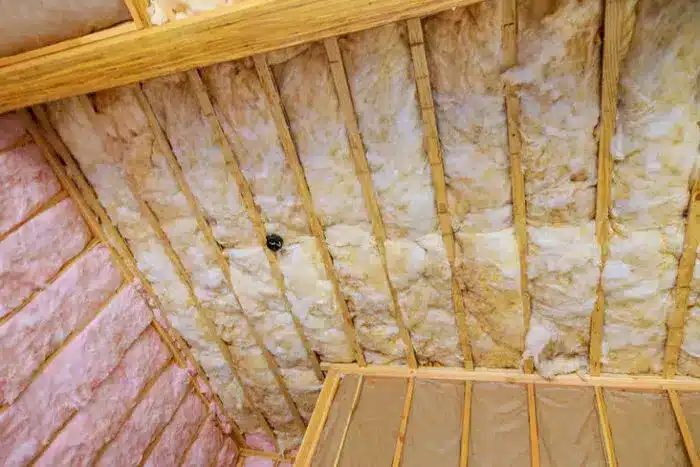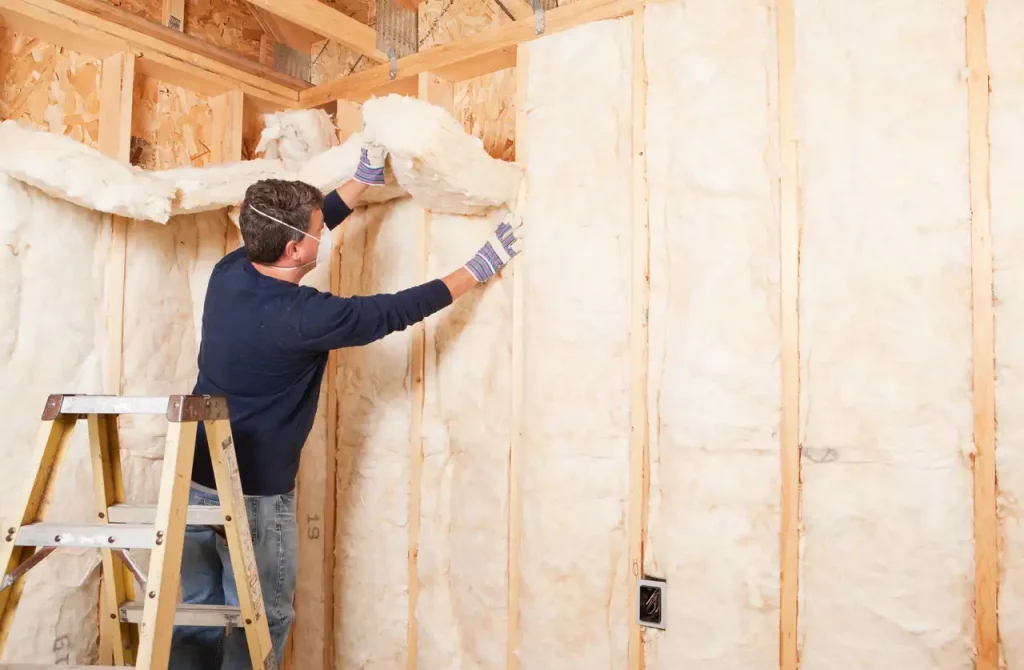
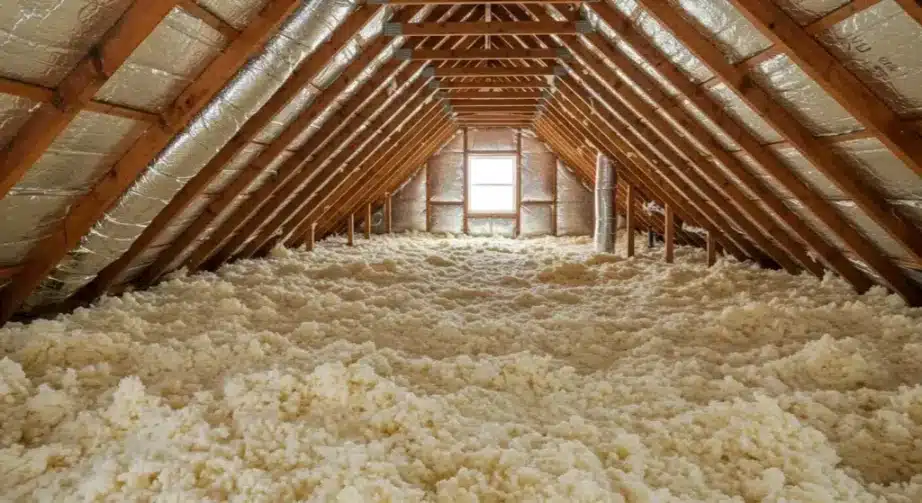
Uneven blown-in insulation in Medford homes is almost always the result of poor installation technique, material settling, or unaddressed air movement in the attic. When insulation coverage is inconsistent, you lose thermal performance where you need it most, especially during Medford’s cold winters and hot summers, where the temperature swing can exceed 50 degrees between seasons. The fix depends on identifying the specific cause, whether that means adding material to thin spots, addressing moisture issues, air sealing before reinsulating, or switching to a material with better resistance to settling.
TLDR / Key Takeaways
- Settling is the most common cause of uneven blown-in insulation, particularly with fiberglass, which can lose 10 to 20% of its thickness over time.
- Inconsistent installation depth during the original blow-in process leaves low spots and voids that directly reduce R-value performance.
- Wind washing from soffit and ridge vents displaces loose-fill insulation near eaves, creating thin bands along the attic perimeter.
- Moisture absorption compresses cellulose insulation and can lead to mold, requiring removal and replacement rather than simply adding more material on top.
- Medford sits in IECC Climate Zone 4C, which means attics should target at least R-38 to R-49 for effective energy performance per U.S. Department of Energy – Energy-Efficient Home Improvement Credit guidelines.
- Air sealing should always precede reinsulating, since adding insulation over air leaks traps moisture and fails to stop the actual heat loss.
- Depth markers and baffles installed during the process are the best way to ensure uniform coverage and prevent future issues.
Why Blown-In Insulation Becomes Uneven
Blown-in insulation, whether cellulose or fiberglass, offers excellent coverage when installed correctly. But several factors can cause it to shift, settle, or develop gaps that undermine your home’s thermal envelope.
Material Settling Over Time
All loose-fill insulation settles to some degree, but the rate and severity vary by material. Cellulose, made from recycled paper treated with fire retardants, tends to settle 15 to 20% over the first few years after installation. Fiberglass settles less but still compresses, especially if the initial bag count was calculated for a settled depth rather than the installed depth. In a standard attic, this settling can reduce your effective R-value by several points, particularly in the center of the attic where insulation depth was originally greatest.
The problem compounds when homeowners add insulation on top of already-settled material without checking the underlying R-value. You may appear to have adequate depth in some areas, while the settled base layer provides minimal resistance to heat transfer.
Inconsistent Installation Depth
Uneven coverage often starts at the time of installation. Blown-in insulation requires the installer to maintain a consistent hose distance, angle, and machine calibration across the entire attic floor. Rushed jobs, inexperienced crews, or inaccessible areas behind ductwork and trusses can all lead to thin spots and voids.
According to Energy Trust of Oregon – Insulation Options, proper installation includes verifying coverage depth with rulers or depth markers placed throughout the attic. Without these checks, it is difficult to confirm that every section meets the target R-value.
Wind Washing Near Vents
Attic ventilation is essential in the Pacific Northwest to prevent moisture buildup, but the airflow from soffit vents and ridge vents can push loose-fill insulation away from the eaves. This creates a thin band of exposed ceiling near the exterior walls, which is exactly where insulation matters most for preventing ice dams and heat loss.
Properly installed baffles or chutes between the rafters at each soffit vent prevent wind from entering the insulation cavity. When these are missing or incorrectly sized, wind washing gradually erodes the insulation layer.
Moisture and Compression
Medford’s climate includes wet winters, and any roof leak, condensation issue, or improper bathroom fan venting can introduce moisture into the attic. Cellulose absorbs moisture more readily than fiberglass, and when it gets wet, it compresses and clumps. Even after drying, the material often does not regain its original loft or R-value.
Wet insulation is more than an efficiency problem. It creates conditions for mold growth and wood rot, which can compromise structural integrity and indoor air quality.
| Cause | Affected Material | Severity | DIY Fixable? |
|---|---|---|---|
| Natural settling | Cellulose, Fiberglass | Moderate | Partial (add more material) |
| Inconsistent installation | Both | High | No (professional reblow) |
| Wind washing | Both, especially fiberglass | High | No (need baffles installed) |
| Moisture compression | Cellulose primarily | Critical | No (removal required) |
| Foot traffic damage | Both | Low to Moderate | Yes (fluff and redistribute) |
| Blocked eaves from storage | Both | High | Yes (clear and reblow) |
How to Identify Uneven Insulation in Your Attic
Most homeowners never look inside their attic, which is why uneven insulation often goes unnoticed until energy bills climb or comfort issues appear. Here are the practical ways to check:
Visual inspection with a flashlight. Look for obvious low spots, bare drywall, or areas where insulation appears thinner than surrounding sections. Pay special attention to the eaves and around ductwork.
Depth measurement. Use a ruler or tape measure to check insulation depth at multiple points. For fiberglass, roughly 10 to 14 inches provides R-38. For cellulose, you need about 10 to 11 inches for the same R-value, since cellulose delivers roughly H-Proofs – Understanding R-Values and Attic Insulation of 3.2 to 3.8 per inch.
Thermal imaging or energy audit. A professional energy audit with an infrared camera can reveal temperature variations on your ceiling that indicate missing or thin insulation. This is especially useful for finding voids hidden beneath settled material.
Ice dams in winter. If you notice ice building up along your roof edge during Medford’s freezing temperatures, uneven or insufficient attic insulation is often a contributing factor, along with inadequate ventilation.
Correction Methods by Cause
Not all uneven insulation problems have the same solution. The right approach depends on what caused the unevenness in the first place.
Adding Material to Settled Areas
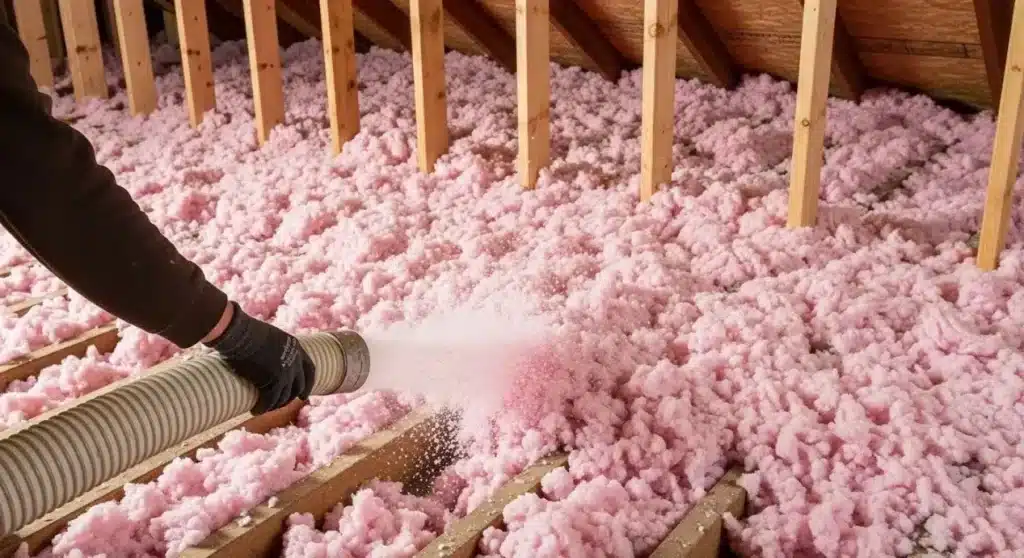
If settling is the primary issue and the existing insulation is dry and in good condition, a professional can blow additional material over the top to bring all areas up to the target R-value. In Medford’s Climate Zone 4C, the UpCodes – Oregon IECC Climate Zones reference and IECC recommendations call for ceiling insulation of R-38 minimum, with R-49 as the preferred target for new construction and major renovations.
The key is calculating the existing R-value based on the current settled depth and material type, then supplementing to reach the target. Depth markers should be installed during the process to ensure consistent coverage.
Air Sealing Before Reinsulating
Adding insulation over air leaks is like wearing a thick coat with the zipper open. Before blowing in new material, all penetrations through the attic floor should be sealed, including around recessed lights, plumbing stacks, electrical wire runs, and the top plates of interior partition walls. This step alone can improve comfort and efficiency as much as adding several inches of insulation.
Installing Baffles at Soffit Vents
If wind washing has displaced insulation near the eaves, rafter baffles need to be installed before reinsulating. These chutes maintain a clear air channel from the soffit vent to the upper attic while holding insulation back from the ventilation opening. Once baffles are in place, insulation can be blown to the correct depth right up to the exterior wall top plate.
Removing and Replacing Wet or Damaged Insulation
If moisture has compromised the insulation, simply adding more material on top is not the answer. Wet cellulose should be removed, the moisture source fixed, and the area allowed to dry before new insulation is installed. In cases of mold growth, remediation may be necessary before any insulation work begins.
Why Medford Homes Face Specific Challenges
Medford’s location in the Rogue Valley creates conditions that stress attic insulation differently than coastal Oregon or the Willamette Valley. Summer temperatures regularly exceed 95 degrees, and winter lows can drop into the 20s. This wide temperature range means your attic insulation works hard in both directions, keeping heat out in July and holding it in during January.
The dry summer season reduces moisture concerns temporarily, but the wet fall and winter months can introduce condensation and leaks. As discussed in Green Building Advisor – Loose-Fill Insulation in Temperate Climates, homes built before modern energy codes may have as little as R-11 or R-19 in the attic, far below the current R-38 to R-49 standard. These older homes also frequently lack proper baffles and air sealing, making them prime candidates for uneven insulation problems.
Recommendations by Home Type
| Home Type | Common Issue | Recommended Correction |
|---|---|---|
| Pre-1980s homes | Low R-value, no air sealing | Full air seal + blow to R-49 |
| 1990s-2000s tract homes | Settled fiberglass, wind washing | Add baffles + supplement to R-38 |
| Homes with HVAC in the attic | Duct obstructions, compressed insulation | Duct sealing + careful reinsulation around obstructions |
| Recently insulated homes | Voids from rushed installation | Professional inspection and spot correction |
| Vaulted ceiling homes | Inadequate baffle space | Rigid foam + dense-pack cellulose in rafter bays |
Signs You Need a Professional Assessment
Not every uneven insulation problem is visible from the attic hatch. Consider calling an insulation professional if you notice any of the following:
- Certain rooms in your home are consistently colder or hotter than others, especially those directly below the attic
- Your heating and cooling costs have increased without a clear explanation, such as a rate hike
- You see ice dams forming along your roof edge in winter
- You can see bare drywall or framing in the attic when looking from the access point
- Your home was insulated more than 15 years ago and has never been re-evaluated
A qualified insulation contractor will assess not just the insulation depth, but also air sealing, ventilation, and moisture conditions to develop a comprehensive correction plan.
Line Chart Suggestion: A side-by-side comparison of R-value retention over a 20-year period for blown-in cellulose versus blown-in fiberglass, showing the settlement curve and the point at which supplemental material is typically needed to maintain the target R-38 in Climate Zone 4C.
Fix Uneven Blown-In Insulation the Right Way
Uneven blown-in insulation will not correct itself, and delaying repairs only increases energy loss and comfort issues. At All Foam & Insulation, LLC, we evaluate attics in Medford, OR for settling, gaps, wind washing, and moisture-related damage, then apply the right solution, whether that is targeted top-ups, full reblown coverage, or air sealing with proper ventilation. We ensure consistent R-value coverage so your insulation performs as it should.
Call us at (541) 826-9600 or email [email protected] to discuss your situation.
FAQs
How much does it cost to fix uneven blown-in insulation in Medford?
Costs depend on the size of your attic, the current insulation condition, and whether air sealing or baffles are needed. Supplemental blowing for a standard 1,200-square-foot attic typically ranges from $800 to $1,800, while a full air seal and reinsulation can run $2,500 to $5,000 or more. Getting an in-person assessment is the only way to receive an accurate estimate for your specific situation.
Can I add more blown-in insulation over existing uneven insulation?
Yes, in most cases. As long as the existing insulation is dry, free of mold, and not contaminated with rodent debris, a professional can blow additional material directly on top to bring all areas to the target R-value. The existing material is factored into the total R-value calculation so you do not over-insulate or waste material.
How long does blown-in insulation last before it needs to be replaced?
Blown-in fiberglass can last 50 years or more with minimal settling. Cellulose typically lasts 20 to 30 years before settling reduces its effectiveness enough to warrant supplementation. Neither material usually needs full replacement unless it has been damaged by moisture, pests, or physical disturbance.
Will fixing my attic insulation really lower my energy bills?
For homes with R-19 or less in the attic, bringing insulation up to R-49 can reduce heating and cooling costs by 10 to 20%, depending on the home’s overall efficiency. The savings are most noticeable in homes with ductwork in the attic, since conditioned air losses through leaky ducts into an under-insulated attic represent a double penalty.
Do I need baffles at every soffit vent?
Yes. Every soffit vent should have a rafter baffle or chute installed to maintain the ventilation pathway from the eave to the upper attic. Missing baffles allow wind to blow insulation away from the edges and can also block ventilation entirely if insulation falls into the soffit, leading to moisture problems and reduced insulation performance.
Sources
- U.S. Department of Energy – Energy-Efficient Home Improvement Credit – Federal guidelines on insulation R-value requirements by climate zone and available tax credits for insulation upgrades.
- Energy Trust of Oregon – Insulation Options – Oregon-specific guidance on insulation types, R-values, and installation best practices for Pacific Northwest homes.
- H-Proofs – Understanding R-Values and Attic Insulation – Technical breakdown of R-value per inch for blown-in cellulose, fiberglass, and other common insulation materials.

- Faced vs. Unfaced Fiberglass Batts in Creswell, OR: Performance and Applications Compared - September 11, 2026
- How to Install Fiberglass Batt Insulation Between Floor Joists in Brookings, OR - September 11, 2026
- Fiberglass Batt Insulation Thickness: How Do You Choose the Right Size? - September 9, 2026