Finding the right contractor for spray foam installation in Grants Pass, OR, means looking beyond a quick online search and focusing on local expertise, proper licensing, and a clear understanding of Southern Oregon’s unique climate demands. Grants Pass sits in IECC Climate Zone 4C, a marine-influenced zone that calls for minimum R-49 insulation in uninsulated attics and R-30 in uninsulated floors according to the U.S. Department of Energy. Spray foam insulation is one of the most effective ways to meet and exceed these requirements, but only when installed by experienced professionals who follow local building codes, use the correct foam type for each application, and prioritize safe installation practices. Whether you are insulating a new build, retrofitting an older home, or upgrading a commercial space, the quality of your contractor directly determines the performance, safety, and longevity of your insulation investment.
TLDR / Key Takeaways
- Grants Pass falls under IECC Climate Zone 4C, requiring R-49 in uninsulated attics and R-30 in uninsulated floors to meet energy code standards.
- Closed-cell spray foam delivers R-6.5 per inch, while open-cell provides R-3.7 per inch, making the choice between them project-dependent.
- National spray foam installation costs range from $1.00 to $4.50 per square foot, with closed-cell typically running 30 to 50 percent higher than open-cell.
- The City of Grants Pass enforces the Oregon Residential Specialty Code, which includes specific structural and insulation requirements tied to seismic zone D1 and a 25-pound snow load.
- The EPA has identified isocyanate exposure as a health concern during spray foam application, making proper safety protocols and ventilation a non-negotiable selection criterion.
- Leading contractors provide written warranties, carry active liability insurance, and supply Safety Data Sheets for every product used on site.
- Retrofit projects in Grants Pass commonly target crawl spaces, rim joists, and attic floors, where air sealing combined with insulation delivers the largest energy savings.
- Homeowners who upgrade insulation may qualify for federal tax credits under the Energy Efficient Home Improvement Credit for qualifying materials and labor.
Why Spray Foam Matters in Grants Pass, OR
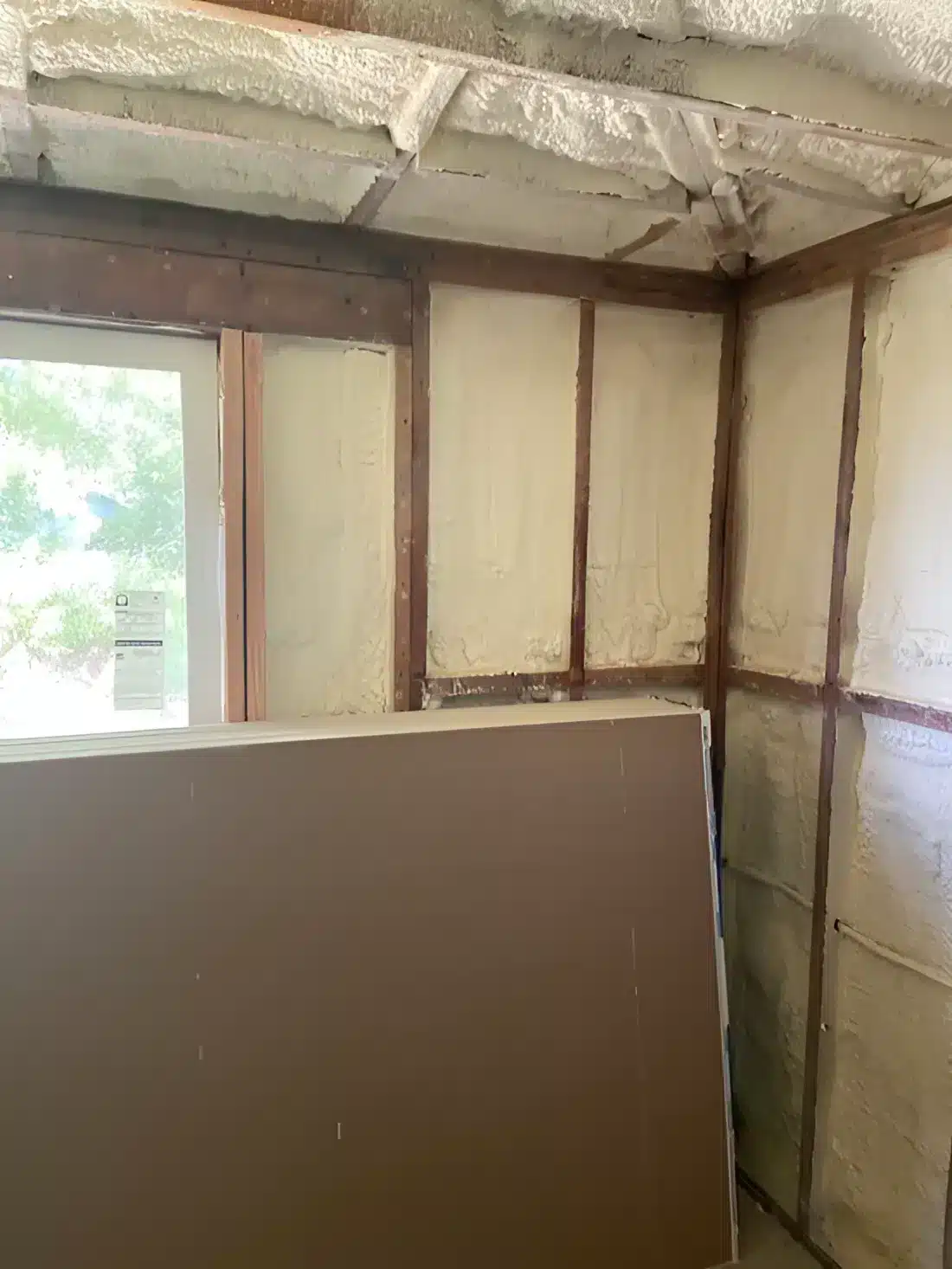
Grants Pass experiences hot, dry summers and cool, wet winters. That temperature swing means homes lose energy in both directions, and standard insulation like fiberglass batts often leaves gaps that allow conditioned air to escape. Spray foam expands on contact to fill cracks, gaps, and hard-to-reach cavities, creating an airtight seal that traditional materials simply cannot match. The U.S. Department of Energy notes that proper insulation not only reduces heating and cooling costs but also improves indoor comfort by resisting all three forms of heat transfer: conduction, convection, and radiation.
Grants Pass also sits in seismic zone D1 with a 25-pound per square foot roof snow load, as documented in the City of Grants Pass building codes. These structural realities mean insulation projects must account for load-bearing considerations, proper ventilation, and code-compliant installation that does not compromise a building’s structural integrity.
Open-Cell vs. Closed-Cell: Choosing the Right Foam
Not all spray foam performs the same way. The two primary types serve different purposes, and a knowledgeable contractor will recommend the right product based on your specific project conditions.
| Feature | Open-Cell Spray Foam | Closed-Cell Spray Foam |
|---|---|---|
| R-Value per Inch | ~R-3.7 | ~R-6.5 |
| Density | Low (0.5 lb/ft3) | High (2.0 lb/ft3) |
| Moisture Barrier | Permeable (allows moisture passage) | Acts as a vapor barrier |
| Best Application | Walls, ceilings, sound dampening | Crawl spaces, foundations, metal buildings |
| Cost per Sq Ft | Lower ($1.00 to $2.50) | Higher ($2.00 to $4.50) |
| Structural Benefit | Minimal | Adds rigidity to walls and roof decks |
According to Fine Homebuilding, closed-cell foam’s higher R-value per inch makes it the preferred choice when cavity depth is limited, such as in 2×4 wall framing. Open-cell foam, with its lower cost and sound-dampening qualities, is often selected for interior wall assemblies and ceiling cavities where space is less restricted.
In Grants Pass, many contractors recommend closed-cell foam for crawl spaces and rim joists due to Southern Oregon’s damp winters. The vapor barrier quality of closed-cell foam helps prevent moisture intrusion from the ground, protecting both the insulation and the building structure.
Cost Expectations for Spray Foam Projects
Understanding the investment required for spray foam insulation helps property owners budget accurately and evaluate quotes. National averages place spray foam costs between $1.00 and $4.50 per square foot, depending on foam type, project complexity, and geographic market conditions.
- Open-cell foam: Typically $1.00 to $2.50 per square foot for standard wall and ceiling applications.
- Closed-cell foam: Typically $2.00 to $4.50 per square foot, with crawl space and basement projects often falling at the higher end due to prep work and access challenges.
- Whole-home projects: A 2,000-square-foot home retrofit commonly ranges from $4,000 to $12,000 depending on the number of areas treated and foam type selected.
These figures represent material and labor combined. A detailed, written quote from a licensed contractor is the only reliable way to price a specific project.
What Separates Top-Rated Contractors
With multiple insulation companies serving the Grants Pass area, several factors distinguish experienced, reliable contractors from the rest.
Licensing and insurance: The City of Grants Pass requires building permits for insulation work that alters the building envelope. A reputable contractor holds an active Oregon construction license and carries general liability and workers’ compensation insurance. Always verify these credentials before signing a contract.
Product transparency: A professional contractor will share Safety Data Sheets for every spray foam product used on your project. The Consumer Product Safety Commission recommends that homeowners request this documentation and confirm that installers follow proper protective measures, including ventilation protocols and re-occupancy timelines.
Experience with local codes: Oregon enforces some of the strictest building energy codes in the country. Contractors who regularly work in Josephine County understand the specific requirements for insulation R-values, air sealing verification, and compliance with the Oregon Residential Specialty Code. Homeowners looking for a broader understanding of insulation systems and applications can refer to this insulation guide for homes and businesses.
Written warranties and references: A trustworthy contractor provides a written warranty covering both materials and workmanship. They should also offer local references from recent projects that you can contact directly.
Health, Safety, and Proper Installation
Spray foam insulation involves chemicals that require careful handling. The EPA has raised concerns about isocyanate exposure during and immediately after spray foam application. Isocyanates can cause skin, eye, and lung irritation, asthma, and sensitization in workers and building occupants.
Proper installation requires the following safety measures:
- Occupants and pets must vacate the building during application.
- Installers wear full personal protective equipment, including respirators.
- The work area is ventilated with mechanical fans during and after spraying.
- The building is not reoccupied until off-gassing levels have dropped to safe thresholds, which a qualified contractor will verify.
A contractor who downplays these precautions or is unwilling to discuss safety protocols is not worth the risk. Leading contractors treat safety as a core part of their process, not an afterthought.
Recommendations by Property Type
Different buildings in Grants Pass have different insulation needs. Here is how the approach typically varies:
| Property Type | Recommended Foam | Priority Areas | Key Consideration |
|---|---|---|---|
| Single-family homes (existing) | Open-cell or closed-cell | Attic floor, rim joist, crawl space | Air sealing before insulating for maximum efficiency |
| New construction | Closed-cell or hybrid | Walls, attic, band joist | Coordinate with framing and HVAC design early |
| Older homes (pre-1980) | Closed-cell for moisture zones | Crawl space, rim joist, attic | Assess for asbestos or lead before disturbing building cavities |
| Commercial buildings | Closed-cell | Roof deck, walls, metal framing | Fire code compliance and structural load requirements |
| Accessory Dwelling Units (ADUs) | Open-cell (cost-effective) | Walls, ceiling, floor | City of Grants Pass has specific ADU permitting requirements |
Signs You Have Found the Right Contractor
Evaluating contractors comes down to a few clear indicators that separate professionals from inexperienced operators.
- They perform a thorough on-site assessment before quoting, rather than providing a price over the phone.
- They explain the differences between open-cell and closed-cell foam and recommend a product based on your specific building conditions, not just the higher-priced option.
- They provide a detailed written estimate that breaks down materials, labor, prep work, cleanup, and warranty terms.
- They carry active insurance and are willing to provide proof upon request.
- They discuss safety protocols, including occupancy timelines and ventilation requirements, without being asked.
- They hold a strong reputation in the Grants Pass community with verifiable local references.
Ready to Upgrade Your Insulation?
All Foam & Insulation serves Grants Pass and the surrounding Rogue Valley with professional spray foam installation backed by local building code expertise and a commitment to safe, high-quality workmanship. Whether you need crawl space encapsulation, attic insulation, or a full-building retrofit, our team will assess your property, recommend the right foam type, and deliver results that stand up to Southern Oregon’s demanding climate.
tContact us at (541) 826-9600 or email [email protected] to get started. Your comfort and energy savings are worth investing in the right team.
Frequently Asked Questions
Is spray foam insulation worth the cost compared to fiberglass? A: Spray foam costs more upfront but delivers higher R-values per inch and creates an airtight seal that fiberglass cannot match, leading to greater long-term energy savings.
How long does spray foam take to cure before I can re-enter my home? A: Most manufacturers recommend waiting 24 hours after application, but your contractor should verify safe re-occupancy based on ventilation and specific product guidelines.
Can spray foam be installed in an existing home without removing drywall? A: Yes, common retrofit applications include crawl spaces, attic floors, and rim joists, all of which are accessible without removing interior finishes.
Does Grants Pass require a building permit for spray foam insulation? A: Insulation work that alters the building envelope typically requires a permit through the City of Grants Pass, and your contractor should handle the permitting process.
Will spray foam help with indoor air quality in my home? A: By sealing air leaks, spray foam reduces the infiltration of dust, allergens, and outdoor pollutants, which can improve indoor air quality when paired with proper ventilation.
Sources
- U.S. Department of Energy – Insulation – Federal guidance on insulation R-values, climate zone requirements, and how insulation resists heat transfer through conduction, convection, and radiation.
- City of Grants Pass – Current Building Codes in Effect – Local structural design criteria including seismic zone D1 classification, 25 lb/sq ft snow load, frost depth, and applicable Oregon Residential Specialty Code.
- Fine Homebuilding – Closed-Cell vs. Open-Cell Spray Foam – Technical comparison of open-cell (R-3.7/inch) and closed-cell (R-6.5/inch) spray foam R-values and application considerations.