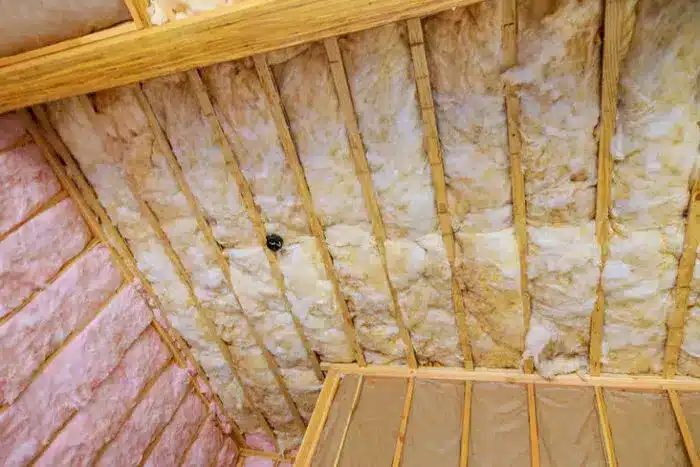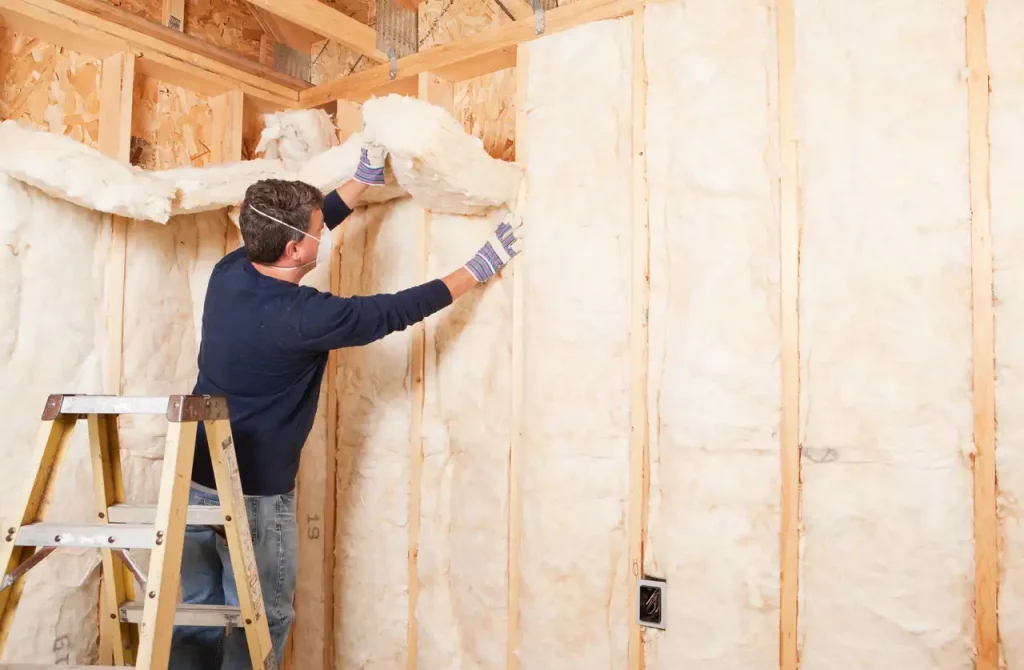
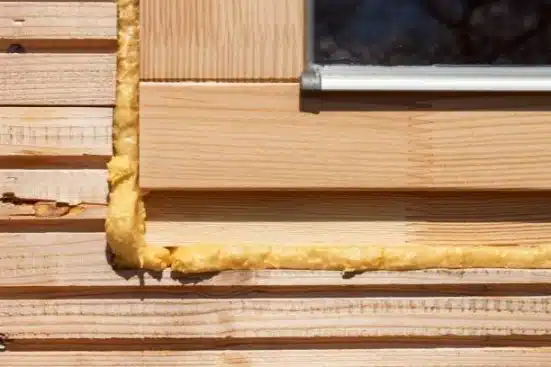
Air sealing and insulation serve two fundamentally different purposes in a building envelope, but they work together to deliver real energy savings. Air sealing stops unconditioned air from leaking in and out through cracks, gaps, and penetrations. Insulation slows conductive heat transfer through walls, ceilings, and floors using materials rated by R-value (thermal resistance). Neither one alone performs as well as both combined. According to ENERGY STAR, homeowners can save an average of 15% on heating and cooling costs by properly air sealing and adding insulation. For contractors, understanding when to prioritize each approach, how R-value relates to actual field performance, and what alternatives exist for different budgets and building types directly affects project outcomes and client satisfaction.
TLDR / Key Takeaways
- Air sealing alone can reduce energy costs by 10 to 20%, while insulation alone typically saves 5 to 15%, according to the U.S. Department of Energy
- R-value measures thermal resistance in a lab setting but does not account for air movement through or around insulation, which can reduce real-world performance by 30% or more
- Air sealing should almost always be completed before adding insulation to prevent trapping moisture and ensure the insulation performs at its rated R-value
- Spray foam insulation combines both air sealing and insulation in a single step, making it the most efficient option when budget allows
- Fiberglass and cellulose insulations rely on separate air sealing work to reach their stated R-value performance in the field
- Climate zone, building age, and existing conditions are the three biggest factors in deciding which approach or combination to recommend
What R-Value Actually Measures (And What It Doesn’t)
R-value is the standard measurement of thermal resistance. It indicates how well a material resists conductive heat flow. Higher R-value means better resistance. This number is determined under controlled laboratory conditions and printed on every insulation product sold in the United States.
The problem is that R-value only measures one type of heat transfer: conduction. It does not account for convection (air movement) or radiation. In a real building, air moves through gaps around windows, doors, electrical outlets, plumbing penetrations, rim joists, and attic hatches. When air moves through or around insulation material, the effective R-value drops significantly.
The Insulation Institute points out that even high-R-value insulation underperforms if the building envelope has not been properly air sealed. A wall insulated to R-38 with fiberglass batts but riddled with air leaks can perform worse than a wall insulated to R-19 that has been thoroughly sealed. This is why R-value alone is an incomplete measure of field performance.
Air Sealing: How It Works and Where It Matters Most
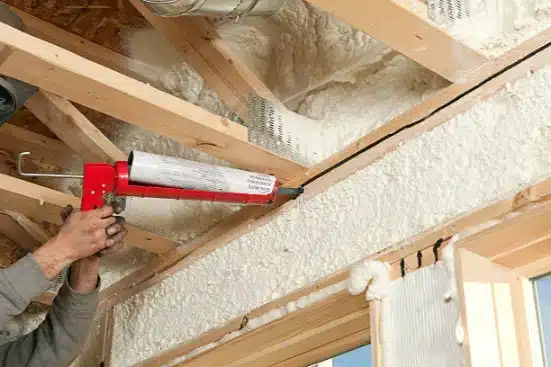
Air sealing involves closing gaps, cracks, and penetrations in the building envelope using caulks, foams, gaskets, and specialized tapes. Common targets include:
- Attic floor penetrations (top plates, recessed lights, duct boots)
- Rim joists and band joists in basements and crawlspaces
- Window and door rough openings
- Plumbing and electrical penetrations
- Ductwork connections and registers
The U.S. Department of Energy has identified that air infiltration and exfiltration account for greater energy losses than any other single component of the building envelope. Sealing these leaks is typically the most cost-effective energy improvement a building owner can make.
Air sealing also controls moisture. When warm, humid indoor air leaks into a cold wall cavity during winter, condensation forms inside the wall. Over time, this leads to mold growth, wood rot, and structural damage. By stopping the air movement, you stop the moisture transport.
R-Value Comparison: Insulation Types at a Glance
Not all insulation materials deliver the same R-value per inch, and not all of them create an effective air barrier. The table below compares the most common insulation types contractors encounter.
| Insulation Type | R-Value per Inch | Air Barrier? | Best Application | Cost Range (per sq ft) |
|---|---|---|---|---|
| Closed-Cell Spray Foam | 6.5 to 7.0 | Yes | Walls, crawlspaces, rim joists | $1.50 to $3.50 |
| Open-Cell Spray Foam | 3.5 to 3.7 | Yes | Walls, attics, sound control | $0.75 to $1.50 |
| Rigid Foam Board (XPS) | 5.0 | Depends on installation | Exterior continuous insulation | $0.70 to $1.20 |
| Rigid Foam Board (EPS) | 3.8 to 4.4 | Depends on installation | Exterior continuous insulation | $0.50 to $0.90 |
| Fiberglass Batt | 2.9 to 3.8 | No | Walls, floors, attics | $0.30 to $1.00 |
| Blown-In Cellulose | 3.1 to 3.8 | No | Attics, existing wall cavities | $0.40 to $1.10 |
| Mineral Wool Batt | 3.3 to 4.2 | No | Walls, fire-rated assemblies | $0.60 to $1.50 |
Closed-cell spray foam stands out because it provides both high R-value per inch and an effective air barrier in a single application. Fiberglass, cellulose, and mineral wool all require separate air sealing to perform at their rated R-value.
Air Sealing vs Insulation: Head-to-Head Comparison
| Factor | Air Sealing | Insulation (R-Value Focus) |
|---|---|---|
| Primary function | Stops air leakage | Slows conductive heat transfer |
| Typical energy savings | 10 to 20% | 5 to 15% |
| Affects moisture control | Yes, directly | Indirectly |
| Measured by | Blower door test (CFM50) | R-value rating |
| Installation complexity | Moderate (detail-oriented) | Low to high (varies by material) |
| Visible to the homeowner | Mostly hidden | Mostly hidden |
| Code requirement | Varies by jurisdiction | Minimum R-values prescribed by code |
| Works independently | Partially effective alone | Underperforms without air sealing |
The key takeaway for property owners is that air sealing maximizes the value of insulation. Adding R-30 insulation to an unsealed attic is a waste of material and money. Seal it first, then insulate.
Which Should Come First: Air Sealing or Insulation?
In nearly every scenario, air sealing should be completed before insulation is installed. Here is why:
Moisture control. If you insulate an air-leaky cavity, warm indoor air carrying moisture will continue to enter that cavity and condense on cold surfaces. Insulation can actually make this worse by keeping interior surfaces warmer, which pushes the dew point deeper into the cavity where the moisture gets trapped against the sheathing.
Insulation effectiveness. Air moving through insulation strips away the trapped air pockets that provide its insulating value. The Insulation Institute has documented that air infiltration can reduce the effective R-value of fiberglass insulation by up to 50% in some installations.
Durability. Air sealing addresses the root cause of many building durability problems, including ice dams, condensation, and mold. Insulation alone cannot solve these issues.
The exception is when using spray foam, which seals and insulates in a single step. In that case, the order question is eliminated.
Real-World Contractor Scenarios
The following table presents realistic scenarios a contractor might encounter and the recommended approach for each.
| Scenario | Property Type | Recommended Option | Estimated Cost |
|---|---|---|---|
| 1960s home, drafty attic, existing fiberglass | Single-family residential | Air seal attic floor + blown-in cellulose over existing | $2,500 to $4,500 |
| New construction, tight budget | Production home | Fiberglass batts + detailed air sealing at rough openings | $1.00 to $1.80 per sq ft |
| Basement rim joist, cold floors above | Single-family or townhome | Closed-cell spray foam on rim joist | $800 to $1,500 |
| Commercial metal building, unconditioned | Warehouse or shop | Closed-cell spray foam on roof deck and walls | $2.50 to $5.00 per sq ft |
| Older multifamily, common area complaints | Apartment building | Air seal common wall and floor penetrations + mineral wool | $1,500 to $6,000 per unit |
Alternative and Hybrid Approaches
For contractors looking beyond the standard fiberglass-and-caulk approach, several alternatives deserve consideration:
Spray foam as a hybrid solution. Both open-cell and closed-cell spray foams seal air leaks and insulate simultaneously. This eliminates the need for a separate air sealing step. Closed-cell spray foam adds structural rigidity and acts as a vapor retarder, which is valuable in flood-prone or high-humidity zones.
Aerogel blankets. Offering R-10 per inch in a thin, flexible blanket, aerogel is ideal for tight spaces where traditional insulation will not fit. The cost is significantly higher, but for targeted applications like header spaces or narrow wall cavities, it can be the only viable option.
Rigid foam continuous insulation. Installing rigid foam board on the exterior of wall assemblies breaks thermal bridging through framing members. This approach has become standard in many energy codes and delivers measurable performance improvements beyond cavity insulation alone.
Dense-pack cellulose. When cellulose is blown into wall cavities at high density (3.5 lbs per cubic foot or more), it provides a measurable air barrier in addition to its insulating properties. This makes it a cost-effective hybrid option for retrofit projects where removing drywall is not feasible.
Bar Chart Suggestion: A side-by-side bar chart showing estimated energy savings percentages for four scenarios: air sealing only, insulation only, both combined, and doing neither. Use a warm-to-cool color gradient from red (poor performance) to green (best performance) to visually reinforce the combined approach as the winner.
Factors That Influence the Decision
Several variables determine whether a contractor should prioritize air sealing, insulation, or a combined approach on any given project:
- Building age and construction type: Older buildings tend to have more air leakage. Newer builds may already be reasonably tight but under-insulated.
- Climate zone: Cold climates prioritize stopping warm air from escaping and preventing condensation. Hot climates focus on keeping hot, humid air out. Mixed climates require careful attention to both heating and cooling seasons.
- Existing conditions: A blower door test reveals the actual air leakage rate and helps identify the most cost-effective sealing targets.
- Budget: Air sealing is typically the lowest-cost, highest-return improvement. Insulation costs scale with the R-value target and material chosen.
- Building codes: Many jurisdictions now require both air sealing verification (blower door testing) and minimum insulation levels for new construction and major renovations.
- Indoor air quality goals: Extremely tight buildings require mechanical ventilation. Contractors should plan for this when specifying aggressive air sealing targets.
Who Air Sealing Is For (And Who It Is Not)
Air sealing is the right priority when:
- The building has never been sealed and shows obvious leakage around penetrations, attic hatches, and ductwork
- A blower door test reveals leakage above 5 to 7 ACH50
- The homeowner or building owner reports drafts, cold spots, or high energy bills
- Moisture problems like condensation, mold, or ice dams are present
- Budget is limited, and the client wants the highest return per dollar spent
Air sealing alone is NOT sufficient when:
- The building already meets tightness targets, but lacks adequate insulation depth
- The climate demands high R-values for code compliance or comfort
- Sound control is a primary concern, since insulation provides acoustic dampening that air sealing does not
Who Insulation-First Makes Sense For (And Who It Does Not)
Insulation is the right priority when:
- Air sealing has already been completed, or the building is reasonably tight
- Code-required R-values have not been met
- The project involves new construction, where air sealing details are specified separately
- Sound attenuation is a primary driver (multifamily walls, home theaters, mechanical rooms)
Insulation alone is NOT sufficient when:
- The building envelope has significant unsealed penetrations
- Moisture issues suggest air-driven condensation
- The homeowner expects dramatic energy bill reductions that only air sealing can deliver
Get a Professional Assessment for Your Next Project
Choosing between air sealing, insulation, or a combined approach depends on building conditions that are not always visible. At All Foam & Insulation, LLC, we evaluate every project individually, using blower door diagnostics and infrared scanning to identify exactly where your building loses energy and where your investment will have the greatest impact. Whether you are insulating a new build, retrofitting a drafty home, or specifying materials for a commercial project, we will recommend the right solution and install it correctly the first time.
Call us at (541) 826-9600 or email [email protected] to get started.
Frequently Asked Questions
Does R-value matter if the building is not air-sealed?
R-value still matters, but it will not deliver its full performance if air is moving through or around the insulation. Think of it like wearing a thick winter coat with the zipper open. The coat has high insulating value, but the air gap defeats the purpose. Seal the building first, then add insulation to get the full benefit of the R-value you are paying for.
Can you over-insulate a building?
You can insulate beyond what is practical or cost-effective, but over-insulation in a tight building creates a different problem: inadequate ventilation. Buildings need fresh air exchange. If you insulate aggressively and seal tightly without providing mechanical ventilation, indoor air quality will suffer from elevated CO2, moisture, and pollutants. The solution is not to under-insulate, but to pair tight envelopes with proper ventilation systems.
Is spray foam insulation worth the higher cost?
For many projects, yes. Spray foam eliminates the need for separate air sealing, provides higher R-value per inch, and adds structural benefits in the case of closed-cell foam. The higher upfront cost is offset by faster installation, fewer callbacks related to air leakage, and better long-term energy performance. For budget-constrained projects, a combination of detailed air sealing with fiberglass or cellulose can deliver similar energy savings at lower material cost.
How do I know if a building needs air sealing or more insulation?
A blower door test is the most reliable way to determine this. The test pressurizes or depressurizes the building and measures the rate of air leakage in cubic feet per minute (CFM50). If the leakage rate is high relative to the building’s floor area, air sealing should be the priority. If the building is already tight but energy bills remain high, insufficient insulation is likely the issue. Infrared imaging during the blower door test can pinpoint exactly where problems exist.
What is the best order of operations for a full retrofit?
Start with a thorough air sealing pass: attic floor, rim joists, penetrations, and any accessible gaps. Then add insulation to meet or exceed code minimums for your climate zone. Finally, verify the results with a post-installation blower door test to confirm that the air sealing is intact and the insulation is performing as expected. Skipping the verification step means you are guessing at the results rather than confirming them.
Sources
- ENERGY STAR – Why Seal and Insulate – EPA estimates of energy savings from combined air sealing and insulation, along with guidance on priority areas and best practices.
- Insulation Institute – Air Infiltration and Insulation – Explanation of how air infiltration affects real-world R-value performance and the relationship between air sealing and insulation effectiveness.
- NREL – Case Study of Envelope Sealing in Existing Multiunit Structures – National Renewable Energy Laboratory data showing that air sealing alone can save 10% to 20% of single-family home energy use.

- Faced vs. Unfaced Fiberglass Batts in Creswell, OR: Performance and Applications Compared - September 11, 2026
- How to Install Fiberglass Batt Insulation Between Floor Joists in Brookings, OR - September 11, 2026
- Fiberglass Batt Insulation Thickness: How Do You Choose the Right Size? - September 9, 2026