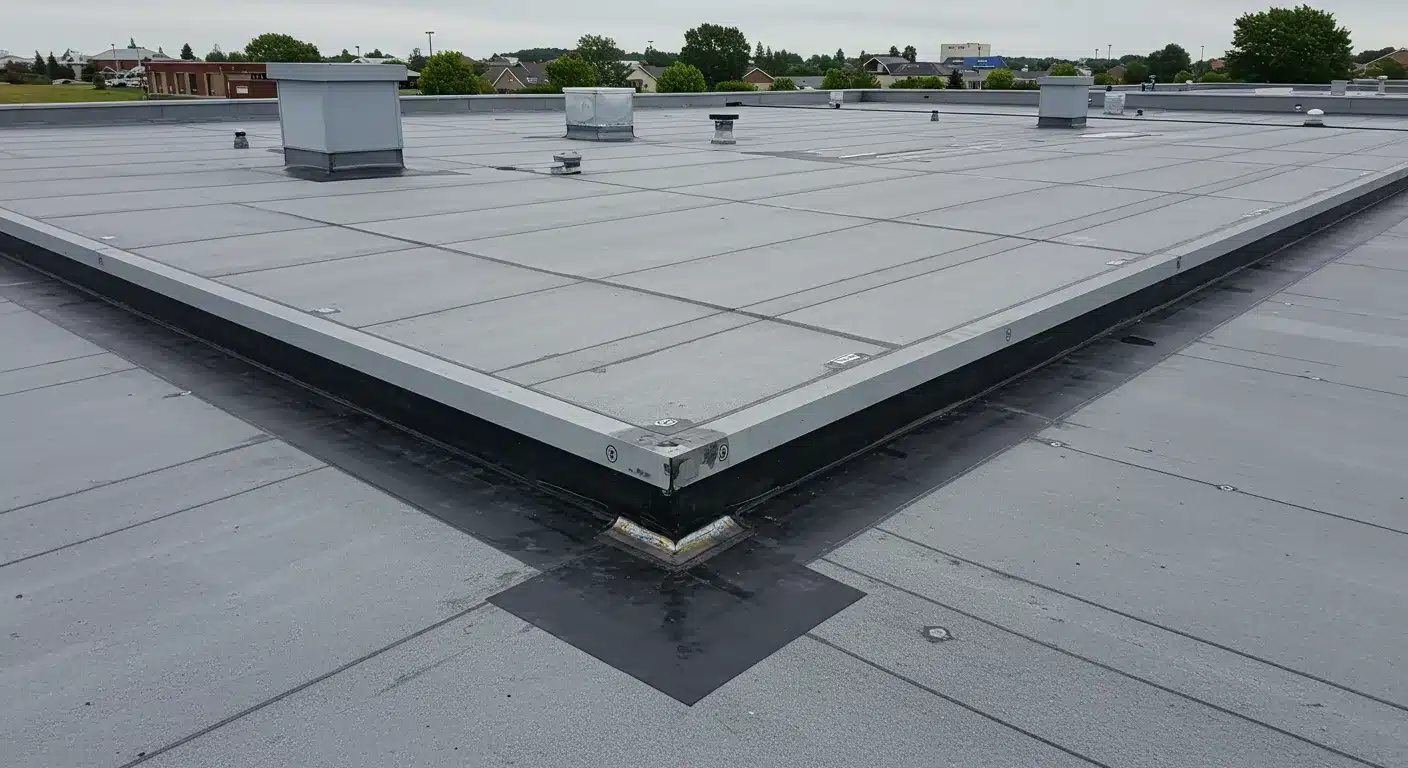
Choosing the right flat roof waterproofing system depends on your building’s size, climate exposure, budget, and how the roof will be used. There is no single “best” membrane for every situation, but modern single-ply and modified bitumen systems have largely replaced older asphalt-and-gravel built-up roofs for good reason. They deliver stronger seams, better UV resistance, faster installation, and longer performance cycles. The main categories to evaluate are thermoplastic membranes like TPO and PVC, thermoset membranes like EPDM, modified bitumen sheets, and cold-applied liquid systems, each serving different priorities around reflectivity, chemical resistance, flexibility, and installation speed.
TLDR / Key Takeaways
- Thermoplastic membranes (TPO, PVC) account for over 55% of the commercial roofing market thanks to heat-welded seams that are as strong as the membrane itself
- TPO has become the most popular single-ply membrane for low-slope commercial roofing since the mid-2010s, driven by its reflective properties and lower material cost
- EPDM, a synthetic rubber thermoset, can deliver warranted lifespans up to 30 years and expected service lives approaching 50 years when fully adhered
- Modified bitumen membranes offer hybrid performance, combining factory fabrication with proven multi-ply redundancy
- White or light-colored membranes reflect 60 to 90% of sunlight, reducing cooling costs and lowering the urban heat island effect
- Proper installation methods (fully adhered, mechanically attached, or ballasted) significantly influence long-term waterproofing performance
- Ponding water, clogged drains, and neglected flashings account for the majority of flat roof failures, not the membrane roofing material itself
Why Membrane Systems Outperform Traditional Built-Up Roofs
Traditional built-up roofs (BUR) using asphalt and gravel have been used for over a century, but they carry real limitations. As UV rays break down the asphalt surface, it cracks, blisters, and alligators. The gravel surfacing shifts over time, exposing the bitumen below. Leaks are hard to locate because water travels between layers before showing up indoors. According to the Wikipedia article on membrane roofing, newer membrane systems eliminate most of these failure points because they are either fully seamless or have heat-welded seams that are equal in strength to the membrane body.
Modern membrane systems also resist the thermal cycling that destroys BUR. They expand and contract with temperature changes without opening seams, and they attach directly to the roof deck rather than relying on the weight of gravel to stay in place. When a leak does occur, the source is far easier to locate and patch compared to multi-layer asphalt systems.
The Four Main Membrane System Categories
Thermoplastic Membranes (TPO and PVC)
Thermoplastic membranes are the dominant choice for new commercial flat roof installations. According to the Wikipedia flat roof article, TPO became the single most popular type of commercial low-slope roof covering as of 2016. Sales data from 2007 to 2012 showed TPO materials and accessories quadrupling those of all other flat roofing materials combined.
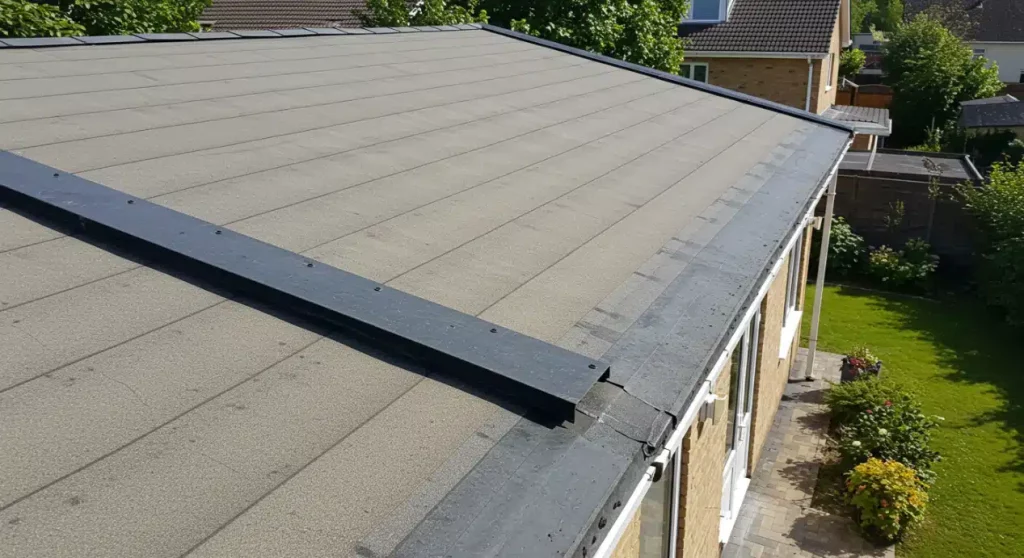
TPO membranes consist of three factory-fused layers: a TPO polymer base, a polyester reinforcement scrim, and a TPO polymer top ply. They come in 45-mil, 60-mil, and 80-mil thicknesses and are available in white, grey, and tan. White TPO is the most common choice because of its reflective, cool roof properties. TPO has no plasticizers added, which means it resists the plasticizer migration issues that can affect PVC over time. Seam strengths are reported to be three to four times higher than EPDM systems, and heat-welding creates bonds that match the membrane’s original strength.
PVC (polyvinyl chloride) membranes share the heat-welded seam advantage but include plasticizers and UV stabilizers for flexibility and weather resistance. PVC tends to offer better chemical resistance, making it well suited for restaurants, manufacturing facilities, and buildings where grease or chemical exhaust may contact the roof surface. It also has inherent fire resistance due to its chlorine content. One consideration with PVC is that thicker membranes retain plasticizer reservoirs longer, maintaining flexibility throughout a longer service life.
Thermoset Membranes (EPDM)
EPDM (ethylene propylene diene monomer) is a synthetic rubber membrane that has been used in roofing since the 1960s. The Wikipedia EPDM rubber article describes EPDM as exhibiting outstanding resistance to heat, ozone, steam, and weather exposure, performing reliably in temperatures ranging from minus 50 degrees Celsius up to 150 degrees Celsius.
EPDM membranes are seamed using pressure-sensitive tapes or adhesives rather than heat welding. While this means seams may not match the strength of thermoplastic welds, modern factory-applied tape systems have reduced installation labor by as much as 75%. Fleece-backed EPDM has a tear strength more than three times that of non-reinforced membranes, offering improved puncture resistance.
EPDM is available in black, white, and grey. Black EPDM absorbs heat, which works well in colder climates but increases cooling loads in warmer regions. White EPDM addresses this but carries a slight premium. The material can be installed as fully adhered, mechanically fastened, or ballasted systems.
Modified Bitumen Membranes
Modified bitumen represents a bridge between old and new technology. Developed in Europe in the mid-1960s, these membranes combine asphalt modified with polymers like atactic polypropylene (APP) or styrene-butadiene-styrene (SBS) with reinforcing fabrics. The Wikipedia membrane roofing page notes that copolymers used to modify asphalt include APP and SBS, each providing different performance characteristics.
APP-modified membranes tend to be stiffer and more heat-resistant, making them well suited for hot climates. SBS-modified bitumen offers more rubber-like flexibility, performing well in climates with wide temperature swings. Installation methods include torch-applied (heating the underside of the roll with a propane torch), hot-mopped, cold adhesive, and self-adhering sheets. Torch application is the most common but requires trained installers due to fire safety concerns.
Modified bitumen offers proven redundancy when multiple plies are installed, and it pairs well with built-up roof systems as a cap sheet. It is widely available, and many roofers are familiar with its installation methods.
Cold-Applied Liquid Membranes
Liquid-applied systems use cold-applied coatings of polyurethane, PMMA, or silicone-based resins, often reinforced with embedded glass fiber matting. These create fully seamless, monolithic waterproofing layers that conform to any roof shape, including complex geometries with multiple penetrations, parapets, and irregular angles.
These systems are popular in retrofit scenarios where the existing membrane can serve as a substrate, avoiding a full tear-off. They cure to form a continuous membrane without seams, which eliminates the most common failure point in sheet-based systems. Application quality depends heavily on correct thickness, as applying the coating too thinly leads to premature failure.
Membrane Comparison at a Glance
| Membrane Type | Category | Seaming Method | Best Application | Key Strength | Key Limitation |
|---|---|---|---|---|---|
| TPO | Thermoplastic | Heat-welded | General commercial, cool roof priority | Reflective, affordable, strong seams | Relatively shorter track record than EPDM |
| PVC | Thermoplastic | Heat-welded | Chemical exposure, restaurants, green roofs | Chemical resistance, fire retardant | Plasticizer migration over long spans |
| EPDM | Thermoset | Tape or adhesive | Long lifespan, cold climates | Proven longevity, UV and weather resistant | Seams weaker than thermoplastics |
| Modified Bitumen | Multi-ply hybrid | Torch, adhesive, or self-adhering | Reroofing, mixed climate zones | Redundant plies, familiar installation | Torch methods carry fire risk |
| Liquid Applied | Monolithic coating | Cured seamless | Complex roof geometries, retrofits | No seams, conforms to any shape | Thickness-dependent, substrate sensitive |
Cool Roof Performance and Energy Impact
The U.S. Department of Energy’s Energy Saver guide on cool roofs explains that conventional roofs can reach 150 degrees Fahrenheit or more on a sunny summer afternoon, while a reflective membrane roof could stay more than 50 degrees cooler. White thermoplastic membranes reflect 60 to 90% of sunlight, directly reducing the heat transferred into the building.
This translates to lower air conditioning costs, reduced strain on HVAC equipment, and improved indoor comfort. In commercial buildings where cooling loads drive a significant portion of energy consumption, the savings compound over decades. Cool roofs also qualify for utility rebates and government incentives in many jurisdictions, and they reduce the urban heat island effect when widely adopted across a community.
For buildings in heating-dominated climates, a cool roof may carry a winter heating penalty by reflecting sunlight that would otherwise warm the building. In those cases, darker membranes like black EPDM or grey TPO may be more appropriate. The right color choice depends on your climate zone, insulation levels, and HVAC system efficiency.
Choosing the Right System by Building Type
| Building Type | Recommended Membrane | Rationale |
|---|---|---|
| Large commercial / warehouse | TPO (white) | Cost-effective at scale, reflective, fast installation |
| Restaurant or food processing | PVC | Superior resistance to grease, fats, and chemical exposure |
| Office building with rooftop equipment | TPO or modified bitumen | Handles foot traffic and equipment loads, good for detail work |
| Residential flat roof addition | EPDM or modified bitumen | Lower profile, proven track record, quieter under rain |
| Green roof installation | PVC or TPO | Root resistant, durable under soil and moisture load |
| Retrofit over existing roof | Liquid-applied or TPO recover | Avoids tear-off, conforms to existing conditions |
Signs You’ve Found the Right Waterproofing Approach
A strong flat membrane roofing solution should be easy to evaluate based on a few practical indicators. First, your installer should clearly explain which membrane type they recommend and why, tying the choice to your specific roof conditions rather than pushing a one-size-fits-all answer. They should walk you through the seaming method, attachment system, and warranty coverage in plain language.
Look for these positive signals:
- The proposal specifies membrane thickness, manufacturer, and attachment method rather than using vague language
- Your contractor inspects the existing deck, drainage, and insulation before recommending a system
- Flashing details at penetrations, parapets, and edges are addressed as part of the system, not treated as afterthoughts
- The installer has manufacturer training or certification for the specific membrane being installed
- Maintenance expectations are discussed upfront, including semi-annual inspections and drain clearing
Common Mistakes That Compromise Flat Roof Waterproofing
Even the best membrane will underperform if the installation or ongoing maintenance falls short. The most frequent problems we see include inadequate drainage design that allows ponding water to sit for more than 48 hours, flashings that are not properly detailed at roof penetrations and edges, and substrates that are not cleaned and prepared before membrane application.
Another common error is choosing a membrane based on price alone without considering the building’s thermal load, foot traffic patterns, and chemical exposure. A cheap TPO installation on a restaurant roof may save money upfront but will degrade quickly when exposed to grease exhaust. Similarly, mechanically fastened systems may not perform as well in high-wind zones compared to fully adhered applications.
Get a Professional Roof Assessment
All Foam & Insulation provides expert flat roof waterproofing solutions using modern membrane systems tailored to your building’s specific needs, climate, and usage demands. Our team evaluates your existing roof structure, drainage, and insulation to recommend the membrane system that delivers the best long-term performance and value. Contact us at [email protected] or call (541) 826-9600 to discuss your project.
Frequently Asked Questions
How long do modern membrane roof systems last?
TPO and PVC membranes typically last 15 to 25 years depending on installation quality and climate. EPDM systems, when fully adhered and properly maintained, can reach 30 to 50 years of service life. Modified bitumen multi-ply systems often deliver 20 to 30 years.
Can a membrane system be installed over an existing flat roof?
In many cases, yes. TPO and modified bitumen can often be installed as a recover system over an existing membrane if the substrate is sound and dry. Liquid-applied membranes are also well suited for retrofit applications. A full tear-off may be required if the existing roof has extensive moisture damage or multiple existing layers.
What is the difference between TPO and PVC membranes?
Both are thermoplastics with heat-welded seams, but TPO contains no plasticizers, making it more resistant to plasticizer migration over time. PVC offers better chemical and fire resistance due to its chlorine content and is often preferred where grease or chemical exposure is a concern. TPO is generally more affordable and more widely used in general commercial applications.
Do white membrane roofs really reduce energy costs?
Yes. White or light-colored membranes reflect 60 to 90% of sunlight, which can keep the roof surface more than 50 degrees cooler than a conventional dark roof on a sunny day. This directly reduces cooling loads and can lower air conditioning energy consumption, especially in warm climates.
How often should a flat roof membrane be inspected?
A minimum of twice per year, typically in spring and fall, and after any major weather event. Special attention should be paid to flashings around penetrations and edges, where approximately 90% of all flat roof leaks originate. Keeping drains clear of debris is also essential to prevent ponding water.
Sources
- Membrane Roofing – Wikipedia – Comprehensive overview of membrane roofing types, including single-ply thermoset and thermoplastic membranes, modified bitumen, and their advantages over traditional built-up roofing systems.
- Flat Roof – Wikipedia – Detailed reference covering all flat roof membrane types including TPO, PVC, EPDM, modified bitumen, and cool roof systems, along with construction methods and maintenance considerations.
- EPDM Rubber – Wikipedia – Technical properties and weathering characteristics of ethylene propylene diene monomer rubber, including its use as a roofing membrane and temperature resistance range.
- Thermoplastic Olefin – Wikipedia – Material composition and applications of TPO, including its UV resistance and widespread use in commercial roofing applications.
- Cool Roofs – U.S. Department of Energy – Government guide on cool roof benefits including energy savings, reduced heat island effect, and single-ply membrane options for low-sloped roofs.

- Faced vs. Unfaced Fiberglass Batts in Creswell, OR: Performance and Applications Compared - September 11, 2026
- How to Install Fiberglass Batt Insulation Between Floor Joists in Brookings, OR - September 11, 2026
- Fiberglass Batt Insulation Thickness: How Do You Choose the Right Size? - September 9, 2026