For most property owners facing extreme heat and UV exposure, TPO (Thermoplastic Polyolefin) delivers better performance because of its highly reflective white surface, heat-welded seams, and resistance to UV degradation. For properties in freezing climates with wide temperature swings, EPDM (Ethylene Propylene Diene Monomer) is the stronger choice due to its rubber-based flexibility that remains elastic down to minus 40 degrees Celsius and its proven long-term resistance to ozone and thermal cycling.
Both are single-ply membrane roofing system designed for low-slope and flat commercial roofing. They share some similarities, but they differ substantially in material composition, weather resistance, energy efficiency, and installation methods. The right choice depends on your climate zone, building use, insulation setup, and long-term performance goals.
TLDR / Key Takeaways
- TPO excels in hot, sunny climates with high solar reflectance, keeping roof surface temperatures more than 50°F cooler than conventional dark roofs during peak summer conditions.
- EPDM outperforms in cold climates with elastic properties maintained down to minus 40°C, making it ideal for regions with frequent freeze-thaw cycles and high wind uplift conditions.
- TPO seams are heat-welded, creating a monolithic bond that resists water infiltration, while EPDM seams rely on adhesives or tape, which can be more vulnerable over time in extreme heat.
- EPDM is typically black and absorbs heat, reducing cooling efficiency unless a white or reflective formulation is selected, which adds cost.
- Both systems require proper insulation beneath the membrane to achieve peak energy performance, as neither reflective surfaces nor rubber membranes substitute for adequate R-value.
- Installation quality accounts for the majority of long-term performance, regardless of which membrane you choose.
How TPO and EPDM Membranes Are Built Differently
Understanding how membrane roofing is manufactured explains why they behave differently under harsh weather. TPO is a thermoplastic material composed of polypropylene, ethylene-propylene rubber, and reinforcing fillers blended at high temperatures. Because it is thermoplastic, it can be repeatedly heated and cooled without losing its chemical structure. This property allows installers to heat-weld the seams, fusing overlapping sheets into a single continuous membrane.
EPDM is a synthetic rubber classified as a thermoset polymer under ASTM standard D-1418. It is made from ethylene, propylene, and a diene comonomer that enables crosslinking through sulfur vulcanization. Once cured, EPDM cannot be re-melted. Its saturated polymer backbone gives it natural resistance to heat, ozone, steam, and weather exposure, which is why it performs well in harsh outdoor environments.
Head-to-Head: TPO vs EPDM in Harsh Weather Conditions
UV and Heat Resistance
In regions with intense sun exposure and sustained high temperatures, the surface properties of the membrane make a significant difference. According to the U.S. Department of Energy, dark conventional roofs can reach 150°F or higher on a sunny summer afternoon, while a reflective cool roof under the same conditions could stay more than 50°F cooler.
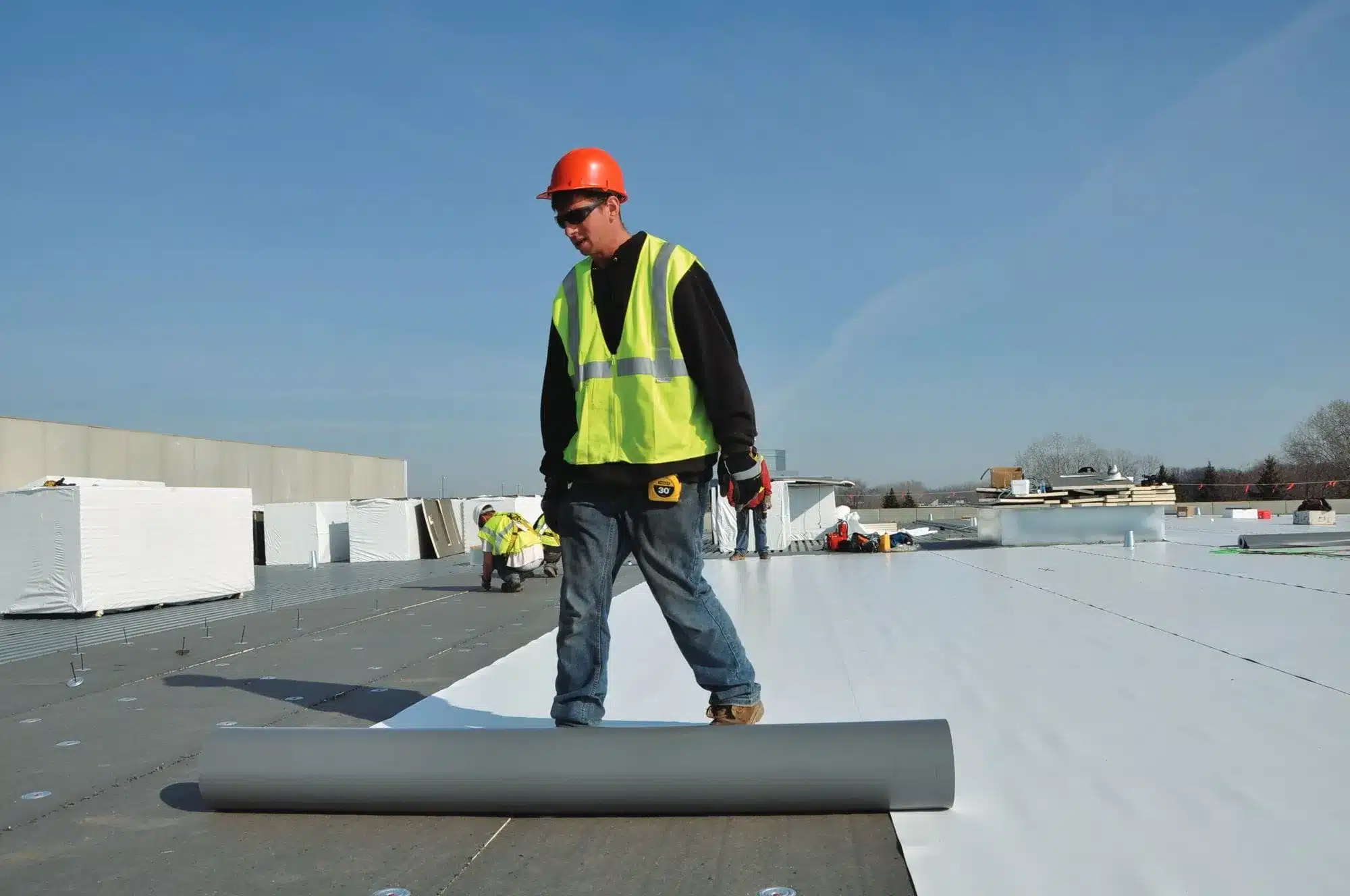
TPO membranes are manufactured white, providing high solar reflectance that meets cool roof standards without additional coatings. The DOE notes that TPO and PVC membranes are typically white and reflective, requiring no special formulations. This inherent reflectivity reduces heat transfer into the building, lowering cooling energy demand.
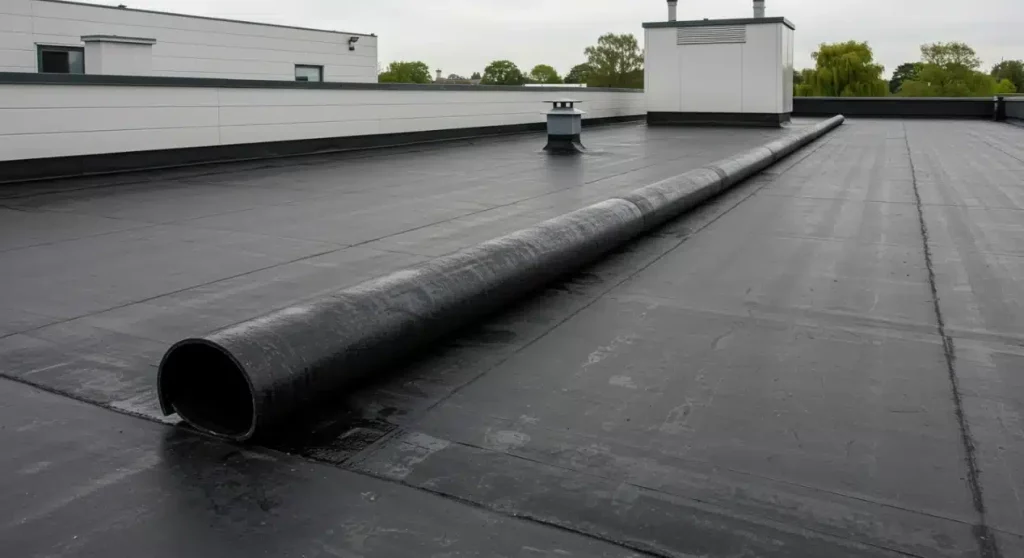
EPDM, by contrast, is traditionally manufactured in black, which absorbs the majority of solar energy. While EPDM resists UV degradation well due to its saturated backbone, it does not reflect heat effectively in its standard black form. White EPDM formulations exist but require special manufacturing processes or factory-applied reflective coatings, which can add to the cost.
The EPA reports that cool roofs can reduce peak cooling demand by 11 to 27 percent in air-conditioned buildings. For a property owner in a hot climate, TPO’s built-in reflectivity delivers measurable energy savings that standard black EPDM simply cannot match.
Cold Weather and Freeze-Thaw Performance
Where TPO gains an edge in heat, EPDM pulls ahead in cold. EPDM maintains elastic properties at temperatures as low as minus 40°C depending on the grade and formulation. Its rubber composition allows it to expand and contract through repeated freeze-thaw cycles without cracking or losing adhesion.
This matters in climates where winter temperatures swing dramatically from day to night. A membrane that becomes brittle in cold weather risks cracking around flashings, seams, and penetrations, which creates pathways for water infiltration.
TPO, while rated for cold climates, is a stiffer material than EPDM at low temperatures. Its thermoplastic nature means it can become less flexible in extreme cold, which may increase the risk of stress fractures if the roof deck shifts or experiences differential movement during temperature drops.
Wind Uplift and Storm Resistance
Both membranes can perform well in high-wind conditions when installed correctly. The determining factor is often the attachment method rather than the material itself. Mechanically fastened systems use plates and screws to secure the membrane to the deck, while fully adhered systems use adhesives.
TPO’s heat-welded seams create a stronger, more uniform bond at the sheet overlaps compared to EPDM’s taped or adhesive-bonded seams. In areas prone to hurricane-force winds, a welded seam system can offer better resistance to wind-driven rain infiltration at the most vulnerable points of the roof.
Seam Integrity and Water Resistance
Seam failure is one of the most common causes of roof leaks on single-ply systems. The EPA notes that single-ply membranes come in several types, with EPDM seams that must be glued or taped together, while PVC and TPO are thermoplastic materials with seams that can be heat-welded.
Heat-welded TPO seams fuse the material at the molecular level, creating a bond that is essentially as strong as the membrane itself. EPDM seams, whether using tape or liquid adhesive, rely on a mechanical bond that can weaken over time when exposed to ponding water, extreme temperature cycling, or UV exposure.
Performance Comparison Table
| Performance Factor | TPO Membrane | EPDM Membrane |
|---|---|---|
| Material Type | Thermoplastic (weldable) | Thermoset rubber (non-weldable) |
| Standard Color | White (highly reflective) | Black (heat absorbing) |
| Solar Reflectance | High (inherently cool roof compliant) | Low (requires white formulation for reflectivity) |
| Cold Flexibility | Moderate (may stiffen in extreme cold) | Excellent (flexible to minus 40°C) |
| UV Resistance | Good (UV-stabilized formulations) | Excellent (saturated polymer backbone) |
| Seam Method | Heat-welded (molecular bond) | Adhesive tape or liquid adhesive |
| Ozone Resistance | Good | Excellent |
| Chemical Resistance | Better resistance to grease and oils | Degrades with bituminous contact |
| Typical Lifespan | 15 to 25 years | 20 to 30+ years |
Real-World Scenarios: Which Membrane Fits
| Scenario | Property Type | Recommended Option | Rationale |
|---|---|---|---|
| Warehouse in Phoenix, AZ | Large commercial, no AC | TPO | Maximum reflectivity keeps interior cooler without mechanical cooling |
| Distribution center in Minneapolis, MN | Commercial, insulated, heated | EPDM | Maintains flexibility through extreme freeze-thaw cycles |
| Retail building in Houston, TX | Commercial, air-conditioned | TPO | Reduces cooling costs with high solar reflectance and welded seams |
| Manufacturing plant in Denver, CO | Industrial, heavy foot traffic | TPO | Better chemical resistance to oils and grease from rooftop equipment |
| School in Portland, OR | Institutional, moderate climate | EPDM | Long lifespan with low maintenance in a mild, wet climate |
Factors That Influence the Decision
Several variables determine which membrane will perform better for a specific building:
- Climate zone: Hot and sunny climates favor TPO for energy savings. Cold and variable climates favor EPDM for flexibility and freeze-thaw resistance.
- Building insulation: According to the DOE, a well-insulated roof benefits less from a cool roof surface, but neither membrane replaces the need for adequate R-value insulation beneath it.
- Roof deck condition: If the existing deck is sound, either system works. If there is moisture damage or structural movement, the more flexible EPDM may accommodate slight shifts better.
- Roof access and foot traffic: TPO generally offers better puncture and chemical resistance, making it preferable for roofs with regular maintenance traffic or exposure to industrial materials.
- Local codes and incentives: Many municipalities now require cool roofs for commercial new construction. TPO naturally meets these requirements, while EPDM may require a white formulation to comply.
- Budget and lifecycle cost: EPDM generally offers a longer service life at a lower material cost, while TPO may deliver higher energy savings that offset its shorter lifespan.
Who TPO Is For and Who It Is NOT For
Ideal for TPO:
- Buildings in Climate Zones 1 through 3 (hot, sunny, and mixed-hot climates)
- Properties with high cooling costs where energy savings justify the investment
- New construction projects subject to cool roof code requirements
- Roofs exposed to industrial chemicals, grease, or oils
- Owners who want heat-welded seams for maximum watertight integrity
Not the best fit for TPO:
- Buildings in extreme cold climates with prolonged sub-zero temperatures
- Properties where the roof experiences frequent, dramatic thermal cycling
- Installations where the contractor lacks heat-welding equipment and experience
Who EPDM Is For and Who It Is NOT For
Ideal for EPDM:
- Buildings in Climate Zones 5 through 8 (cold and very cold climates)
- Facilities that prioritize maximum membrane lifespan and low maintenance
- Properties with complex roof geometries where a flexible membrane accommodates movement
- Owners in mild climates who want a proven, long-lasting system
Not the best fit for EPDM:
- Buildings in hot climates where cooling energy costs are a primary concern
- Projects that must meet strict cool roof code requirements (unless white EPDM is specified)
- Roofs with heavy grease or chemical exposure from mechanical equipment
Ready to Choose the Right Membrane for Your Roof?
All Foam & Insulation helps building owners and contractors evaluate roofing and insulation systems that perform reliably in demanding conditions. Our team assesses your climate exposure, building use, insulation profile, and budget to recommend the membrane system that delivers the best long-term return. Whether you need a full membrane installation, insulation upgrades beneath your roof deck, or a comprehensive building envelope assessment, we have the experience to guide the decision.
Call us at (541) 826-9600 or email [email protected] to get started. We provide honest recommendations based on your building’s specific needs, not a one-size-fits-all approach.
Frequently Asked Questions
Can TPO be installed in cold weather?
Yes, TPO can be installed in cold conditions, but heat-welding requires the membrane and equipment to reach minimum bonding temperatures. Our team follows manufacturer guidelines to ensure proper seam fusion regardless of ambient conditions.
Does EPDM work in hot climates at all?
EPDM functions in hot climates, but its standard black formulation absorbs solar heat, which increases cooling loads. White EPDM formulations are available and can meet cool roof requirements, though they may come at a higher material cost than standard white TPO.
How do maintenance requirements compare between the two?
Both systems need semi-annual inspections and prompt repair of any punctures or seam separations. EPDM may require periodic seam inspections as adhesive-bonded joints can weaken over time, while TPO’s heat-welded seams generally need less ongoing attention.
Can either membrane be installed over an existing roof?
Both TPO and EPDM can be installed as recover systems over certain existing roof types, provided the underlying deck is structurally sound, moisture-free, and compatible. Building codes and the condition of the existing roof dictate whether a full tear-off or a recover is permitted.
Which membrane is better for roofs with heavy ponding water?
Neither membrane is designed to support standing water long-term, as ponding accelerates degradation of seams and adhesive bonds. However, TPO’s heat-welded seams are less susceptible to water infiltration at the overlaps, making it somewhat more tolerant of temporary ponding if drainage issues exist.
Sources
- U.S. Department of Energy – Cool Roofs Guide – Comprehensive guide covering single-ply membrane types including TPO and EPDM, solar reflectance and thermal emittance properties, and energy savings calculations for cool roof systems.
- U.S. Department of Energy – Energy Saver: Cool Roofs – Overview of cool roof benefits, including reduced energy bills, lower peak cooling demand, and guidance on selecting reflective roof products for low-slope applications.
- Wikipedia – EPDM Rubber – Technical reference covering EPDM material composition, thermal properties including service temperature range of minus 50°C to 150°C, and resistance to heat, ozone, steam, and weather.
- Wikipedia – Thermoplastic Olefin – Technical reference on TPO polymer composition, UV resistance in outdoor applications including roofing, and thermoplastic welding properties.
- U.S. EPA – Using Cool Roofs to Reduce Heat Islands – EPA resource documenting cool roof performance data, single-ply membrane classifications including EPDM and TPO, and measured cooling energy savings of 11 to 27 percent for reflective roof surfaces.

- Faced vs. Unfaced Fiberglass Batts in Creswell, OR: Performance and Applications Compared - September 11, 2026
- How to Install Fiberglass Batt Insulation Between Floor Joists in Brookings, OR - September 11, 2026
- Fiberglass Batt Insulation Thickness: How Do You Choose the Right Size? - September 9, 2026