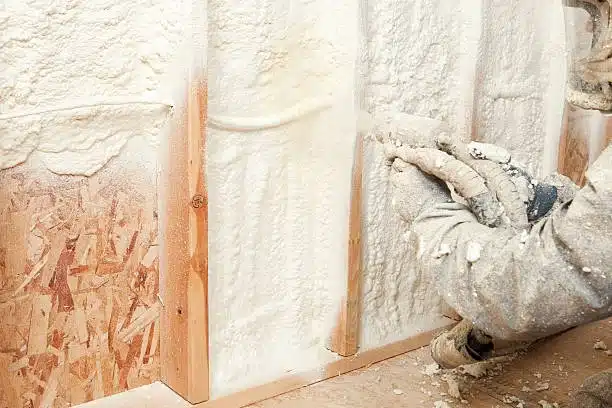
Spray foam insulation does not actually dry; it cures through a rapid chemical reaction between two distinct liquid components. When spray polyurethane foam fails to harden properly, the problem typically stems from improper chemical ratios, inadequate temperature control, or equipment malfunctions. Fixing uncured foam requires fully scraping out the defective material, cleaning the substrate, and reapplying a new layer under strict climate and equipment parameters to ensure a permanent and safe thermal barrier.
TLDR / Key Takeaways
- Spray foam relies on a precise exothermic chemical reaction to cure rather than a traditional moisture evaporation drying process.
- Temperature fluctuations in the environment or within the chemical drums can completely halt the curing phase and ruin the application.
- An off-ratio mix between the A-side and B-side chemicals results in spongy, tacky, or brittle foam that will never set properly.
- Moisture on the application surface prevents proper adhesion, causing the foam to shrink, pull away, or trap water against the framing.
- Faulty equipment, such as clogged proportioner guns or broken hose heating elements, remains a leading cause of installation failure.
- Uncured foam off-gasses harmful odors indefinitely and must be completely physically removed before attempting any reapplication.
The Science Behind the Cure
To understand why spray foam fails, professionals must understand how it works. Spray polyurethane foam is created on-site by mixing two chemicals under high heat and pressure. The A-side contains isocyanates, while the B-side contains polyol resins, catalysts, and blowing agents. When these two liquids meet in the spray gun, they undergo a rapid exothermic reaction. Understanding how spray foam insulation works can help identify why curing or performance issues may occur during installation.
This process requires a precise 1-to-1 ratio. If the balance is interrupted by pressure drops or temperature changes, the reaction fails. The United States Environmental Protection Agency outlines the importance of proper mixing and curing to prevent the off-gassing of volatile organic compounds. You can read more about chemical safety on the United States Environmental Protection Agency website. When the foam does not cure, it loses all structural, thermal, and air-sealing properties.
Common Causes of Failing Spray Foam
Multiple variables can interrupt the delicate chemical reaction required for rigid or open-cell foam to cure correctly.
Improper Climate Control and Substrate Temperature
Both the ambient air temperature and the surface temperature of the substrate must fall within the manufacturer’s specified range. If framing lumber or exterior sheathing is too cold, it acts as a heat sink. This instantly draws the necessary heat out of the chemical reaction, leaving the foam gooey and uncured.
Moisture and High Humidity
Water is the enemy of uncured polyurethane. If the wood framing has a high moisture content or there is excessive ambient humidity, the isocyanate will react with the water instead of the B-side resin. This creates an undesired carbon dioxide reaction, resulting in crunchy, hollow, or brittle foam that peels away from the wall.
Equipment Malfunctions
Spray foam proportioners are highly complex machines. If the heated hose fails to maintain the target temperature, the viscosity of the chemicals will change. Thicker chemicals flow more slowly, throwing off the 1-to-1 ratio. Clogged strainers, faulty transfer pumps, or cross-contamination inside the spray gun will immediately result in bad foam.
Identifying Foam Installation Issues
Recognizing the visual and physical symptoms of failed foam is the first step toward correcting the issue. Below is a breakdown of common symptoms, their likely causes, and the necessary response.
| Visual/Physical Symptom | Probable Cause | Action Required |
|---|---|---|
| Foam is crunchy or brittle | Too much A-side (Isocyanate) | Stop spraying, check B-side line pressure, clean gun |
| Foam is spongy or stays sticky | Too much B-side (Resin) | Stop spraying, check A-side line pressure and temperatures |
| Foam shrinks and pulls from studs | Wet substrate or improper surface prep | Remove foam, dry out the substrate, reapply |
| Foam has an enduring foul odor | Off-ratio mix or inadequate ventilation | Complete removal of affected foam is required |
| Foam color is inconsistent or streaky | Clogged spray gun mixing chamber | Rebuild and thoroughly clean the spray gun |
Actionable Strategies for Proper Application
Professionals must implement strict quality control protocols to ensure permanent, high-performance results. Correcting curing issues requires addressing the root cause before any new material is sprayed.
1. Institute Daily Equipment Calibration
Before pulling the trigger on a live wall, run the system to operating temperature and check the dynamic pressure gauges. The A-side and B-side pressures must remain equal when the trigger is pulled. Any pressure divergence greater than 200 PSI indicates a blockage or pump issue that will result in uncured foam.
2. Manage the Environment Actively
Do not rely on the weather forecast. Use commercial heaters or air conditioners to bring the ambient workspace to the ideal temperature. Utilize an infrared thermometer to verify that the actual wood framing or metal substrate meets the chemical manufacturer’s minimum temperature requirements.
3. Monitor Substrate Moisture
Invest in a high-quality pin-style moisture meter. Test the framing lumber in multiple locations before setting up the spray rig. The moisture content of the wood should strictly be below 18 percent. If the wood is too wet, run commercial dehumidifiers until the framing reaches safe levels.
4. Perform Routine Test Sprays
Always spray a test shot onto a piece of cardboard or plastic before beginning the actual application. Observe the rise time, color, and cell structure. Allow the test shot to cool and cut into it to verify the internal core is fully cured and free of voids.
Factors That Affect Performance
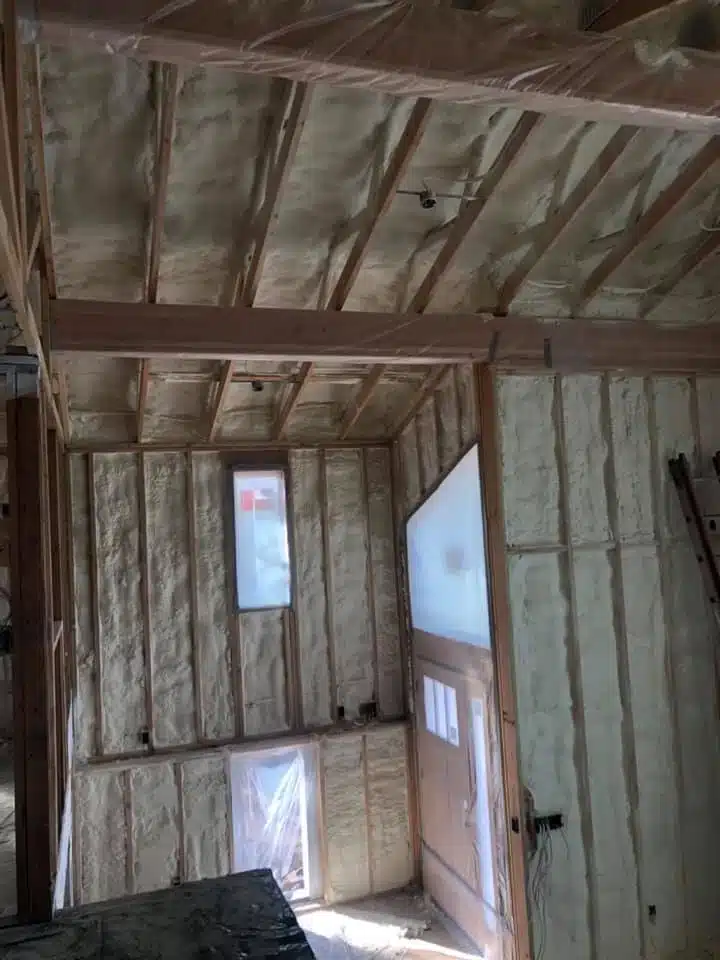
The ultimate success of spray foam insulation goes beyond the initial cure. Several long-term variables dictate how the material will perform, particularly in cold environments. According to the U.S. Department of Energy, selecting the proper insulation material and ensuring correct installation are vital for maximizing energy efficiency and minimizing heat loss.
Climate Zone Demands
Cold climates place heavy demands on building envelopes. Closed-cell foam is generally preferred in these regions because it acts as a vapor retarder at specific thicknesses. This prevents warm indoor air from diffusing into the wall cavity and creating condensation against freezing exterior sheathing.
Installation Thickness and Yield
Applying foam too thick in a single pass traps excess heat from the exothermic reaction. This can scorch the foam, create an internal fire hazard, and ruin the cellular structure, leading to shrinkage. Installers must respect the maximum pass thickness guidelines, allowing the material to cool appropriately before adding subsequent layers.
Air and Vapor Barrier Requirements
Properly cured closed-cell foam operates as both an air and vapor barrier. However, building science dictates that the entire envelope must work harmoniously. For advanced insights into managing air leakage and vapor transmission, you can review the technical resources provided by the Building Science Corporation. Understanding these principles ensures that the properly cured foam achieves its maximum R-value and longevity. Further background on the composition and typical performance metrics of these materials can be found on the Wikipedia entry on spray polyurethane foam.
Real-World Examples
Understanding how these issues manifest in the field can help professionals and homeowners troubleshoot effectively. The following table outlines realistic scenarios regarding uncured foam and the corresponding solutions.
| Scenario | Home Type | Problem | Solution | Outcome |
|---|---|---|---|---|
| Winter Retrofit | 1950s Ranch | Foam sliding off the attic roof deck | Stopped application, brought in industrial heaters to warm the cold roof deck | Perfect adhesion and complete cure on the second pass |
| Basement Renovation | Split-Level | Foam pulling away from rim joists | Identified 22% moisture content in wood. Removed foam, ran dehumidifiers | Wood dried to 12%, re-sprayed foam locked perfectly into place |
| New Build Walls | Two-Story Modern | Sticky, foul-smelling foam in wall cavities | Identified clogged B-side filter causing off-ratio mix. Removed bad foam | Rebuilt equipment, re-sprayed cavity, achieved targeted R-value |
Trusted Spray Foam Solutions in Wheaton, IL
All Foam & Insulation, LLC is the expert solution for homeowners and contractors facing insulation challenges. We specialize in high-performance applications, meticulous equipment management, and rigorous climate control to guarantee a perfect cure every single time. Our rigorous quality control protocols ensure that your home or commercial building receives an airtight, highly efficient thermal barrier that performs flawlessly for decades.
Contact details:
Company: All Foam & Insulation, LLC Phone: (541) 826-9600 Email: [email protected]
Partner with true professionals to secure your building envelope and maximize your energy savings permanently.
FAQs
How long does spray foam take to cure completely?
When mixed and applied at the correct temperatures, spray foam expands and becomes tack-free in seconds. However, it requires a full 24 hours to cure completely and safely finish its chemical off-gassing process.
Can you spray new foam over uncured foam?
No. Spraying over uncured or off-ratio foam will not fix the problem. The defective layer will continue to off-gas, remain structurally weak, and eventually pull away from the wall, taking the new foam down with it.
Why does my newly insulated house smell like fish?
A persistent fishy or foul chemical odor indicates that the foam was applied off-ratio and has not cured properly. The only way to eliminate this health hazard and odor is the complete physical removal of the defective material.
Will cold weather stop spray foam from working?
Cold weather can prevent the chemical reaction from occurring if the application surface is too cold. Installers must use winter-formulated chemicals, heated hoses, and space heaters to warm the environment before spraying.
How do I know if my insulation contractor mixed the foam right?
A properly mixed and cured closed-cell foam will be rigid, consistent in color, and difficult to dent with a thumb. It should adhere tightly to the framing without shrinking, cracking, or leaving a lingering chemical smell after 24 hours.
Sources
- United States Environmental Protection Agency:
- U.S. Department of Energy:
- Building Science Corporation:
- Wikipedia entry on spray polyurethane foam:

- Faced vs. Unfaced Fiberglass Batts in Creswell, OR: Performance and Applications Compared - September 11, 2026
- How to Install Fiberglass Batt Insulation Between Floor Joists in Brookings, OR - September 11, 2026
- Fiberglass Batt Insulation Thickness: How Do You Choose the Right Size? - September 9, 2026