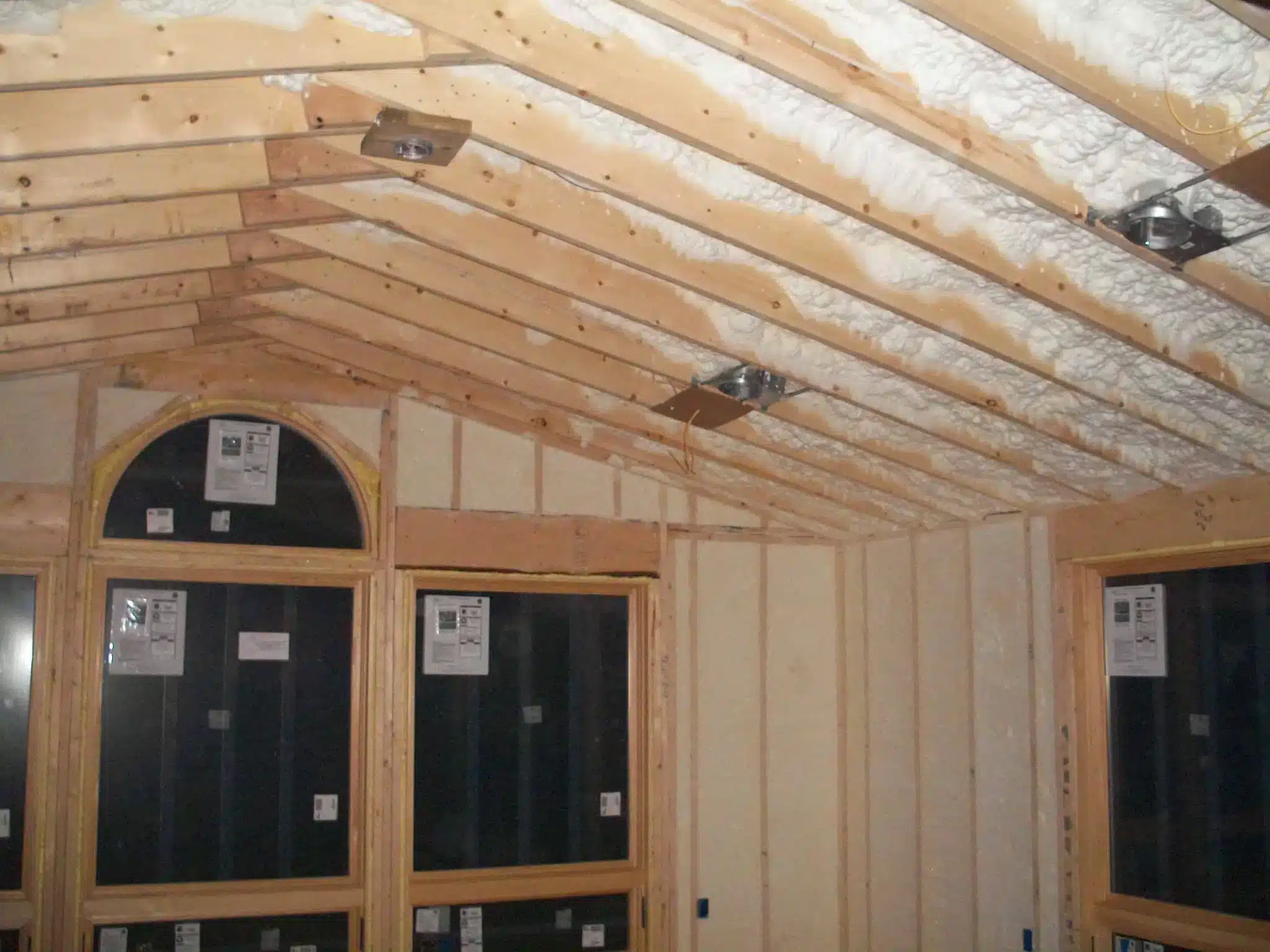
Professional spray foam insulation is one of the most effective methods for sealing air leaks in homes throughout Ashland, OR. Air leakage accounts for between 25% and 40% of the energy used for heating and cooling in a typical residence, according to ENERGY STAR. Unlike traditional batt insulation that leaves gaps around framing, pipes, and wiring, spray foam expands on contact to fill cracks, crevices, and irregular cavities. This creates a continuous air barrier and thermal barrier in a single application. For homeowners in Ashland’s Climate Zone 4C, where winters are cold and wet and summers can be warm, professional spray foam services address the specific challenges our regional climate places on building envelopes. The right approach depends on the area being insulated, the condition of the existing building, and whether moisture control is also a priority.
TLDR / Key Takeaways
- Air leakage is responsible for 25% to 40% of heating and cooling energy loss in an average home, making air sealing a high-impact upgrade
- Spray foam insulation acts as both a thermal barrier and an air barrier simultaneously, filling gaps that fiberglass batts cannot reach
- The U.S. Department of Energy recommends reducing air leakage as much as possible and providing controlled ventilation as needed
- Ashland falls within Climate Zone 4C (Marine), requiring attic insulation of R-60 and under-floor insulation of R-30 per updated Oregon code
- Older homes in Ashland, many built before 1980, tend to have significantly higher air leakage than newer construction due to aging materials and less advanced building techniques
- Proper air sealing reduces drafts, limits moisture infiltration, improves indoor air quality, and decreases the load on HVAC systems
- Professional installation is required for spray foam because incorrect application can lead to moisture trapping and off-gassing concerns
- Combining air sealing with adequate mechanical ventilation ensures healthy indoor air quality in a tightened home
Why Air Leaks Are a Serious Problem in Ashland Homes
Ashland’s climate presents a specific set of challenges for home envelopes. Located in southern Oregon’s Rogue Valley, Ashland experiences cold, wet winters with occasional snow and hot, dry summers. This temperature swing means homes leak conditioned air for roughly half the year in each direction. During winter, warm indoor air escapes through gaps in the building envelope, carrying with it the energy you paid to produce. During summer, hot outdoor air infiltrates, forcing your cooling system to work harder.
The Department of Energy notes that the average American household spends about $2,000 annually on energy, and $200 to $400 of that may be wasted through drafts, air leaks around openings, and outdated systems. Sealing those leaks can save 5% to 30% per year on energy bills while making the home noticeably more comfortable.
Common air leak locations in Ashland homes include:
- Attic hatches and pull-down stairs
- Recessed can lights penetrating into attic spaces
- Gaps around plumbing, electrical wiring, and duct penetrations through walls, floors, and ceilings
- Joint areas where different building materials meet (siding to foundation, framing to sheathing)
- Crawlspaces and unconditioned basements connected to living areas
- Around window and door frames where settling has created gaps
A Lawrence Berkeley National Laboratory study analyzing over 66,000 blower door tests found that older and smaller homes tend to have significantly higher normalized leakage areas compared to newer construction. Many Ashland homes fit this profile, making professional air sealing especially relevant.
How Spray Foam Insulation Seals Air Leaks
Spray foam insulation in Ashland, OR is applied as a liquid that expands into a solid foam, conforming to the exact shape of whatever cavity or gap it fills. This expansion characteristic is what separates spray foam from every other insulation material on the market. Fiberglass batts, for instance, are cut to fit between studs but leave visible gaps around pipes, wires, and irregular framing. Loose-fill cellulose settles over time. Spray foam adheres to surfaces and expands to fill voids, creating a monolithic seal.
Open-Cell vs. Closed-Cell Spray Foam
| Property | Open-Cell Foam | Closed-Cell Foam |
|---|---|---|
| Density | Low (0.5 lb/cu ft) | Medium to High (1.7-3+ lb/cu ft) |
| R-Value per Inch | R-3.5 to R-3.7 | R-6.0 to R-7.0 |
| Air Barrier | Yes | Yes |
| Vapor Barrier | No (vapor permeable) | Yes (when thick enough) |
| Expansion | 3x applied volume | Up to 30x applied volume |
| Best Applications | Walls, attics, sound control | Crawlspaces, rim joists, metal buildings |
Open-cell spray foam is semi-rigid and porous, allowing moisture vapor to pass through while blocking air movement. This makes it well suited for wall cavities and attic floors where vapor permeability helps the wall assembly dry. Closed-cell spray foam is rigid and dense, providing a higher R-value per inch and acting as a vapor retarder. It also adds structural strength to the assembly.
Where Spray Foam Makes the Biggest Difference
Rim Joist and Band Joist Areas. The rim joist area where the floor framing meets the exterior wall is one of the leakiest locations in any home. These areas are difficult to insulate with rigid boards or batts because of their irregular shape and the presence of framing members, plumbing, and wiring. Closed-cell spray foam fills these cavities completely and creates an air seal and vapor barrier in one step.
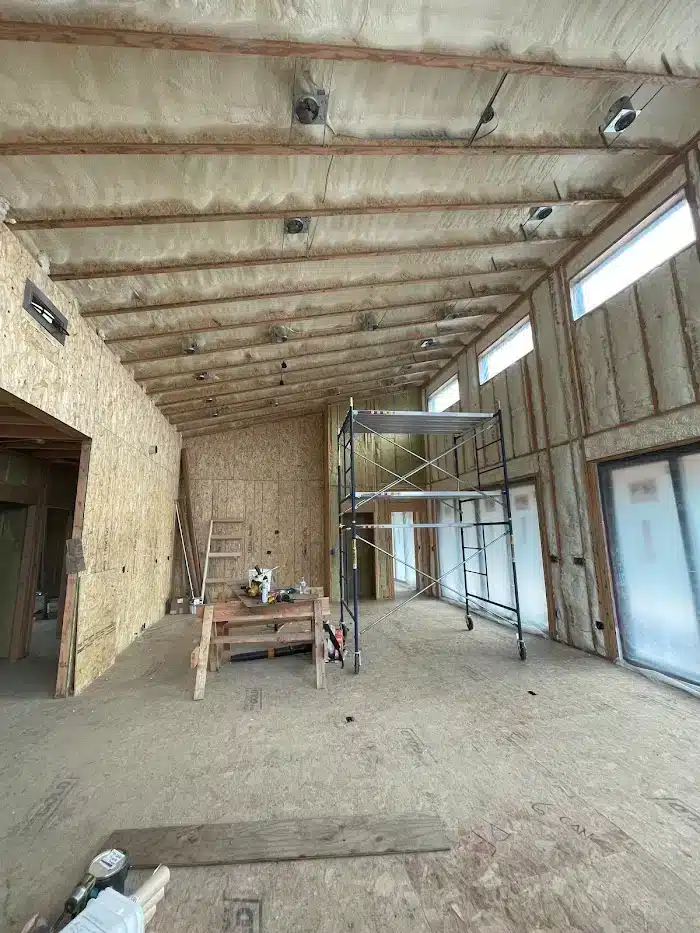
Attic Floor and Roofline. For homes with unconditioned attics, spray foam applied to the attic floor seals around every penetration, including can lights, electrical runs, and plumbing vents. The Department of Energy’s insulation guide recommends R-60 for uninsulated attics in Climate Zone 4, and spray foam helps achieve this while simultaneously sealing the air leaks that undermine the performance of other insulation types.
Crawlspace Encapsulation. Many Ashland homes have vented crawlspaces that allow cold winter air to penetrate the floor above. Sealing and insulating crawlspace walls and the rim joist with closed-cell spray foam prevents this air exchange, keeps floors warmer, and reduces the risk of moisture-related issues like mold and wood rot.
Ashland’s Climate Zone and Insulation Requirements
Ashland, Oregon falls within IECC Climate Zone 4C (Marine), which carries specific insulation and air sealing requirements under the updated Oregon Residential Specialty Code. According to a summary from the Insulation Institute, the 2023 ORSC requires the following for Climate Zones 4 and 5:
| Building Component | Code Requirement (Zones 4-5) |
|---|---|
| Wall Insulation, Above Grade | R-21 intermediate / U-0.059 |
| Wall Insulation, Below Grade | R-21 or R-15 ci / C-0.063 |
| Flat Ceilings | R-49 / U-0.021 |
| Vaulted Ceilings | R-30 rafter or R-30 scissor truss / U-0.033 |
| Under Floors | R-30 / U-0.033 |
| Slab-Edge Perimeter | R-15 / F-0.52 |
| Air Leakage Rate | 4 ACH50 |
The air leakage rate of 4 air changes per hour at 50 Pascals (ACH50) is a mandatory testing requirement. Homes must demonstrate compliance through blower door testing. This code change makes professional air sealing not just a good practice but a compliance requirement. Spray foam insulation installation is one of the most effective ways to meet and exceed these targets because it eliminates many of the common leak paths in a single application.
Signs Your Home Needs Professional Air Sealing
Not every home shows obvious signs of air leakage. Some indicators are subtle and develop gradually over years. Here are the most common signs that your Ashland home would benefit from professional spray foam air sealing:
- Cold floors in winter, especially over crawlspaces or unconditioned basements
- Drafty rooms even when windows and doors are closed
- Visible dirt or staining on carpet near baseboards or on ceiling paint near wall/ceiling joints, which the Department of Energy identifies as evidence of air movement carrying dust and particulates
- High energy bills compared to similarly sized homes in your area
- Ice dams forming on the roof edge during winter, indicating warm air escaping into the attic and melting snow from below
- Condensation on windows during cold weather, suggesting excess indoor humidity from uncontrolled air infiltration
- Uneven temperatures between rooms, particularly between floors
- Musty or damp smells coming from crawlspaces or attic areas
Recommendations by Home Type
Different homes in Ashland have different air sealing needs based on age, construction type, and condition.
| Home Type | Common Leak Areas | Recommended Approach | Key Notes |
|---|---|---|---|
| Pre-1950 Homes | Wall cavities, foundation gaps, around chimneys, balloon framing | Comprehensive assessment followed by targeted spray foam at rim joists and crawlspaces; wall injection where accessible | These homes have the highest leakage; prioritize crawlspaces and rim joists first |
| 1950-1980 Homes | Around window/door framing, recessed lights, attic penetrations, duct chases | Attic air sealing with spray foam, crawlspace encapsulation, rim joist insulation | Construction is tighter than pre-1950 but still well above modern standards |
| 1980-2000 Homes | Electrical penetrations, framing gaps, HVAC duct connections | Targeted spray foam at specific leak points identified through blower door testing | Moderate leakage; focused sealing yields good results |
| Post-2000 Homes | Minor gaps around penetrations, duct leakage | Blower door test to identify remaining leaks, then spot sealing with spray foam | Best candidates for targeted, low-intensity corrections |
Signs You’ve Found the Right Spray Foam Contractor
Choosing a qualified professional for spray foam insulation in Ashland matters as much as choosing the right product. A few quality indicators to look for:
- They conduct a thorough assessment before quoting. A professional crew will evaluate your home’s specific conditions, identify leak locations, and explain which areas need sealing and why, rather than offering a one-size-fits-all solution.
- They understand local code requirements. Ashland falls under Oregon’s updated energy code, and your installer should be familiar with the R-value and air leakage requirements for Climate Zone 4C.
- They explain the difference between open-cell and closed-cell applications. The right foam type depends on the location, moisture conditions, and your goals. A knowledgeable team will recommend based on what your home actually needs.
- They discuss ventilation. The Department of Energy recommends controlled ventilation in tightly sealed homes. A qualified installer will address this, especially if your home will become significantly tighter after the work.
- They provide clear project scope and documentation. You should receive a written outline of areas to be treated, foam type and thickness, and expected performance outcomes.
Ready to Seal Your Home’s Air Leaks
All Foam & Insulation, LLC provides professional spray foam insulation services to homeowners throughout Ashland, OR, and the surrounding Rogue Valley. Our team evaluates your home’s specific needs, identifies air leak locations, and applies the right spray foam solution to create a lasting seal. We work with both open-cell and closed-cell formulations to match the demands of each area in your home.
Call us at (541) 826-9600 or email [email protected] to discuss your project. We will help you build a tighter, more comfortable, and more efficient home.
Frequently Asked Questions
How does spray foam seal air leaks better than fiberglass or cellulose?
Spray foam expands on contact to fill gaps and crevices completely, creating a continuous air barrier. Fiberglass and cellulose leave voids around framing, pipes, and wiring that allow air to pass through.
Can air sealing my Ashland home cause moisture problems?
When done correctly with the right foam type and appropriate mechanical ventilation, air sealing reduces uncontrolled moisture infiltration. Our professionals evaluate your home’s ventilation needs before and after the project.
How long does spray foam insulation last once installed?
Properly installed spray foam insulation is a permanent building material that does not settle, sag, or degrade over time. It maintains its air sealing and insulating properties for the life of the home.
What areas of my home benefit most from spray foam air sealing?
Rim joists, crawlspaces, attic penetrations, and around duct work are typically the highest-impact areas. A blower door test can pinpoint the specific leak locations in your home that will yield the greatest improvement.
Is spray foam insulation safe for my family and pets?
Once fully cured, spray foam is inert and non-toxic. Professional installers follow proper safety protocols during application, including ventilation requirements and re-occupancy timeframes specified by the manufacturer.
Sources
- ENERGY STAR – Air Sealing Building Envelope Improvements – Detailed guide on how air leakage affects home energy efficiency, comfort, and indoor air quality, with statistics on energy loss percentages.
- U.S. Department of Energy – Air Sealing Your Home – Comprehensive resource on air sealing techniques, materials, and strategies for reducing uncontrolled air infiltration in residential buildings.
- U.S. Department of Energy – Why Energy Efficiency Matters – Overview of residential energy consumption and the potential savings from reducing drafts and upgrading insulation and systems.
- Lawrence Berkeley National Laboratory – Analysis of U.S. Residential Air Leakage Database – Research study analyzing over 66,000 blower door measurements to characterize air leakage patterns across the U.S. housing stock by age, size, and type.
- Insulation Institute – Oregon Residential Specialty Code Summary – Summary of Oregon’s 2023 residential energy code requirements including R-values, air leakage rates, and compliance paths for Climate Zones 4 and 5.