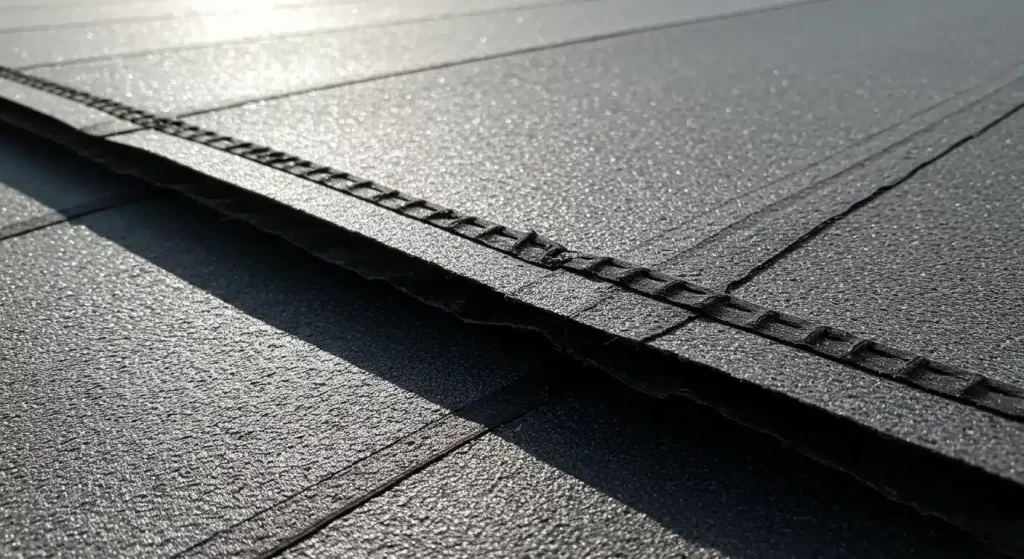
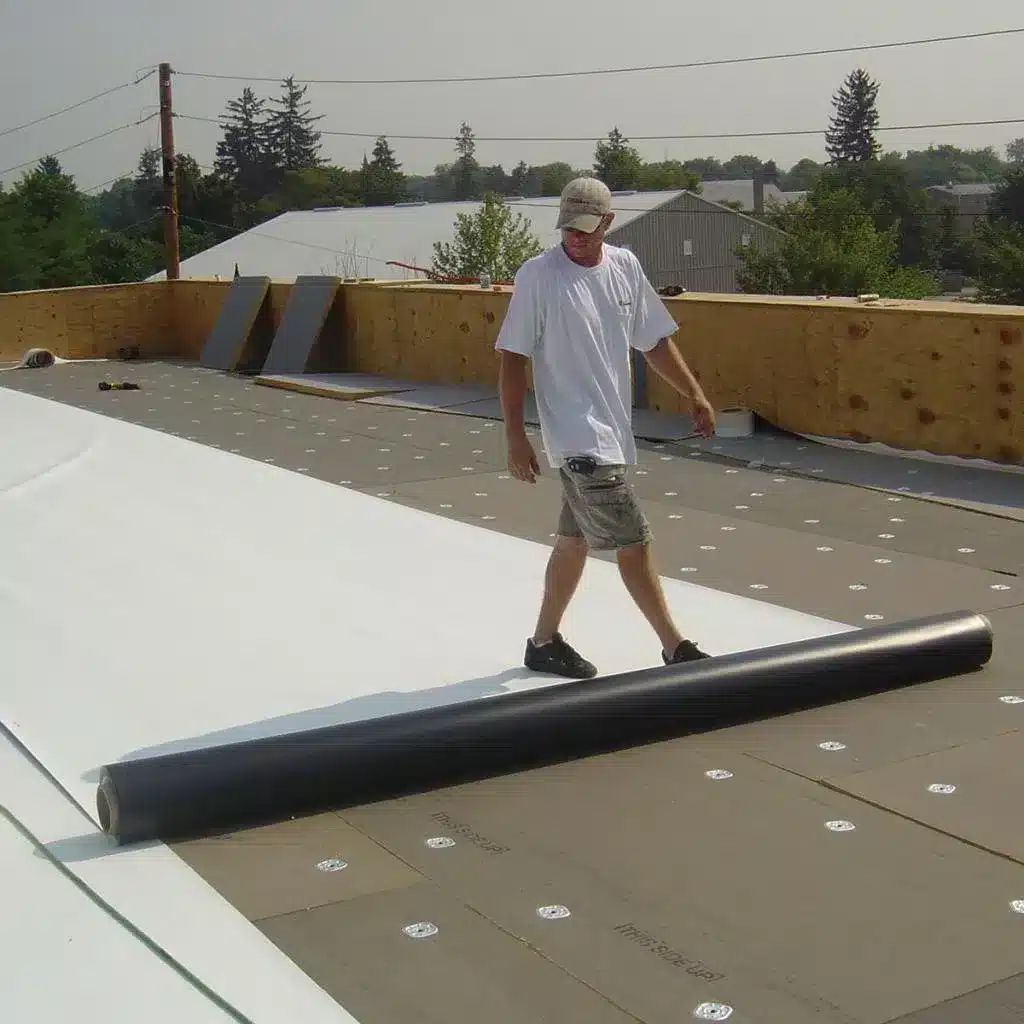
Membrane roofing works by creating a continuous, watertight barrier across a low-slope or flat roof surface, preventing water from penetrating seams, fasteners, and membrane edges where most leaks originate. Unlike traditional built-up roofing with multiple layers that can separate and fail over time, single-ply membranes like TPO, EPDM, and PVC are manufactured as unified sheets that, when properly installed with heat-welded or chemically sealed seams, leave almost no gaps for moisture to exploit. The right membrane system depends on your building’s climate exposure, roof deck condition, drainage design, and long-term performance goals. Each membrane type offers distinct advantages in terms of UV resistance, reflectivity, chemical tolerance, and seam strength, making the selection process specific to each project’s demands.
TLDR / Key Takeaways
- Membrane roofing creates a continuous single-layer barrier that eliminates the weak points found in multi-layer built-up roofing systems
- Heat-welded seams on TPO and PVC membranes form bonds that are actually stronger than the membrane itself, preventing seam separation
- Reflective membrane roofs can stay over 50°F cooler than conventional dark roofs, reducing thermal cycling that degrades materials over time
- Proper drainage design and tapered insulation work together with the membrane to prevent ponding water, the leading cause of moisture damage on flat roofs
- Commercial membrane warranties typically range from 10 to 30 years, with longer terms requiring thicker membranes and certified installation
- TPO, EPDM, and PVC each serve different building needs based on climate, chemical exposure, and energy efficiency priorities
How Membrane Roofing Stops Water at the Source
The primary defense mechanism of membrane roofing is its physical structure. Single-ply membranes are prefabricated sheets manufactured in wide rolls, rolled directly onto the roof surface and attached using mechanical fasteners, adhesives, or heat welding. According to the U.S. Department of Energy, single-ply membranes are one of the primary product categories for low-sloped roofs, where water tends to collect and drain slowly compared to pitched roofs.
The membrane itself is a continuous sheet, but seams where sheets overlap are where the waterproofing claim is truly tested. TPO and PVC membranes use hot-air welding to fuse seams together at the molecular level. This process melts the thermoplastic material of both sheets, creating a bond that becomes one unified piece of material. Unlike adhesive-based seams that rely on glues or tapes susceptible to degradation from UV exposure, temperature swings, and moisture, heat-welded joints maintain their integrity throughout the roof’s service life. EPDM, a synthetic rubber membrane, uses liquid adhesives or tape systems at seams, which require careful surface preparation and quality control during installation to perform reliably long term.
The Role of Reflectivity in Moisture Prevention
Lower roof surface temperatures directly reduce the rate at which roofing materials degrade, which indirectly preserves waterproofing integrity. The Lawrence Berkeley National Laboratory Heat Island Group has documented that on a typical summer afternoon, a clean white roof reflecting 80% of sunlight stays approximately 55°F cooler than a gray roof reflecting only 20%. This temperature difference has real implications for moisture protection because extreme thermal cycling, the repeated expansion and contraction of roofing materials, causes seams to stress, fasteners to loosen, and membranes to crack over time.
When a membrane roof absorbs less solar heat, it undergoes less thermal movement. Less movement means seams face less mechanical stress and fasteners experience less pull-out force. Both TPO and PVC membranes are available in white or light-colored formulations that qualify as “cool roofs” under the ENERGY STAR program, providing this thermal stability alongside their waterproofing performance. EPDM, typically installed in dark colors, absorbs more heat and undergoes more thermal movement, which is worth factoring into material selection for buildings in hot, sunny climates.
Preventing Ponding Water and Structural Moisture
Even the best membrane cannot overcome fundamentally poor roof drainage. Ponding water, defined as water that remains on a roof surface for more than 48 hours after a rain event, is the most common cause of premature membrane failure. Standing water degrades adhesives, weakens seams, softens insulation boards, and creates conditions for biological growth including algae, moss, and in extreme cases, rooted vegetation that can physically penetrate the membrane.
The EPA’s guidance on cool roofs identifies single-ply membranes with reflective pigments as a standard product category for low-slope roof protection, but also notes that ongoing maintenance, including keeping drainage paths clear and the roof surface clean, is necessary to maximize both reflectance and waterproofing performance. A well-designed membrane roof system incorporates proper slope toward drains, scuppers, or gutters, often achieved through tapered insulation systems that direct water off the roof even on nominally flat surfaces.
Membrane Types and How They Handle Moisture
Not all membranes resist water the same way. The material composition, seam technology, and installation method all influence how effectively a membrane system keeps water out over decades of exposure.
| Membrane Type | Seam Method | Moisture Resistance Strength | Best Suited For |
|---|---|---|---|
| TPO | Heat-welded | High UV resistance, strong welds, reflective surface | Hot climates, buildings prioritizing energy efficiency |
| PVC | Heat-welded | Chemical resistance, fire resistance, proven long-term welds | Restaurants, factories, chemically exposed environments |
| EPDM | Adhesive/tape | Excellent flexibility, accommodates structural movement | Variable climates, buildings with shifting or expanding roof decks |
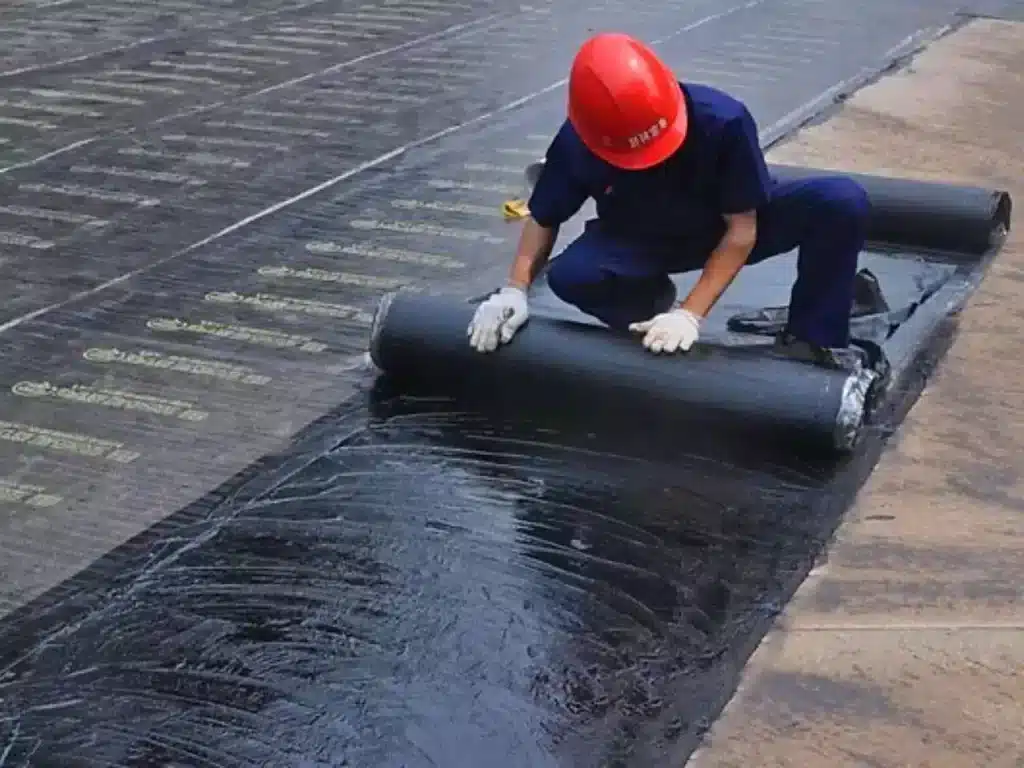
| Modified Bitumen | Torch-applied | Multi-layer redundancy, good puncture resistance | Retrofit projects, buildings needing granule-surfaced membranes |
TPO: Strength Through Simplicity
Thermoplastic polyolefin (TPO) membranes have become the fastest-growing segment of the commercial roofing market. According to Wikipedia’s entry on thermoplastic olefin, TPO materials do not degrade under solar UV radiation, a common failure mode for other polymer types. This UV stability means the membrane maintains its waterproofing properties and reflective surface over longer periods without the brittleness or cracking that comes with UV degradation.
TPO’s heat-welded seams create a monolithic surface where sheet overlaps become chemically identical to the membrane itself. The weld is not a joint between two pieces but a fused single piece, which eliminates the seam as a potential leak path entirely. For building owners in warm climates, TPO’s reflective white surface delivers both moisture protection and measurable cooling energy savings.
EPDM: Flexibility Under Pressure
EPDM is a synthetic rubber membrane known for its ability to accommodate structural movement without tearing or losing adhesion. Buildings with large roof expanses, those subject to settling, or facilities with rooftop equipment that generates vibration benefit from EPDM’s elasticity. The material can stretch and return to its original form repeatedly without damage.
However, EPDM’s seam technology relies on adhesives and tapes rather than heat welding. This makes installation quality control more critical. If seams are not properly prepared and sealed during installation, they can become the weakest link in the waterproofing system. Ponding water on EPDM can also accelerate degradation if not addressed, as standing moisture can compromise adhesive bonds over time.
PVC: Chemical and Fire Resistance
Polyvinyl chloride (PVC) roof membranes offer the same heat-welded seam technology as TPO but add inherent resistance to chemicals, fire, and grease. For commercial kitchens, manufacturing facilities, or any building where exhaust systems may deposit oils and chemicals onto the roof surface, PVC’s chemical resistance helps maintain membrane integrity where other materials might soften or degrade.
Choosing the Right Membrane for Your Building
Selecting the right membrane system requires matching material properties to your building’s specific conditions and performance priorities.
| Building Type / Condition | Recommended Membrane | Key Consideration |
|---|---|---|
| Warehouse or retail with large, open roof | TPO | Reflectivity reduces cooling costs; large sheets minimize seams |
| Food service or chemical processing facility | PVC | Grease and chemical resistance protects membrane integrity |
| Building with structural movement or vibration | EPDM | Flexibility accommodates movement without cracking |
| Cold storage facility | TPO or PVC | Reflective surface reduces heat gain into refrigerated space |
| Building with rooftop solar installation | TPO or PVC | Heat-welded seams resist uplift from wind around panel arrays |
Signs Your Membrane Roof Needs Attention
Even well-installed membrane systems require periodic inspection. Watch for these indicators that moisture may be compromising your roof:
- Visible seams separating or lifting at sheet overlaps, particularly after wind events or temperature extremes
- Bubbles or blisters forming under the membrane surface, indicating trapped moisture or adhesive failure
- Water stains on interior ceilings or walls, especially recurring in the same locations after rain
- Cracking or crazing on the membrane surface, suggesting UV degradation or material fatigue
- Biological growth such as algae patches, which indicate persistent moisture that is not draining properly
Regular inspections by qualified roofing professionals, combined with keeping drainage systems clear and addressing damage promptly, extend the effective service life of any membrane system well beyond its warranty period.
Signs You Have the Right Roofing Partner
Choosing a membrane system is only half the equation. The quality of installation determines whether the membrane performs as designed. A qualified contractor provides detailed written proposals that specify membrane type, thickness, attachment method, and warranty coverage. They follow NRCA guidelines for low-slope membrane roof design, which cover material standards, performance criteria, and installation best practices for commercial roofing systems. Their crew maintains clean, organized job sites, communicates timelines clearly, and documents the installation process with photos that become part of your building’s long-term maintenance record.
Get Expert Membrane Roofing Protection
All Foam & Insulation, LLC brings decades of experience installing and maintaining membrane roofing systems that keep commercial and residential buildings dry and protected. Our team evaluates your roof’s specific conditions, including drainage, deck type, climate exposure, and building use, to recommend the membrane system that delivers the best long-term performance for your investment.
Call us at (541) 826-9600 or email [email protected] to discuss your roofing needs with our team. We provide honest assessments and clear recommendations so you can make confident decisions about protecting your building from leaks and moisture damage.
Frequently Asked Questions
How long does a membrane roof typically last?
Most membrane roofs last 20 to 30 years with proper installation and routine maintenance, depending on thickness and environmental exposure.
Can a membrane roof be installed over an existing roof?
Yes, recovery installations are often possible if the existing roof deck is sound and local building codes permit it.
What makes heat-welded seams better than adhesive seams?
Heat welding fuses materials at a molecular level for superior strength, whereas adhesive seams can degrade from UV and moisture over time.
Does membrane roofing work in cold climates?
Yes, systems like EPDM handle freezing temperatures well when combined with proper insulation and vapor retarders to prevent internal condensation.
How do I know if my flat roof has ponding water problems?
Standing water remaining 48 hours after rain or visible dirt rings on the membrane are primary indicators of a ponding problem.
Sources
- U.S. Department of Energy: https://www.energy.gov/energysaver/cool-roofs
- Lawrence Berkeley National Laboratory Heat Island Group: https://heatisland.lbl.gov/coolscience/cool-roofs
- ENERGY STAR program: https://www.energystar.gov/products/cool-roofs
- EPA's guidance on cool roofs: https://www.epa.gov/heatislands/using-cool-roofs-reduce-heat-islands
- Wikipedia's entry on thermoplastic olefin: https://en.wikipedia.org/wiki/Thermoplastic_olefin
- NRCA guidelines: https://www.nrca.net/roofingguidelines/Library/Detail?id=p5h1FpIazUo%3D