If you are walking across freezing floors in January or noticing cold air streaming through certain rooms, the problem almost always traces back to missing or inadequate insulation solutions. In Klamath Falls, where winter low temperatures average 22°F and December’s mean temperature sits below freezing, heat escapes fast through uninsulated walls, floors, and ceilings. Fiberglass batt insulation addresses this by filling the cavities in your home’s thermal envelope with millions of tiny air pockets that resist conductive heat flow. The result is warmer floors, fewer drafts, and lower heating demand during the coldest months of the year.
TLDR / Key Takeaways
- Klamath Falls, OR sits in a cold climate zone with winter lows averaging 22°F and temperatures regularly dropping well below zero during cold snaps
- Fiberglass batt insulation traps air in millions of small pockets, creating thermal resistance measured as R-value
- The EPA estimates homeowners can save an average of 15% on heating and cooling costs by air sealing and adding insulation
- 9 out of 10 U.S. homes are under-insulated, making this a widespread issue in older housing stock
- Fiberglass batts deliver R-3.0 to R-3.8 per inch, and climate zone 5 requires R-49 to R-60 for ceilings and R-20 to R-30 for walls depending on code
- Proper installation matters as much as the material itself, with gaps and compression reducing effectiveness
- Fiberglass batts are naturally fire-resistant and do not absorb moisture, which suits Klamath Falls’ semi-arid climate
- Federal tax credits may be available for insulation upgrades that meet 2021 IECC requirements
Why Klamath Falls Homes Struggle with Cold Floors and Drafts
Klamath Falls has a semi-arid continental climate with very cold winters and significant temperature swings between day and night. According to climate data (1991-2020 normals), the city’s average low temperature in January is 22°F and December averages just 4.6°F as a daytime high. Cold waves can push temperatures to -20°F or lower. At 4,091 feet in elevation, this is one of the coldest cities in Oregon.
When outdoor air drops that low and your home lacks proper insulation in floor joists, walls, or attic spaces, the temperature differential drives rapid heat loss. Warm air inside the house transfers through uninsulated building assemblies to the cold exterior. Floors over crawl spaces and basements are among the first places homeowners feel the effect because cold air pools at ground level and uninsulated floor cavities provide almost no resistance to that heat transfer.
The Klamath Falls climate data from US Climate Data confirms these conditions with monthly normals collected at the Klamath Falls International Airport station. The annual low temperature averages 35°F, but that number masks the reality of sub-freezing conditions that persist for months.
How Fiberglass Batt Insulation Works
Fiberglass batt insulation is made from fine strands of glass spun into a wool-like material and bound together with a resin. As Wikipedia’s glass wool article explains, the material traps many small pockets of air between the glass fibers. These small air cells cannot effectively transfer heat through natural convection, and because air itself is a poor conductor of heat, the combined effect creates strong thermal resistance.
Fiberglass batts come in pre-cut panels or continuous rolls designed to fit standard wall cavities (16 or 24 inches on center), floor joist bays, and ceiling framing. The R-value, which measures thermal resistance, typically ranges from R-11 to R-49 depending on thickness. For a cold climate like Klamath Falls, selecting the right R-value for each part of the building envelope makes the difference between cold rooms and consistent comfort.
Insulation Requirements for Klamath Falls
The U.S. Department of Energy classifies Klamath Falls in climate zone 5, a heating-dominated region that demands substantial insulation. According to the DOE’s guide on insulation and air-sealing essentials, climate zone 5 requires:
| Building Component | Minimum R-Value (2021 IECC) | What This Means |
|---|---|---|
| Ceiling / Unfinished Attic | R-49 to R-60 | Thick layer of insulation across the attic floor |
| Wood Frame Walls | R-20 + R-5 continuous or R-13 + R-10 continuous | Cavity fill plus exterior rigid board |
| Floors Over Unconditioned Spaces | R-30 | Batts installed between floor joists over crawl spaces |
| Basement Walls | R-15 to R-19 | Cavity insulation or continuous board on interior |
| Rim Joists | R-13 to R-19 | Critical air-sealing and insulation location |
Meeting these targets with fiberglass batts means using thicker products in attics (R-38 to R-49 pre-cut batts), R-13 to R-21 batts in standard 2×4 and 2×6 wall cavities, and R-19 or R-30 products between floor joists. In practice, many homes in the Klamath Falls area were built before these codes took effect, which is why cold floors and drafts are so common.
Where Fiberglass Batts Make the Biggest Impact
Floors Over Crawl Spaces and Basements
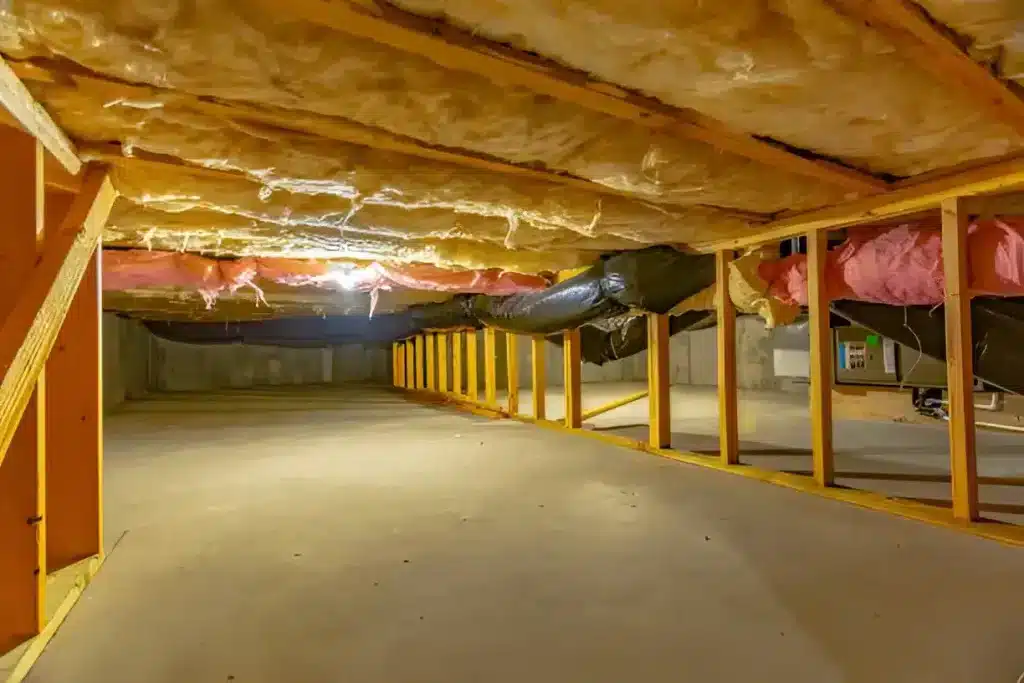
Cold floors are the most noticeable comfort problem in under-insulated homes. When floor joist cavities above a crawl space or basement have no insulation, heat from the living space escapes directly into the unconditioned area below. Fiberglass batts friction-fit between joists or are held in place with wire supports, creating a thermal barrier between the conditioned room and the cold space beneath.
Exterior Walls
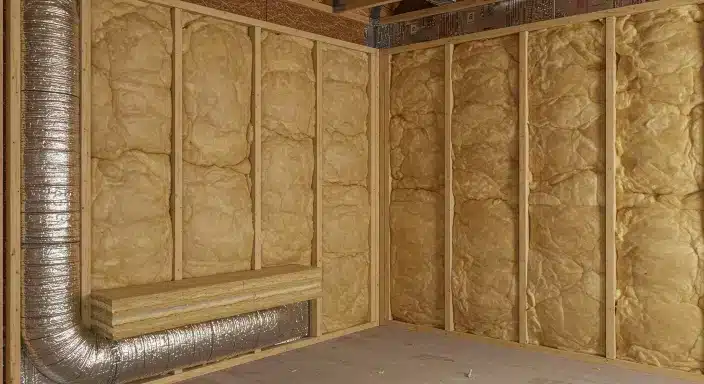
Drafty rooms on exterior walls usually indicate missing or settled wall insulation. In homes built before modern energy codes, wall cavities may contain no insulation at all. Fiberglass batts installed during construction or added through retrofit methods fill these cavities and reduce the convective drafts you feel near exterior surfaces.
Attics
Heat rises, so an under-insulated attic allows a significant portion of your heating energy to escape through the ceiling. Fiberglass batts laid across attic joists (and perpendicular to the first layer for deeper coverage) slow this heat loss directly. The DOE’s insulation R-value table specifies that climate zone 5 attics need R-49 to R-60 for new construction, a standard that fiberglass batts can meet in one or two layers.
Common Mistakes That Reduce Fiberglass Batt Performance
Even good insulation materials fail when installed incorrectly. Here are the most frequent issues we see in Klamath Falls homes:
- Gaps and voids around obstructions: Cutting batts to fit around electrical boxes, plumbing, and framing creates pathways for air movement. Every gap reduces the effective R-value of the entire assembly.
- Compression: Fiberglass works by trapping still air. Compressing a batt to fit a tight space squeezes out the air pockets and drops its thermal resistance below its rated value.
- Missing vapor barriers in the right location: In Klamath Falls’ cold, semi-arid climate, proper vapor barrier placement prevents moisture buildup inside wall and ceiling cavities.
- Ignoring air sealing first: Insulation alone does not stop air leaks. Air moves through gaps, cracks, and penetrations regardless of what insulation is present. Sealing those leaks before insulating is what produces the best results.
How Much Can You Actually Save?
The EPA’s ENERGY STAR program estimates that homeowners can save an average of 15% on heating and cooling costs by air sealing their homes and adding insulation in attics, floors over crawl spaces, and basements. That number translates to meaningful dollar savings over a heating season in a climate as cold as Klamath Falls, where furnaces run for months at a time.
Beyond energy savings, fiberglass batt insulation delivers comfort improvements that are immediately noticeable. Rooms that once felt drafty hold heat more evenly, floors lose that chill underfoot, and temperature differences between rooms shrink. The ENERGY STAR Seal and Insulate program notes that sealing leaks and adding insulation can reduce noise from outside, limit pollen and dust entry, improve humidity control, and lower the chance of ice dams on the roof during snowy periods.
Recommendations by Home Type
| Home Type | Recommended Approach | Key Considerations |
|---|---|---|
| Pre-1970s homes with no wall insulation | Drill-and-fill with blown-in insulation for walls, fiberglass batts for attic and floors | Walls are hardest to retrofit, start with attic and floors for fastest comfort gains |
| 1980s-2000s homes with code-minimum insulation | Add a second layer of fiberglass batts in the attic, upgrade floor insulation | Original insulation may have settled, reducing effective R-value |
| New construction or major renovation | Use R-21 or R-23 batts in 2×6 walls, R-49 to R-60 in attics, R-30 in floors | Best time to add continuous exterior insulation alongside cavity batts |
| Homes with crawl space moisture issues | Address drainage and vapor barriers first, then install fiberglass batts in floor joists | Moisture control must come before insulation to prevent mold and rot |
Signs You Have Found the Right Insulation Approach
A reliable insulation assessment will include more than a quick visual inspection. Look for these indicators that your evaluation is thorough and trustworthy:
- The assessment addresses air sealing before insulation, not just adding material on top of existing problems
- Your evaluator explains which areas of your home lose the most heat and prioritizes work accordingly
- The recommended R-values match or exceed current code requirements for climate zone 5
- The proposal covers vapor barrier placement appropriate for Klamath Falls’ cold, dry climate
- Communication is clear about what the work involves, timeline, and what results to expect
Get a Warmer Home with All Foam & Insulation, LLC
All Foam & Insulation, LLC provides expert fiberglass batt insulation services for homeowners throughout Klamath Falls and the surrounding area. Our team evaluates your home’s specific insulation needs, identifies air leakage points, and installs material to the correct R-value standards for our cold local climate. We handle everything from attic and wall insulation to crawl space and floor applications, so you get consistent comfort in every room.
Call us at (541) 826-9600 or email [email protected] to get started on a warmer, more energy-efficient home today.
Frequently Asked Questions
Can fiberglass batt insulation stop cold drafts on its own?
Fiberglass batts reduce conductive heat loss but they do not seal air leaks. For the best results, air sealing should be done before or alongside insulation installation.
Is fiberglass batt insulation safe for homes with children and pets?
When properly installed behind drywall or in enclosed cavities, fiberglass batts are safe. The fibers are only a concern during installation, and our team takes precautions to contain any loose material.
How long does fiberglass batt insulation last?
Fiberglass batts that are installed correctly and kept dry can last the lifetime of the home. They do not settle significantly or degrade when protected from moisture and physical damage.
What R-value do I need for my attic in Klamath Falls?
Under the 2021 IECC for climate zone 5, ceilings in uninsulated attics require R-49 to R-60 depending on the specific compliance path chosen for the project.
Can fiberglass batt insulation help with summer cooling too?
Yes, fiberglass batts resist heat transfer in both directions. In summer, they reduce heat gain through the attic and walls, which eases the load on your cooling system.
Sources
- US Climate Data – Klamath Falls, Oregon – Monthly temperature and precipitation normals (1991-2020) for the Klamath Falls International Airport station at 4,091 feet elevation.
- Wikipedia – Glass Wool (Fiberglass Insulation) – Detailed explanation of how fiberglass insulation traps air pockets for thermal resistance, manufacturing process, and building applications.
- ENERGY STAR – Why Seal and Insulate – EPA estimates that homeowners can save 15% on heating and cooling costs through combined air sealing and insulation upgrades.