Closed-cell spray foam insulation stops air leaks and heat loss by creating an airtight seal with an R-value of approximately 6.5 per inch, making it one of the most effective insulation solutions for homes in Medford’s climate. The material expands up to 30 times its liquid volume to fill gaps and cracks, then cures into a rigid cellular structure that blocks air movement and moisture intrusion. This comprehensive approach addresses both conduction and convection heat loss, which together account for most energy waste in typical homes.
Medford residents face particular challenges with temperature swings ranging from summer highs above 90°F to winter lows near 20°F, making proper insulation essential for year-round comfort. All Foam & Insulation, LLC has extensive experience applying spray foam in Medford, Oregon‘s diverse conditions, understanding how the material performs in both humid summers and dry winters. The following information explains why closed-cell spray foam stands out as a superior solution for local homes.
How Closed-Cell Spray Foam Works
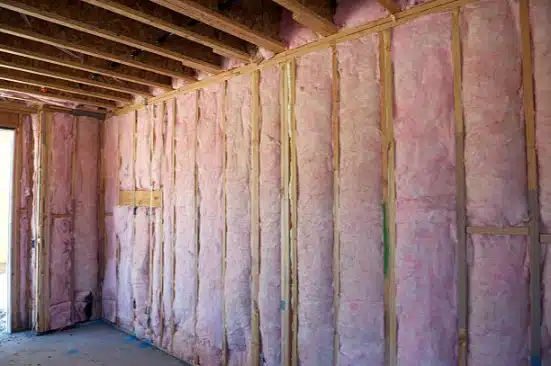
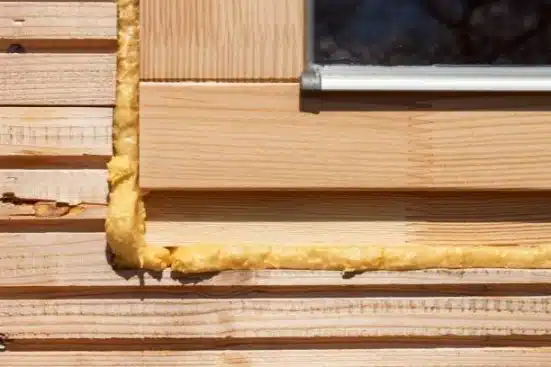
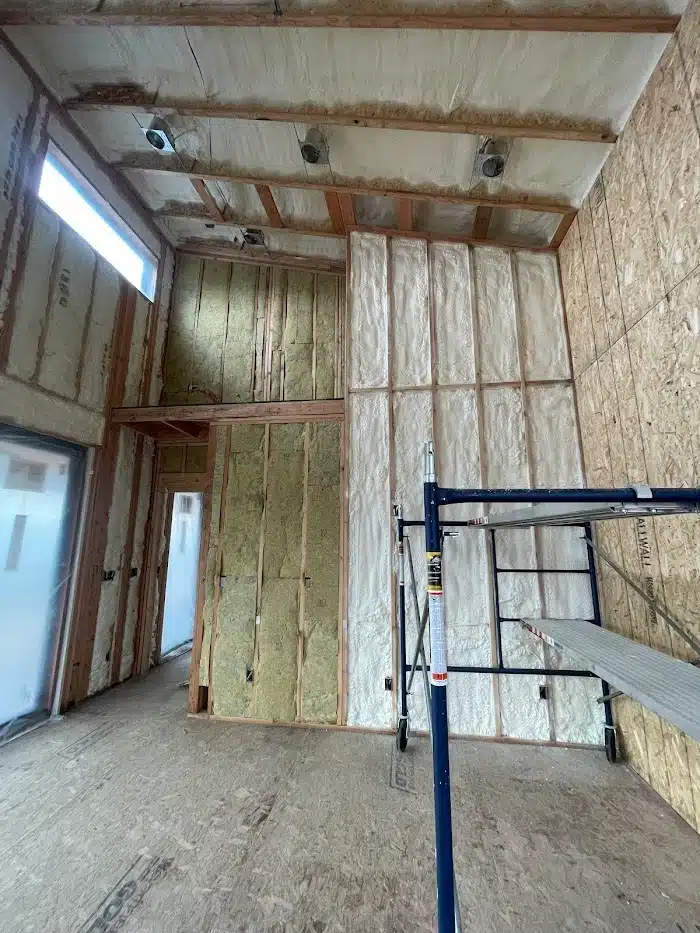
Closed-cell spray foam consists of two chemical components that combine at the application point and rapidly expand. The foam creates millions of tiny closed cells filled with inert gas, giving it both high insulating properties and structural strength. Unlike traditional insulation materials like fiberglass or cellulose, spray foam adheres directly to surfaces and eliminates gaps where air can pass through.
The material’s density, typically around 2 pounds per cubic foot, contributes to its air-sealing capabilities. This density means it can add structural rigidity to walls while preventing the air movement that accounts for up to 40% of a home’s energy loss, according to the U.S. Department of Energy.
Technical Performance Comparison
Understanding the technical specifications helps homeowners make informed decisions about insulation options. The table below compares closed-cell spray foam with common alternatives:
| Material | R-Value per Inch | Air Barrier | Vapor Barrier |
|---|---|---|---|
| Closed-Cell Spray Foam | 6.5 | Yes | Yes |
| Open-Cell Spray Foam | 3.5 | Yes | No |
| Fiberglass Batts | 3.2 | No | No |
| Cellulose | 3.2 | No | No |
The higher R-value per inch means thinner walls achieve better insulation performance, which is particularly valuable in retrofit situations where space is limited. Additionally, the vapor barrier properties of closed-cell foam help control moisture, an important consideration in Medford’s variable climate.
Regional Considerations for Medford Homes
Medford’s location in the Rogue River Valley presents specific insulation challenges. The area experiences significant temperature variations between seasons and even day to night. According to the Building Performance Institute, local building codes require minimum insulation values, but exceeding these requirements provides better comfort and energy savings.
The valley’s occasional temperature inversions can trap cold air during winter months, making proper air sealing especially important. Closed-cell spray foam’s air barrier properties help maintain consistent indoor temperatures despite these weather patterns. The material also performs well during summer heat waves, reducing cooling costs by preventing hot attic air from infiltrating living spaces.

Things to Consider Before Making a Decision
Several factors influence whether closed-cell spray foam suits your particular situation:
Budget constraints – The upfront cost is higher than traditional insulation, but energy savings typically provide a return on investment within 3-7 years.
Existing construction vs. new build – Retrofits may require removing existing insulation, adding to the project complexity and cost. New constructions allow for more efficient application.
Accessibility of application areas – Crawl spaces and tight attics in some older Medford homes may pose access challenges that affect installation costs.
Moisture concerns – If your home has existing moisture issues, these must be addressed before foam application to prevent trapping moisture behind the insulation.
Bonus Tip: In Medford’s climate, applying closed-cell spray foam to the underside of roof decking creates a conditioned attic space, which can extend the life of HVAC equipment by keeping it in a more temperature-stable environment.
Bonus Tip: During winter months in Medford, indoor heating may need to be increased during application to ensure proper curing and expansion of the foam.
Making the Right Insulation Choice
The decision to install closed-cell spray foam involves weighing initial costs against long-term benefits in energy savings, comfort, and home durability. For Medford homeowners facing extreme temperature variations, the air-sealing properties combined with high R-values make closed-cell spray foam particularly effective at reducing both heating and cooling costs.
Before committing, evaluate your specific situation: the age and condition of your home, existing moisture problems, accessibility of insulation areas, and your long-term plans for the property. Professional assessment can help determine whether closed-cell spray foam provides the best return on investment for your particular circumstances.
Get Expert Assessment for Your Home
All Foam & Insulation, LLC offers comprehensive insulation evaluations for Medford area homeowners. Our team understands local climate challenges and can provide specific recommendations based on your home’s unique characteristics. Contact Joe at [email protected] or call (541) 826-9600 to schedule a consultation and determine whether closed-cell spray foam insulation suits your needs and budget.
FAQS
Does closed-cell spray foam require special handling for electrical wiring?
Electricians must install wire guards where spray foam will cover wiring to prevent the material from encasing electrical components. This requirement adds minimal cost and ensures safety while maintaining the insulation’s air-sealing properties.
How long does closed-cell spray foam last?
Properly installed closed-cell spray foam can last the lifetime of the building without significant degradation. The material doesn’t settle, compress, or absorb moisture, maintaining its insulating properties indefinitely under normal conditions.
Can spray foam be applied over existing insulation?
In most cases, existing insulation should be removed before applying spray foam to ensure proper adhesion and eliminate any trapped moisture. However, in some retrofit situations, foam can be applied over certain types of insulation after inspection.
What happens if there’s a water leak after installation?
Closed-cell spray foam is water-resistant but not waterproof. Significant water leaks should be addressed promptly, though the foam itself won’t absorb water like fiberglass or cellulose would. Small amounts of moisture typically dissipate without causing damage.
Is spray foam safe for people with chemical sensitivities?
Once fully cured, typically within 24 hours, closed-cell spray foam is inert and considered safe for most people, including those with chemical sensitivities. However, proper ventilation during installation remains essential.
Sources
- U.S. Department of Energy – Official government resource on insulation types, R-values, and energy efficiency recommendations
- Building Performance Institute – Nonprofit organization providing standards for home performance and insulation best practices