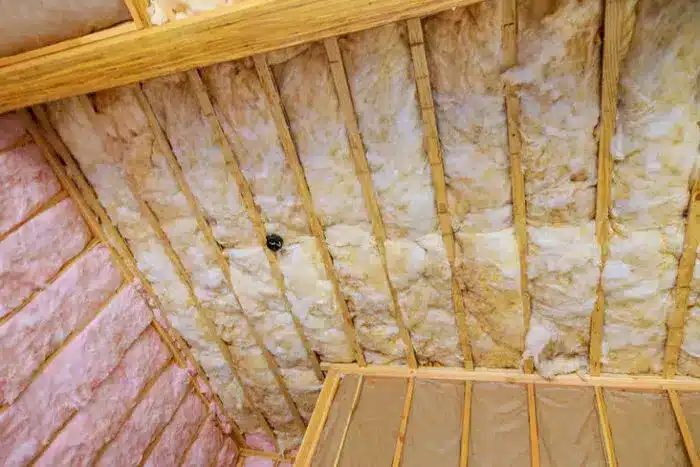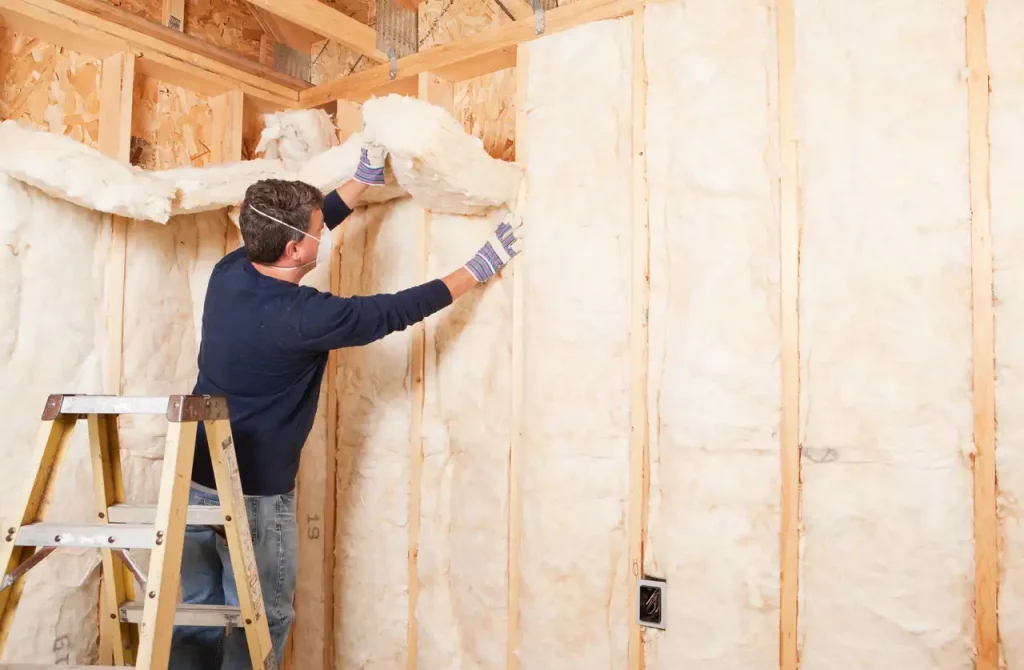
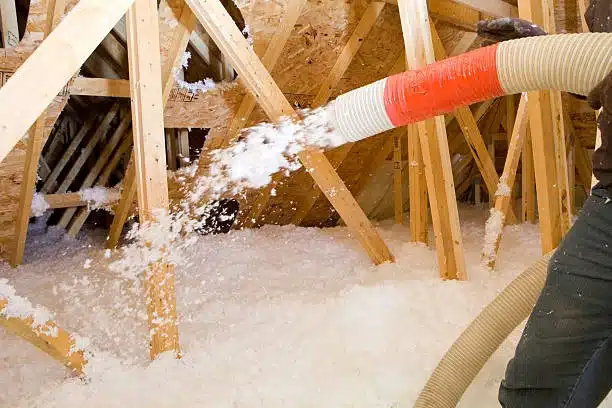
Cellulose blown-in insulation provides significantly higher airflow resistance than standard fiberglass blown-in insulation due to its dense, shredded-paper composition. This high density allows cellulose to pack tightly into cavities, effectively acting as an air retarder that blocks convective air currents and wind-washing. Fiberglass, while highly effective at trapping still air to prevent heat transfer, is naturally lighter and highly porous, meaning it offers minimal resistance to airflow unless installed at extremely high densities. In the short term, cellulose immediately reduces drafts and improves energy efficiency without requiring extensive pre-sealing. Over the long term, however, cellulose is more prone to settling, which can eventually open up air gaps at the top of wall cavities. Fiberglass resists settling much better and maintains its structure over decades. Strategically, business owners and builders choose cellulose for drafty retrofits needing combined thermal and air-blocking performance, while fiberglass is preferred for new construction where dedicated mechanical air barriers are already installed, offering lower costs and superior moisture resistance.
For a deeper understanding of material performance and installation approaches, check the insulation guide for homes and businesses for more detailed insights.
TLDR / Key Takeaways
- Air Permeability: Cellulose naturally restricts airflow due to its tightly packed fiber structure, while standard blown-in fiberglass allows air to pass through easily.
- R-Value per Inch: Cellulose provides an R-value of roughly 3.2 to 3.8 per inch; blown-in fiberglass generally provides 2.2 to 2.9 per inch.
- Settling Rates: Cellulose can settle by up to 20% over its lifespan, potentially creating air voids over time. Fiberglass settling is minimal (usually under 2% to 5%).
- Cost Ranges: Blown fiberglass is generally more cost-effective upfront ($1.00 – $1.50 per sq. ft.), whereas cellulose carries a slightly higher materials and installation cost ($1.20 – $1.80 per sq. ft.).
- Moisture Handling: Fiberglass is hydrophobic and dries quickly without degrading. Cellulose absorbs moisture, which can compact the material, reduce its airflow resistance, and lower its thermal performance.
- Strategic Application: Use cellulose for older building retrofits with poor air sealing. Use fiberglass in newer properties that feature comprehensive house wraps and modern air barriers.
The Building Science of Airflow Resistance
For building professionals, understanding the difference between thermal resistance (R-value) and airflow resistance is critical. Insulation is designed to stop conductive heat loss, but if air moves freely through the material (convective heat loss), the effective R-value plummets.
According to the Department of Energy, choosing the proper insulation material involves evaluating how it interacts with the surrounding building envelope. While neither blown-in cellulose nor fiberglass qualifies as a mechanical air barrier (like spray foam or house wrap), their physical structures dictate how much air penetration they allow.
Cellulose Insulation: Dense and Draft-Resistant
Cellulose is manufactured from heavily processed, recycled newsprint treated with borates for fire and pest resistance. Because the paper fibers are short and irregular, they interlock tightly when blown into an attic or wall cavity. This creates a dense mat that drastically slows air movement. The Energy Star program emphasizes that reducing air leaks is foundational to HVAC efficiency, and the dense nature of cellulose inherently limits draft penetration, making it an excellent “air retarder” for retrofitting aging structures.
Fiberglass Blown-In: Lightweight and Settling Resistant
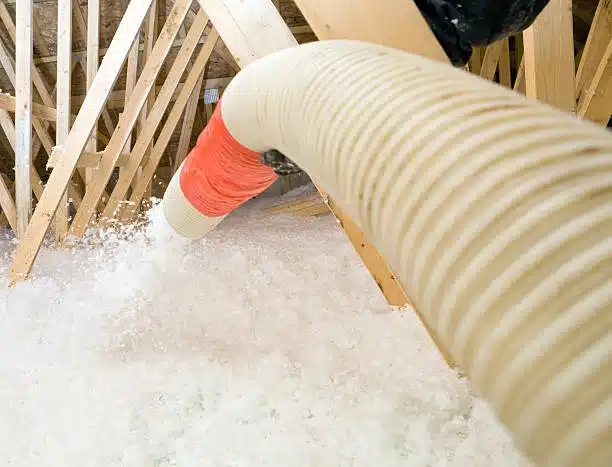
Blown-in fiberglass consists of spun glass fibers. It is engineered to trap tiny pockets of still air, which provide its insulating properties. However, because the fibers are smooth and long, the material remains highly porous. Research by the Insulation Institute indicates that while fiberglass offers exceptional, long-lasting thermal resistance with almost zero settling, it requires a thoroughly sealed building envelope to perform at its peak. Without proper air sealing, “wind-washing” (air movement from eaves or structural gaps) can strip the heat out of fiberglass insulation, drastically reducing its efficiency.
Core Performance Comparisons
To help builders and contractors specify the right product, the table below contrasts the physical and performance attributes of both materials.
| Performance Factor | Cellulose Blown-In | Fiberglass Blown-In |
|---|---|---|
| Inherent Airflow Resistance | High (acts as an air retarder) | Low (highly air permeable) |
| Density (lbs per cubic ft) | 1.5 to 2.0 (Attic) / 3.5 (Dense-pack walls) | 0.5 to 1.0 (Attic) |
| Long-Term Settling | 15% to 20% (can create top-plate air gaps) | 2% to 5% (maintains cavity fill) |
| Moisture Resistance | Poor (absorbs water, loses R-value) | Excellent (hydrophobic, dries quickly) |
| Installation Speed | Moderate (dusty, requires heavier equipment) | Fast (lightweight, cleaner install) |
Real-World Examples for Contractors
Selecting the right blown-in insulation requires matching the material’s airflow properties to the specific conditions of the property. Below are typical project scenarios.
| Scenario | Property Type | Recommended Option | Estimated Cost per Sq. Ft. |
|---|---|---|---|
| Historic Retrofit | 1920s Home, poorly sealed walls, drafty interiors | Cellulose (Dense-Pack) – Blocks existing drafts and fills irregular wall cavities. | $1.50 – $2.00 |
| New Construction Attic | 2023 Build, fully air-sealed top plates, modern ventilation | Fiberglass – Lowest cost, zero settling, high R-value preservation due to existing air barriers. | $1.00 – $1.50 |
| Mid-Century Suburban Upgrade | 1970s Home, adding insulation over existing fiberglass batts | Cellulose – Creates a dense top-cap that stops wind-washing through the older fiberglass. | $1.20 – $1.60 |
| Humid Climate Facility | Commercial space in a high-humidity zone | Fiberglass – Resists moisture absorption and prevents mold growth while providing thermal control. | $1.10 – $1.60 |
Factors That Influence the Decision
When deciding between these two materials, contractors must assess the building holistically. The Environmental Protection Agency notes that managing the building envelope is vital for indoor air quality and structural longevity. Consider the following variables:
- Existing Air Sealing: If the property has significant air leaks that cannot be manually sealed, cellulose provides better immediate relief from drafts.
- Climate Zones and Wind Exposure: In regions with high wind exposure, fiberglass in attics must be protected by proper baffling at the soffits to prevent wind-washing. Cellulose is naturally heavier and less susceptible to wind displacement.
- Moisture Management: Roof leaks or high interior humidity can ruin cellulose by turning it into a dense, wet mass that causes structural rot. Fiberglass allows water to pass through and dries rapidly.
- Weight Load Constraints: Cellulose is heavy. In older homes with ½-inch drywall ceilings spaced 24 inches on center, blowing a thick layer of cellulose can cause ceiling sagging. Lightweight fiberglass avoids this risk completely.
Who This Is For / Who This Is NOT For
Cellulose Insulation
Ideal For:
- Retrofitting older, drafty homes without tearing down walls.
- Contractors are looking for an eco-friendly, highly recycled product.
- Attic “capping” projects where a dense layer is needed to stop air movement over existing insulation.
Not Recommended For:
- Properties with active roof leaks or severe moisture issues.
- Ceilings with low weight-bearing capacity.
Fiberglass Blown-In
Ideal For:
- New construction projects with comprehensive, mechanical air sealing are already complete.
- High-humidity climates or areas prone to condensation.
- Budget-conscious projects require maximum coverage at a lower material cost.
Not Recommended For:
- Older homes with wide-open gaps and no budget for manual air sealing.
- Areas highly exposed to heavy winds without the installation of proper ventilation baffles.
Secure Your Building’s Envelope
Maximize energy efficiency and eliminate drafts on your next project with All Foam & Insulation, LLC. Call to request a free quote or schedule a comprehensive assessment to determine the exact thermal and airflow requirements for your building.
Contact details:
Company: All Foam & Insulation, LLC
Phone: (541) 826-9600
Email: [email protected]
Lock in long-term savings and superior building performance today.
FAQs
Does blown-in insulation act as an air barrier?
No. While dense-packed cellulose acts as a strong air retarder that slows down drafts, neither cellulose nor fiberglass replaces a mechanical air barrier like house wrap, caulk, or spray foam.
Which material loses more R-value in extreme cold and wind?
Fiberglass is highly susceptible to “wind-washing” and convective air loops in extreme cold, meaning its effective R-value can drop if the cavity is not air-sealed. Cellulose maintains its R-value better in drafty conditions.
How does settling affect airflow resistance?
Cellulose settles over time (up to 20%), which can expose the tops of wall cavities to air movement and thermal bridging. Fiberglass retains its original loft and volume over decades, preventing new gaps from forming.
Is it possible to mix cellulose and fiberglass?
Yes. Contractors frequently blow a heavy layer of cellulose over existing fiberglass batts (a technique called “capping”) to compress the fiberglass, improve total R-value, and block wind-washing.
How does moisture impact airflow in both materials?
When cellulose gets wet, it compacts and permanently loses its fluffy structure, creating wide air gaps and losing thermal resistance. Fiberglass does not absorb water, allowing it to dry out and retain its insulating properties.
Sources
- https://www.energy.gov/energysaver/types-insulation
- https://www.energystar.gov/saveathome/seal_and_insulate/about
- https://insulationinstitute.org/about-insulation/fiberglass/
- https://www.epa.gov/indoor-air-quality-iaq/improving-indoor-air-quality

- Faced vs. Unfaced Fiberglass Batts in Creswell, OR: Performance and Applications Compared - September 11, 2026
- How to Install Fiberglass Batt Insulation Between Floor Joists in Brookings, OR - September 11, 2026
- Fiberglass Batt Insulation Thickness: How Do You Choose the Right Size? - September 9, 2026