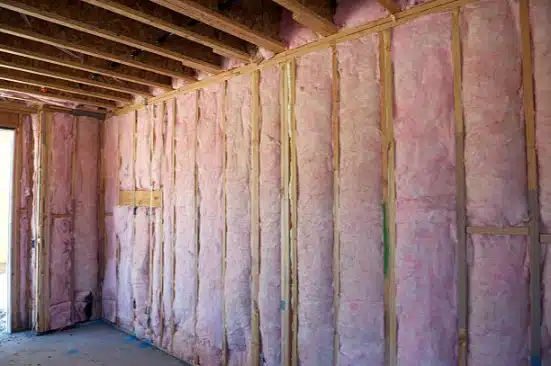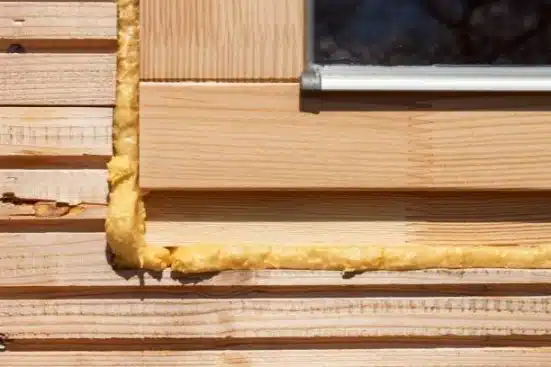
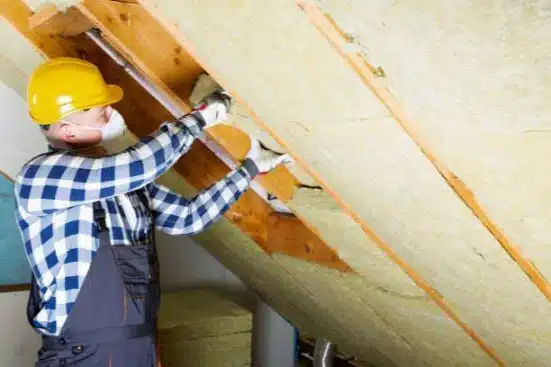
The most effective noise-reducing insulation materials combine high density with fibrous or cellular structures that absorb sound waves. Mineral wool, fiberglass, open-cell spray foam, and cellulose each offer different balances of acoustic performance, thermal comfort, and installation practicality. The right choice depends on whether you need to block airborne noise between rooms, reduce exterior noise infiltration, improve thermal comfort alongside sound control, or meet specific fire-rating requirements. For most residential and commercial projects where noise reduction is a priority, mineral wool tends to outperform other options in standalone Sound Transmission Class (STC) ratings, while spray foam excels at sealing the air gaps that let sound travel through walls, ceilings, and floors.
TLDR / Key Takeaways
- Mineral wool delivers the highest STC ratings among common insulation materials (45 to 52), making it the top choice for walls and ceilings where noise control is the primary goal.
- Fiberglass batts provide solid mid-range acoustic performance (STC ~38) at a lower cost, ideal for budget-conscious projects that still need meaningful sound reduction.
- Open-cell spray foam seals cracks and gaps that other materials miss, which helps block sound paths even though its standalone STC rating (40 to 50) varies by manufacturer.
- Closed-cell spray foam offers the strongest air barrier but provides the least acoustic absorption among foam options (STC 37 to 39), so it works best when paired with other sound-dampening materials.
- Cellulose insulation is a dense, eco-friendly option that performs well for both sound and thermal control, especially in retrofit applications where blown-in installation is needed.
- The NRC (Noise Reduction Coefficient) rating measures sound absorption within a room, while STC measures how well a wall or assembly blocks sound from passing through. Both metrics matter for complete noise control.
- Combining materials, such as mineral wool within wall cavities plus acoustic sealant at joints, consistently outperforms any single material alone.
How Sound Travels Through Buildings and Why Insulation Matters
Sound moves through buildings in two primary ways: airborne transmission (voices, music, TV noise) and structure-borne vibration (footsteps, plumbing noise, machinery). Insulation addresses both, but the mechanisms differ. Fibrous materials like mineral wool and fiberglass trap air in tiny pockets, converting sound energy into heat through friction. Spray foam seals the gaps, cracks, and penetrations where air carries sound waves directly through assemblies.
According to the Insulation Institute, the main insulation categories, fiberglass, mineral wool, cellulose, and spray foam, each have distinct physical properties that affect both thermal and acoustic performance. Understanding those differences is the first step toward specifying the right product for a project where comfort and quiet are priorities.
Two ratings drive most acoustic insulation decisions. STC measures how well a complete wall or ceiling assembly blocks sound between spaces, while NRC measures how much sound a material absorbs within a room. A higher number in either rating means better performance. For reference, an STC of 25 allows normal speech to be understood through a wall, while an STC of 50 makes loud speech barely audible.
Material Comparison: Acoustic Performance, Thermal Value, and Practical Considerations
The table below compares the five most common insulation materials used for noise reduction, covering their acoustic ratings, thermal properties, and best-fit applications.
| Material | STC Range | NRC Range | R-Value per Inch | Best Application | Key Limitation |
|---|---|---|---|---|---|
| Mineral Wool | 45 to 52 | 0.90 to 1.05+ | 3.3 to 4.2 | Interior walls, ceilings, sound-critical rooms | Higher material cost than fiberglass |
| Fiberglass Batts | 36 to 39 | 0.80 to 0.95 | 2.9 to 3.8 | Standard walls, floors, and general-purpose use | Lower density means less sound blocking |
| Open-Cell Spray Foam | 40 to 50 | 0.70 to 0.90 | 3.5 to 3.7 | Irregular cavities, rim joists, retrofits | Expensive, can require professional installation |
| Closed-Cell Spray Foam | 37 to 39 | 0.50 to 0.70 | 6.0 to 7.0 | Exterior walls, crawl spaces, and moisture control | Rigid and less effective at absorbing sound |
| Cellulose (Blown-In) | 38 to 44 | 0.80 to 0.90 | 3.1 to 3.8 | Attics, existing wall cavities, retrofit projects | Can settle over time, reducing effectiveness |
Mineral Wool: The Acoustic Leader
Mineral wool, often sold under the Rockwool brand, is made from spun volcanic rock or slag. Its high density (typically 8 to 12 pounds per cubic foot for acoustic-specific products) gives it exceptional sound-blocking properties. According to Acoustical Surfaces, mineral wool achieves STC ratings between 45 and 52, the highest among standard insulation materials. It also boasts NRC values exceeding 1.0 in some configurations, meaning it absorbs more sound than it reflects.
Beyond acoustics, mineral wool is naturally fire-resistant (it can withstand temperatures above 2,000 degrees Fahrenheit), water-repellent, and dimensionally stable. These properties make it a strong choice for shared walls in multifamily buildings, home theaters, recording studios, and any space where both fire safety and noise control matter.
The main tradeoff is cost. Mineral wool typically runs 30 to 50 percent more than fiberglass in material costs alone. However, when the project requires high STC ratings, mineral wool often eliminates the need for additional sound-dampening layers, which can offset the higher per-batt price.
Fiberglass: Reliable Performance at Lower Cost
Fiberglass insulation has been a standard in construction for decades. It provides solid acoustic performance with STC ratings around 36 to 39 for standard wall assemblies. While it does not match mineral wool in pure sound blocking, high-density fiberglass batts designed specifically for acoustic applications can close much of that gap.
Fiberglass is lightweight, easy to handle, widely available, and costs less than mineral wool or spray foam solutions. It works well in standard residential wall and floor assemblies where moderate noise reduction is sufficient. For contractors managing budgets across large multifamily or commercial projects, fiberglass delivers consistent performance at scale.
For contractors managing budgets, Service Partners is a contractor-focused resource comparing mineral wool, fiberglass, and spray foam for acoustic applications.
One consideration: fiberglass is less dense than mineral wool, so it does not block low-frequency sounds (bass, heavy footfall impact) as effectively. In applications where low-frequency noise is a concern, fiberglass should be paired with other strategies like resilient channel or mass-loaded vinyl.
Spray Foam: Air Sealing Meets Sound Control
Spray foam insulation splits into two categories with very different acoustic profiles.
Open-cell spray foam expands to fill irregular cavities and seal penetrations that batt insulation cannot reach. Its STC ratings range from 40 to 50, depending on the manufacturer and thickness, and its ability to eliminate air gaps makes it particularly effective at stopping sound paths that would otherwise bypass batt insulation. Open-cell foam is softer and more absorptive than closed-cell foam, which helps with mid-to-high frequency noise.
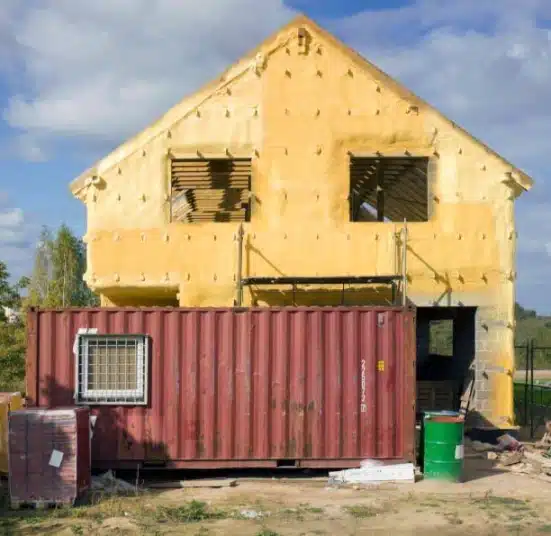
Closed-cell spray foam is denser and provides roughly double the R-value per inch (6.0 to 7.0 vs. 3.5 to 3.7). But that rigidity works against acoustic absorption. According to industry data from ISID, closed-cell spray foam typically achieves STC ratings between 37 and 39, putting it on par with or slightly below fiberglass for sound control. Its real value is in moisture resistance and structural rigidity, not acoustics.
For projects that need both superior air sealing and meaningful noise reduction, open-cell spray foam in wall cavities combined with mineral wool in ceilings is a highly effective pairing.
Cellulose: Dense, Eco-Friendly, and Underutilized for Sound
Cellulose insulation, made from recycled paper treated with borates for fire and pest resistance, offers acoustic performance that often surprises people. With STC ratings between 38 and 44 and a density of roughly 1.5 to 2.0 pounds per cubic foot when blown, cellulose performs better than standard fiberglass for sound control.
Its biggest advantage is retrofit versatility. Blown-in cellulose can fill existing wall cavities through small holes, making it practical for older homes and buildings where opening walls is not feasible. It also provides excellent thermal performance at a competitive price point.
The limitation is settling. Over time, blown cellulose can compact at the top of wall cavities, leaving gaps that reduce both thermal and acoustic effectiveness. Professional installers use proper density calculations and void-filling techniques to minimize this issue.
Combining Materials for Maximum Noise Reduction
No single insulation material solves every noise problem. The most effective acoustic assemblies combine materials to address both airborne and structure-borne sound transmission.
A well-designed sound wall might include:
- Mineral wool batts within the stud cavity for absorption
- Resilient channel or sound isolation clips to decouple drywall from framing
- Acoustic sealant at all joints, penetrations, and perimeter gaps
- Double layers of drywall with Green Glue compound between them
This layered approach can push STC ratings above 60, which makes loud speech barely audible through the wall. The insulation material matters, but the assembly design often matters more.
Comparison Chart Suggestion: A bar chart comparing STC ratings across five common wall assemblies, from a basic fiberglass assembly (STC 38) to a full decoupled assembly with mineral wool, resilient channel, and double drywall (STC 63+). This would help contractors and building owners visualize the incremental value of each layer.
Real-World Scenarios
| Building Type | Noise Challenge | Recommended Approach | Expected STC Improvement |
|---|---|---|---|
| Multifamily apartment | Airborne noise between units (voices, TV) | Mineral wool in party walls + acoustic sealant | 45 to 52 |
| Home theater | Low-frequency sound containment | Mineral wool + resilient channel + double drywall | 55 to 63 |
| Home office in garage | Exterior traffic and street noise | Open-cell spray foam in walls + mineral wool in ceiling | 42 to 48 |
| Older home retrofit | Noise through uninsulated plaster walls | Dense-pack cellulose in existing cavities | 38 to 44 |
| Commercial office | Open-plan speech privacy | Acoustic fiberglass ceiling panels + wall insulation | 40 to 50 (ceiling assembly) |
How to Evaluate Noise-Reducing Insulation
For detailed guidance on material selection, consult resources like the Rmax guide to soundproofing insulation materials.
When specifying insulation for a project where sound control matters, ask these questions:
- What is the dominant noise type? Airborne noise (speech, music) responds well to absorption within cavities. Impact noise (footsteps, machinery) requires decoupling and mass.
- What STC or NRC rating does the project require? Local building codes may specify a minimum STC for party walls. Check requirements before selecting materials.
- Is the application new construction or retrofit? Retrofit projects often favor blown-in materials (cellulose, blown fiberglass) that can fill existing cavities without demolition.
- Are there fire code requirements? Mineral wool and fiberglass are non-combustible, which matters in commercial buildings, multi-family housing, and attached garages.
- What is the moisture exposure level? Closed-cell spray foam and mineral wool handle moisture better than fiberglass and cellulose in high-humidity areas like crawl spaces and basements.
Common Mistakes in Acoustic Insulation
- Ignoring air gaps and penetrations. Even the best insulation will underperform if sound can travel through unsealed electrical boxes, plumbing penetrations, and gaps around windows and doors. Acoustic sealant is a small investment with a large impact on overall STC.
- Confusing absorption with blocking. Acoustic foam panels absorb sound within a room (improving NRC) but do almost nothing to stop sound from passing through a wall. Wall cavity insulation is needed for blocking (STC improvement).
- Using only one material when a combination is needed. A single layer of fiberglass in a standard wall will not achieve the same result as mineral wool paired with resilient channel and proper sealing.
- Underestimating low-frequency noise. Thin materials and lightweight assemblies are poor at blocking bass and impact noise. Mass, density, and decoupling are required for low-frequency control.
- Compressing batt insulation. Fiberglass and mineral wool lose effective R-value and acoustic performance when compressed into cavities smaller than their rated thickness. Use friction-fit or the correct thickness for each cavity.
Recommendations by Project Type
| Project Type | Recommended Material | Why |
|---|---|---|
| New home construction, interior walls | Mineral wool | Highest STC for party walls and bedrooms, fire-resistant |
| Budget-conscious residential remodel | High-density fiberglass | Good acoustic performance at lower material cost |
| Older home, sound retrofit | Dense-pack cellulose | Can fill existing wall cavities without opening walls |
| Crawl space or basement ceiling | Closed-cell spray foam | Moisture control priority with moderate acoustic benefit |
| Irregular cavities, rim joists, retrofits | Open-cell spray foam | Seals gaps that batts cannot reach while adding absorption |
| Commercial office fit-out | Fiberglass ceiling panels + mineral wool in walls | Balanced cost, fire rating, and acoustic performance at scale |
Signs You Have the Right Insulation Strategy
- The specified materials match the dominant noise type (airborne vs. impact)
- STC and NRC targets are defined before material selection
- Air sealing is included as part of the acoustic plan, not treated as a separate
- Fire ratings and moisture resistance align with the building code and environment
- The installer has experience with acoustic assemblies, not just thermal insulation
- A layered approach is used where noise reduction targets exceed what a single material can achieve
- Cost-benefit analysis considers total assembly performance, not just material price per square foot
Get Expert Guidance on Noise-Reducing Insulation
Choosing the right insulation material for noise reduction and comfort involves balancing acoustic ratings, thermal performance, fire safety, and project budget. All Foam & Insulation, LLC brings years of hands-on experience helping homeowners and contractors select and install insulation systems that deliver real results. Whether you are planning a new build, retrofitting an older home, or solving a specific noise problem, our team can assess your space and recommend the best approach.
Call us at (541) 826-9600 or email [email protected] to discuss your project. We serve property owners and contractors throughout Southern Oregon and the surrounding areas.
FAQs
Does insulation alone solve noise problems?
Insulation within wall and ceiling cavities significantly reduces airborne sound transmission, but it works best as part of a complete assembly. Sealing gaps with acoustic caulk, using resilient channel to decouple drywall, and adding mass through double drywall layers all contribute to the final STC rating. Insulation is a critical component, not a standalone solution.
Is spray foam good for soundproofing?
Open-cell spray foam provides moderate to good sound reduction (STC 40 to 50) and excels at sealing the cracks and gaps where sound bypasses other insulation types. Closed-cell spray foam is less effective for acoustics (STC 37 to 39) but offers superior moisture resistance. For the best acoustic results, open-cell foam is generally preferred when spray foam is specified for sound control.
How does mineral wool compare to fiberglass for noise reduction?
Mineral wool is denser than fiberglass, which gives it higher STC ratings (45 to 52 versus 36 to 39) and better low-frequency sound blocking. Mineral wool is also non-combustible and water-repellent. Fiberglass costs less and is easier to source in standard sizes. For projects where noise control is a priority, mineral wool is the stronger performer.
Can I add sound-reducing insulation to existing walls?
Yes, through a process called dense-packing. Cellulose or blown fiberglass can be injected into existing wall cavities through small holes drilled in the drywall or exterior siding. This approach typically achieves STC improvements of 38 to 44 depending on the material and packing density. It is a practical option for older homes where removing drywall is not desirable.
What is the difference between STC and NRC ratings?
STC (Sound Transmission Class) measures how well a wall, ceiling, or floor assembly blocks sound from passing from one space to another. Higher STC means less sound gets through. NRC (Noise Reduction Coefficient) measures how much sound a material absorbs within a room, which reduces echo and reverberation. Both matter for comfort, but they serve different purposes. Insulation within cavities primarily improves STC, while surface treatments like acoustic panels improve NRC.
Sources
- Acoustical Surfaces – Mineral Wool vs Fiberglass – Comparison of STC ratings and acoustic properties between mineral wool and fiberglass insulation materials.
- Insulation Institute – Insulation Types Comparison – Overview of fiberglass, mineral wool, cellulose, and spray foam insulation types including thermal and acoustic properties.
- ISID – Does Spray Foam Insulate Sound – Technical analysis of spray foam insulation STC ratings compared to other common insulation materials.