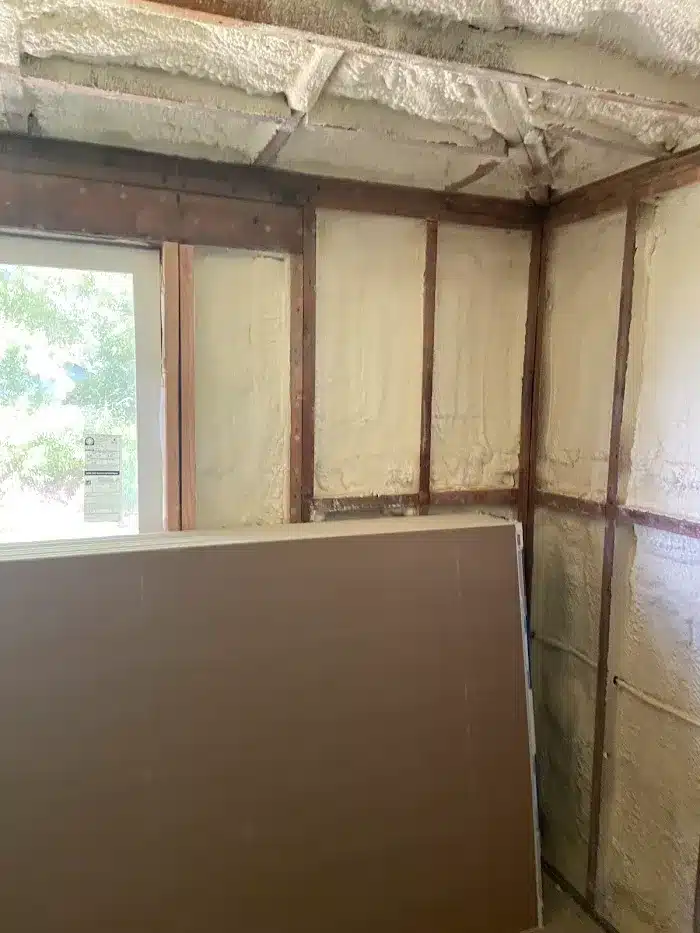
Closed-cell spray foam insulation solution stops moisture movement and prevents condensation better than traditional insulation materials. This material creates a solid plastic barrier that blocks both air flow and water vapor diffusion. In the Rogue Valley, where wet winters and humid mornings meet hot, dry summers, this dual action protects a home’s structural integrity from rot and mold. All Foam & Insulation, LLC has seen that homes with this insulation type maintain dryer wall cavities and more consistent indoor temperatures throughout the year.
This guide explains how moisture moves through buildings, the specific properties that make closed-cell foam effective, and why these characteristics matter specifically for homes in the Medford area.
How Moisture Moves Through Buildings
Moisture enters wall cavities in two primary ways: air leakage and vapor diffusion. Air leakage transports moisture through gaps around windows, outlets, and pipes. This carries significantly more water vapor than diffusion. Vapor diffusion occurs when water molecules move through porous materials from areas of high humidity to low humidity.
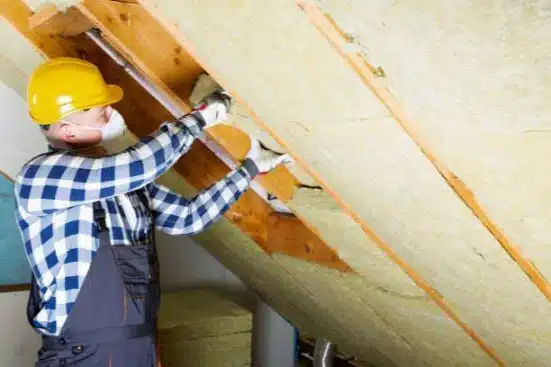
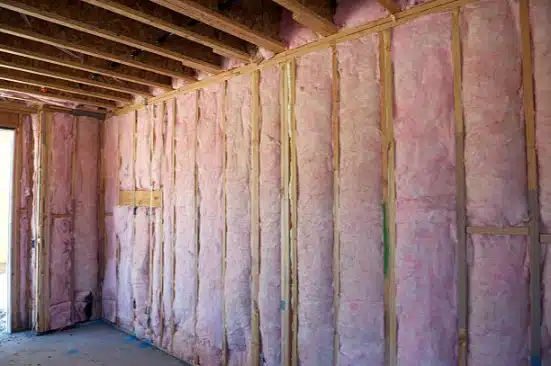
Traditional insulation, like fiberglass or cellulose, does not stop air movement. Air simply passes through the fibers, carrying moisture with it. When warm, moist air hits a cold surface inside a wall cavity, it cools down and releases its moisture as condensation. This wet environment allows mold to grow and wood to rot over time. The U.S. Department of Energy states that proper air sealing combined with insulation is one of the most effective ways to improve a home’s energy efficiency and durability.
The Science Behind Closed-Cell Foam
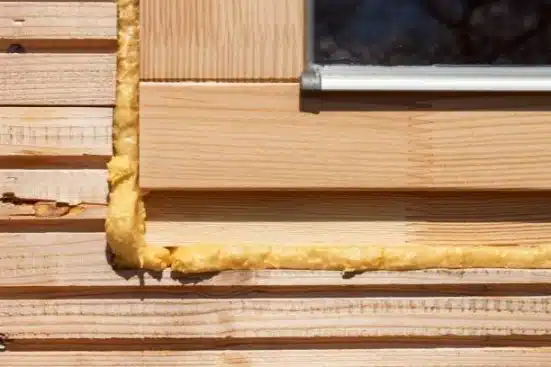
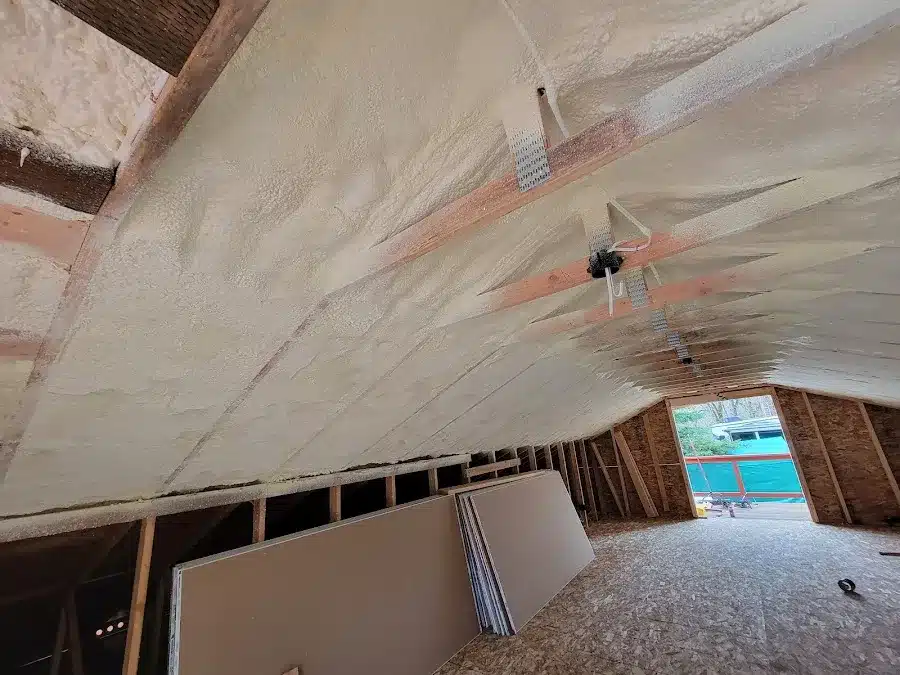
Closed-cell spray foam consists of two chemicals that react rapidly when mixed. The foam expands to about 30 to 60 times its liquid volume. As it expands, the cells fill with a gas that helps the foam resist heat transfer. Unlike open-cell foam, which has cells that rupture and connect, the cells in this material remain completely closed and independent.
This structure makes the foam rigid. It adheres tenaciously to wood, concrete, and metal. This bond creates a continuous seal that mechanically locks out water. Even if a roof leak occurs above the insulation, the foam will resist soaking up the water like a sponge. Instead, it will shed the water and allow it to drain to the bottom. The material’s impermeability is measured in perms. Most closed-cell foams have a permeability rating of less than 1.0 perm at 3 inches thick, classifying it as a Class II vapor retarder.
Comparing Insulation Types
Understanding the differences between insulation materials helps in making an informed decision. The table below compares the performance characteristics of common insulation options.
| Feature | Closed-Cell Foam | Open-Cell Foam | Fiberglass Batts |
|---|---|---|---|
| Air Barrier | Yes (stops drafts) | No (air passes through) | No (air passes through) |
| Vapor Retarder | Yes (Class II) | No (high permeability) | No (high permeability) |
| R-Value per Inch | ~R-6 to R-7 | ~R-3.5 to R-3.8 | ~R-2.5 to R-3.5 |
| Water Resistance | Hydrophobic (repels water) | Hydrophilic (absorbs water) | Does not absorb but holds water |
| Physical Structure | Rigid, adds strength | Soft, flexible | Flexible, fluffy |
Bonus Tip
Always check the foam thickness. Closed-cell foam must be installed at a sufficient depth to provide the advertised R-value and vapor resistance. A thin layer might seal air leaks but will not provide enough thermal resistance or vapor control for extreme weather.
Why Medford’s Climate Requires Specific Solutions
Medford sits in a mixed-dry climate zone. Winters are cool and wet, with heavy rainfall and occasional snow. Summers are hot and dry. This temperature swing creates a significant vapor drive. During winter, the warm, moist indoor air wants to escape to the cold outdoors. In summer, the hot outdoor air tries to push its way inside.
If a wall assembly allows this vapor to pass through unchecked, it can accumulate within the cavity. Closed-cell foam addresses this by serving as both an air barrier and a vapor retarder in a single application. According to research by Building Science Corporation, controlling air flow is the most critical factor in moisture management, followed by vapor diffusion control. The foam eliminates the primary path for moisture entry (air leaks) and significantly slows the secondary path (diffusion).
In the Rogue Valley, many homes have older construction methods that lack proper house wraps or sealing. Adding foam to the rim joists, crawl spaces, and walls provides a modern thermal envelope that upgrades the home’s performance without requiring a complete rebuild.
Things to Consider Before Making a Decision
Investing in insulation is a major decision. Several factors determine whether closed-cell foam is the right choice for a specific project.
Budget Constraints Closed-cell foam has a higher upfront cost compared to fiberglass or cellulose. However, the return on investment comes from lower energy bills and the prevention of expensive moisture damage repairs.
Cavity Depth The foam expands significantly. In tight cavities, installers must be careful not to overfill and cause bowing in drywall or sheathing. A professional assessment of the framing depth ensures the correct amount is applied.
Existing Moisture Problems Foam seals a cavity tightly. If a roof leak or plumbing issue exists behind the foam, it becomes difficult to detect. Fix all active leaks before insulation installation. Once the cavity is dry, the foam can prevent future moisture intrusion.
Bonus Tip
Crawl spaces are particularly vulnerable to moisture in Southern Oregon. Sealing the crawl space with closed-cell foam isolates the home from ground moisture and soil gases, improving overall indoor air quality.
Frequently Asked Questions
How thick should the foam be applied?
The thickness depends on the climate zone and the specific part of the house being insulated. In Medford, a minimum of 2 inches is often required to reach a Class II vapor retarder rating and to prevent condensation on exterior sheathing.
Can I install closed-cell foam over old insulation?
Removing old insulation is usually best because it may contain dust, allergens, or rodent droppings. Installing foam over dirty material traps these contaminants inside the wall. However, some retrofit applications allow for filling cavities from the outside without complete removal.
Is closed-cell foam a fire hazard?
Like many building materials, foam is organic and can burn. Installers apply an ignition barrier or thermal barrier, such as drywall or an intumescent coating, to meet building codes and fire safety standards.
Does it lose R-value over time?
Older formulations of spray foam used gases that escaped over time, reducing the R-value. Modern formulations have stabilized and maintain their R-value for the life of the building with minimal loss.
How does it affect resale value?
Energy efficiency is a selling point. Many buyers look for homes with lower utility costs. Having modern insulation and proof of a well-sealed building envelope can make a property more attractive to buyers.
Final Thoughts
Closed-cell spray foam in Medford, OR offers a high-performance solution for moisture resistance and vapor control. It addresses the specific challenges of wet winters and hot summers by stopping air leakage and blocking vapor diffusion. While the initial cost is higher than that of traditional materials, the protection against structural damage and the improvement in energy efficiency provide long-term value. Homeowners should evaluate their current moisture issues, budget, and long-term comfort goals when deciding on an insulation strategy.
Professional Consultation
Determining the right insulation requires a detailed look at the specific building structure. All Foam & Insulation, LLC provides assessments to help homeowners understand their options. Contact us at [email protected] or call (541) 826-9600 to discuss moisture management needs and insulation solutions.
Sources
- U.S. Department of Energy – Information on how insulation works and the importance of air sealing for energy efficiency.
- Building Science Corporation – Research on wall assemblies, moisture control, and the “Perfect Wall” concept.