High energy bills, drafty rooms, and inconsistent temperatures are common frustrations for property owners. You might blame an aging HVAC system or old windows, but the real culprit is often hidden from view: inadequate or settled insulation. Your home or building could be losing a significant amount of conditioned air through the attic and walls, forcing your heating and cooling systems to work overtime. This not only drives up utility costs but also compromises the overall comfort and health of your indoor environment. Insulation professionals see firsthand how properly installed insulation can completely change a property’s performance, and blown-in insulation consistently stands out as a superior method for achieving these results.
This comprehensive guide is designed to be your go-to resource for everything related to blown-in insulation. We’ll break down the materials, the process, and the benefits in a clear, straightforward way. Think of this as the culmination of countless hours spent in attics and wall cavities, condensed into a practical manual to help you make an informed decision.
Here’s what you’ll learn:
- What blown-in insulation is and how it functions.
- The different materials available include fiberglass, cellulose, and mineral wool.
- A step-by-step look at the professional installation process.
- The key advantages from energy savings to sound reduction.
- How blown-in insulation compares to traditional methods like batts.
- Where it works best and how to determine the right amount for your property.
By the end of this guide, you’ll have a complete understanding of why this method is considered a top-tier solution for creating a more efficient, comfortable, and valuable property.
What Exactly is Blown-In Insulation?
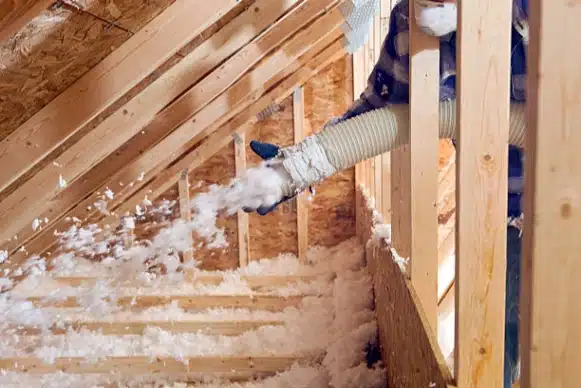
Blown-in insulation, also known as loose-fill insulation, is a type of thermal insulation made of small particles of fiber, foam, or other materials. Unlike traditional batt insulation that comes in pre-cut rolls, blown-in insulation is installed using a specialized blowing machine. This machine uses a long, flexible hose to propel the insulation material into attics, wall cavities, and other spaces, allowing it to fill every gap and crevice.
How It Works: The Basic Principle
The effectiveness of any insulation is based on its ability to trap air. The small, fibrous particles of blown-in material create millions of tiny air pockets. These pockets slow down the movement of heat, a process known as convection.
- In the winter, it keeps the warm air generated by your furnace from escaping through the ceiling and walls.
- In the summer, it prevents the intense heat from the sun-baked roof and exterior walls from radiating into your living spaces.
By creating this thermal barrier, blown-in insulation effectively separates your indoor climate from the outdoor weather, stabilizing temperatures and reducing the workload on your HVAC system.
Why It Matters for Your Property
Proper insulation is one of the most effective ways to improve a building’s energy efficiency. According to the U.S. Environmental Protection Agency’s ENERGY STAR program, a homeowner can save an average of 15% on heating and cooling costs by air sealing their home and adding insulation in attics, floors over crawl spaces, and accessible basement rim joists. Blown-in insulation excels at this because it creates a monolithic, seamless blanket of protection. It easily flows around wiring, plumbing, and structural framing, eliminating the gaps and compression issues that can plague batt insulation and reduce its effectiveness. This complete coverage is what makes it a premier solution for both new construction and existing properties.
The Core Materials of Blown-In Insulation
Blown-in insulation isn’t a single product but a category of materials. The three primary types each have their own unique properties, advantages, and ideal applications.
Fiberglass
Loose-fill fiberglass is made from molten glass that is spun into fine fibers. It’s naturally moisture-resistant and non-combustible. Modern fiberglass insulation contains a significant amount of recycled glass content, often between 50% and 70%, making it a more environmentally friendly choice than in the past.
- Pros: Lightweight, won’t settle over time, naturally resistant to moisture and mold, and excellent fire resistance.
- Cons: Can cause skin and respiratory irritation during installation, may have a slightly lower R-value per inch than cellulose.
- Best For: Attics, especially in climates with higher humidity, and areas where weight is a concern.
Cellulose
Cellulose insulation is made primarily from recycled paper products, such as newspapers and cardboard. The material is treated with non-toxic borates to make it fire-retardant and resistant to pests and mold. This high recycled content, often over 80%, makes it a very popular green building material.
- Pros: High recycled content, excellent at filling tight spaces, superior sound-dampening qualities, can provide a higher R-value per inch.
- Cons: Can absorb moisture if a leak occurs (though the fire retardant helps with mold), can settle over time, requiring a slightly deeper initial installation.
- Best For: Dense-packing wall cavities, soundproofing between floors, and environmentally conscious projects.
Rock Wool / Mineral Wool
Rock wool, also called mineral wool, is a stone-based insulation material created from basalt rock and recycled slag from the steel industry. These raw materials are melted and spun into a fibrous structure, much like fiberglass. It is known for its exceptional fire resistance and thermal properties.
- Pros: Extremely high melting point (over 2,000°F), excellent thermal and acoustic insulation, water repellent, and a high percentage of recycled content.
- Cons: Generally more expensive than fiberglass or cellulose, and can be heavier.
- Best For: Applications requiring superior fire protection, soundproofing media rooms or bedrooms, and high-performance building envelopes.
Here’s a quick comparison of the three main types:
| Feature | Fiberglass | Cellulose | Mineral Wool |
|---|---|---|---|
| Primary Material | Spun Glass Fibers | Recycled Paper | Volcanic Rock & Slag |
| Recycled Content | 50-70% | 80-85% | Up to 75% |
| Fire Resistance | High (Non-combustible) | Good (Treated) | Excellent (Non-combustible) |
| Moisture Resistance | High | Moderate | High (Water Repellent) |
| R-Value per Inch | ~2.2 – 2.7 | ~3.2 – 3.8 | ~3.0 – 3.3 |
| Settling Risk | Very Low | Low to Moderate | Very Low |
Key Takeaways: Choosing Your Material The right material for your project depends on your priorities. If budget and moisture resistance are key, fiberglass is a great choice. For maximum recycled content and superior sound dampening, cellulose is hard to beat. If fire safety and high-performance are the primary goals, mineral wool is an excellent investment. Once the ideal material is chosen, the focus shifts to the professional installation process.
The Installation Process Explained
While the concept is simple, a professional installation is critical to achieving the promised performance benefits. The process is methodical and requires specialized equipment and safety protocols.
Step 1: Preparation and Safety
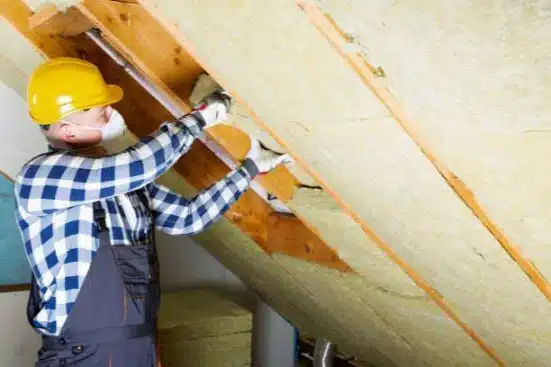
Before any insulation is blown, the area must be properly prepared. In an attic, this involves:
- Installing baffles or vents to ensure proper airflow from the soffits, preventing ice dams and moisture buildup.
- Locating and protecting recessed lighting fixtures. Older can lights not rated for insulation contact (non-IC rated) must be shielded to prevent a fire hazard.
- Air sealing any gaps in the attic floor, such as around plumbing pipes, wiring, and the attic access hatch.
Expert Tip: A thorough air sealing job is just as important as the insulation itself. Sealing these gaps can prevent a tremendous amount of air leakage, which is a major source of energy loss in most homes.
Step 2: The Blowing Machine and Application
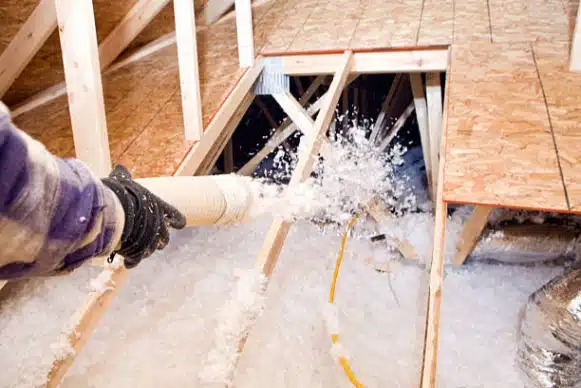
A large hopper and blowing machine are set up outside the property, typically in a truck. Bags of the chosen insulation material are fed into the hopper, where the machine agitates and fluffs the material. A long, flexible hose is run from the machine to the application area.
One technician feeds the machine while another directs the hose inside, systematically applying the insulation to the desired depth. For attics, this means covering the floor joists and creating a uniform blanket. For walls, a technique called “dense-packing” is used, where the insulation is blown into the cavity at high pressure to ensure it fills the space and won’t settle. Rulers and depth gauges are used throughout the process to ensure consistency.
Step 3: Settling and Final Checks
Once the target R-value and depth are reached, the crew performs a final inspection. They ensure coverage is even and that no areas are missed. Rulers are left in place to mark the final depth, providing a clear visual for future inspections. The worksite is then cleaned up, a process that is typically quick and contained since the machinery remains outside.
Key Benefits of Choosing Blown-In Insulation
The advantages of blown-in insulation go far beyond simply lowering your heating bill. It provides a comprehensive upgrade to a property’s performance and comfort.
Superior Thermal Performance and Energy Savings
Because it fills every nook and cranny, blown-in insulation creates a much more effective thermal barrier than batts, which can leave gaps around obstacles. This complete coverage significantly reduces thermal bridging, where heat bypasses insulation through the wood framing. The result is a more consistent indoor temperature and lower energy consumption year-round. A 2022 market analysis reported by Grand View Research highlights that the growing demand for thermal insulation is directly tied to its ability to reduce energy loss in buildings, which accounts for a substantial portion of global energy consumption.
Excellent Sound Dampening Qualities
The same fibrous density that traps air also absorbs sound waves. Blown-in insulation, particularly cellulose and mineral wool, is highly effective at reducing airborne noise transfer between rooms and from the outside. This can make a noticeable difference in the quietness of a home, especially in multi-family housing or properties near busy roads.
Fire Resistance and Pest Deterrence
All major types of blown-in insulation offer fire resistance. Fiberglass and mineral wool are naturally non-combustible, while cellulose is heavily treated with fire retardants. In fact, dense-packed cellulose can actually block air from feeding a fire, slowing its spread. The borate treatment used in cellulose also acts as a very effective deterrent for insects like cockroaches, silverfish, and termites.
Blown-In Insulation vs. Other Insulation Types
How does blown-in stack up against other common methods? Here’s a brief comparison.
| Insulation Type | Blown-In Insulation | Batt Insulation | Spray Foam Insulation |
|---|---|---|---|
| Form | Loose fibers | Pre-cut rolls/batts | Liquid is applied, then expands |
| Coverage | Excellent (seamless) | Good (can have gaps) | Excellent (air-sealing) |
| Installation | Requires special machinery | Can be DIY, but precision is key | Requires professional installation |
| Cost | Moderate | Low to Moderate | High |
| Best For | Irregular spaces, attics, and wall retrofits | Standard stud/joist cavities | Air sealing, high-performance builds |
Batt Insulation (Rolled Fiberglass)
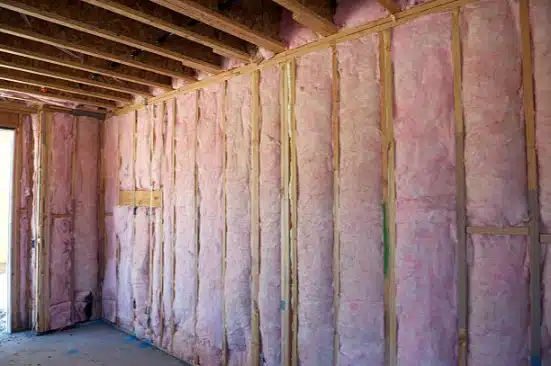
Batts are the familiar pink or yellow rolls of fiberglass seen in home improvement stores. While effective when installed perfectly in standard-sized wall cavities, their performance drops significantly if they are compressed, cut poorly, or have gaps. Blown-in insulation avoids these issues entirely by custom-fitting the space it fills.
Spray Foam Insulation
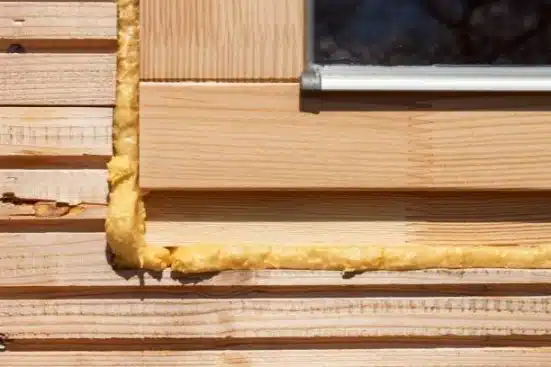
Spray foam insulation offers outstanding thermal performance and acts as an air barrier. However, it typically comes at a much higher price point. Blown-in insulation provides many of the same gap-filling benefits at a more accessible cost, making it a great middle-ground for homeowners seeking high performance without the premium price of spray foam.
Common Applications: Where Does Blown-In Insulation Excel?
Blown-in insulation is versatile, but it truly shines in a few specific areas.
Attics: The Most Common and Effective Use Case
The attic is the single most important place to insulate in a home. Since heat rises, a poorly insulated attic is like leaving a window open in the winter. Blown-in insulation is ideal for attics because it can easily be installed over existing insulation (a process called “capping”) and creates a thick, seamless blanket that covers the joists and fills all gaps.
Expert Tip: When having your attic insulated, ask the installer to create a small dam around the access hatch. This prevents the loose-fill material from falling out every time you open the hatch.
Wall Cavities (Dense-Pack Method)
For existing homes with uninsulated walls, blown-in insulation is a fantastic solution. Installers can drill small holes in the exterior or interior walls, insert a hose, and densely pack the cavities with cellulose or fiberglass. This process is far less disruptive than tearing out drywall to install batts. This technique is especially popular for older homes, bringing their thermal performance up to modern standards.
Hard-to-Reach Areas and Irregular Spaces
Blown-in insulation is the perfect problem-solver for areas with complex shapes, such as crawl spaces, floors with cross-bridging, and areas with lots of wiring and plumbing. Its loose form allows it to flow where rigid batts simply can’t go.
Understanding R-Value and Blown-In Insulation
You can’t talk about insulation without talking about R-value. This is the measure of an insulation material’s ability to resist heat flow. The higher the R-value, the better its insulating power.
What is R-Value?
R-value is a cumulative measurement. The total R-value of a wall or ceiling is the sum of the R-values of all its layers: drywall, insulation, sheathing, and siding. However, the insulation layer provides the vast majority of the total R-value.
Recommended R-Values by Climate Zone
The amount of insulation you need depends on your climate. The U.S. Department of Energy provides recommendations for R-values based on climate zones. For example, a cold climate like the Northeast might require an attic R-value of R-49 to R-60, while a hot climate like the Southeast might need R-30 to R-49. A professional contractor can tell you the specific recommendation for your area.
How Blown-In Insulation Achieves High R-Values
With blown-in insulation, the R-value is determined by the depth of the material. For instance, if a particular cellulose product has an R-value of 3.7 per inch, installing it to a depth of 13 inches would yield a total R-value of approximately R-48. This makes it easy for installers to customize the level of insulation to meet or exceed local building codes and energy efficiency targets.
Expert Tip: Don’t forget to insulate and weatherstrip your attic access hatch or door. It’s often a major weak point in an otherwise well-insulated attic ceiling.
Putting Your Blown-In Insulation Strategy into Action
You now have a complete picture of what blown-in insulation is, how it works, and why it’s such an effective solution for property efficiency. From the seamless coverage that eliminates costly air leaks to the superior thermal performance that keeps you comfortable year-round, the benefits are clear and substantial. By choosing the right material for your needs and ensuring a professional installation, you are making a direct investment in your property’s value, comfort, and long-term energy performance.
The key is to remember that insulation is a complete system. Proper air sealing, adequate ventilation, and choosing the correct R-value for your climate are all necessary parts of a successful project. Use this guide as your reference as you assess your property’s needs and explore your options.
Need Expert Guidance?
Navigating the details of an insulation upgrade can feel overwhelming. If you want a professional assessment of your property’s current insulation or a clear quote for an upgrade, the experts at All Foam & Insulation, LLC are here to help. For a no-obligation consultation, you can reach the team directly by calling (541) 826-9600 or sending an email to [email protected].
Sources
- ENERGY STAR – A U.S. Environmental Protection Agency program that provides information on energy savings through insulation and air sealing.
- Grand View Research – A market research firm that provides data and analysis on the global insulation market.
- U.S. Department of Energy – The official government resource for information on insulation types, R-values, and climate zone recommendations.
Frequently Asked Questions About Blown-In Insulation
How long does blown-in insulation last?
Properly installed blown-in fiberglass and mineral wool insulation will last for the life of the building, as they do not settle or degrade. Cellulose may settle slightly over the first few years, but professional installers account for this by installing it at a greater initial depth.
Is blown-in insulation messy to install?
When done by a professional crew, the process is very clean. The equipment stays outside, and only the hose enters the home. They take care to seal off the work area and clean up thoroughly afterward. The mess is minimal.
Can I install blown-in insulation myself?
While it’s possible to rent a machine from a big-box store, it’s not generally recommended. Professionals have the experience to ensure even coverage, proper depth, and adequate ventilation. They also know how to handle safety issues like recessed lighting and air sealing, which are critical for a successful job.
Is blown-in insulation safe for my family?
Yes. Modern blown-in insulation materials are safe. Fiberglass is made without formaldehyde, and the borates used to treat cellulose are non-toxic to humans. The materials are stable and do not off-gas once installed.
Can you put new blown-in insulation over old insulation?
Absolutely. As long as the existing insulation is dry and not moldy, blowing a fresh layer of insulation over it is a common and effective practice. This “capping” brings the total R-value up to modern standards without the cost and hassle of removing the old material.